BPC-157 and TB-500 are different molecules with different, unequal evidence bases — not one "stack."
Only one study has ever tested the two together directly, and it found no additional benefit from combining them over TB-500 alone.
Neither compound is FDA-approved; the July 2026 PCAC vote was a non-binding recommendation, not approval.
BPC-157 and TB-500 get searched as a pair constantly, but they're two different molecules with two very different evidence bases —and almost no research has ever tested them together. This page separates what each compound's own literature actually shows from what simply gets repeated because the two names sit next to each other in a product listing.
Featured In This Article
RESEARCH PEPTIDE
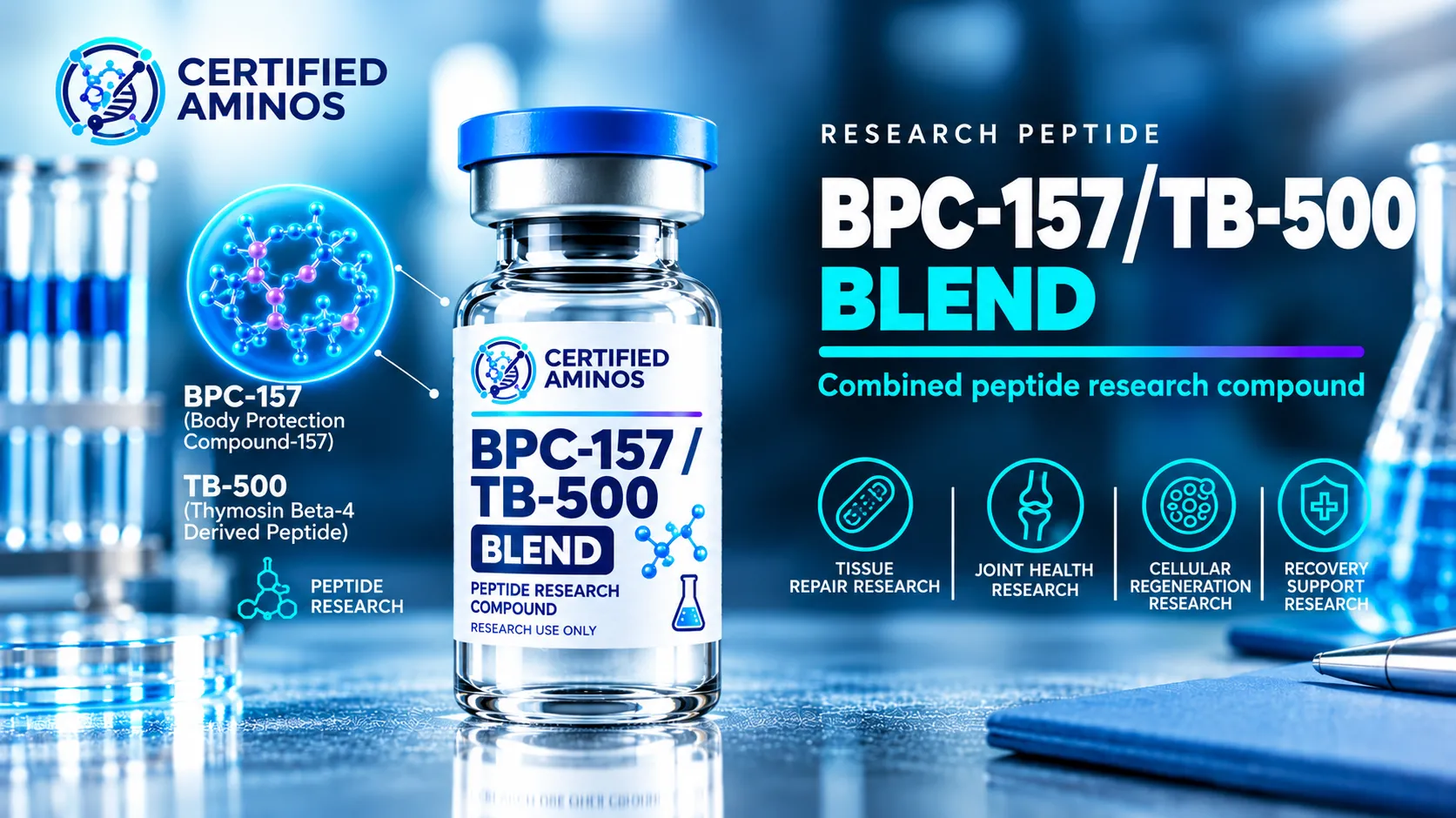
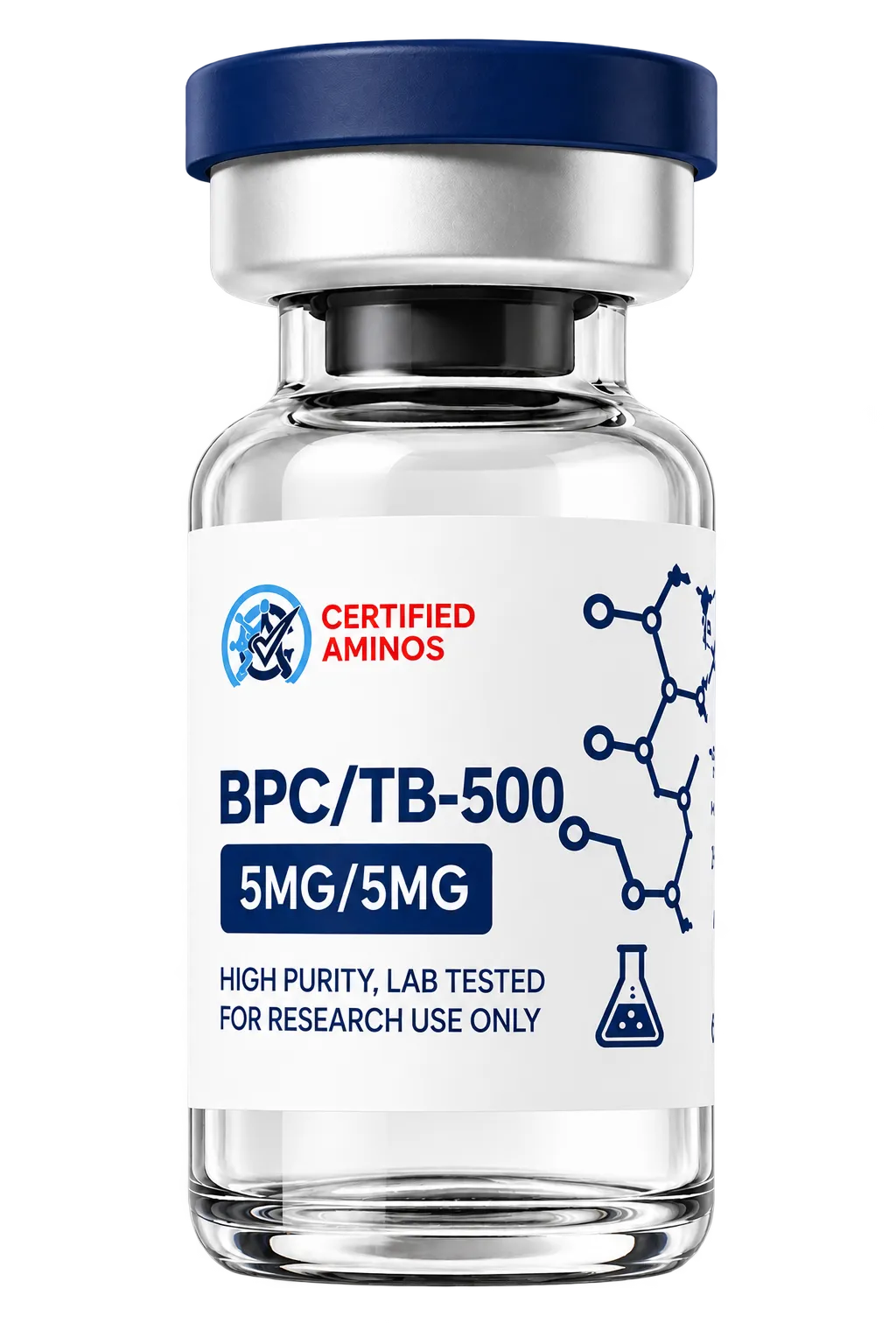
BPC-157 / TB-500 Blend
Highly purified synthetic peptide prepared for rigorous laboratory research.
$109.00
RESEARCH PEPTIDE
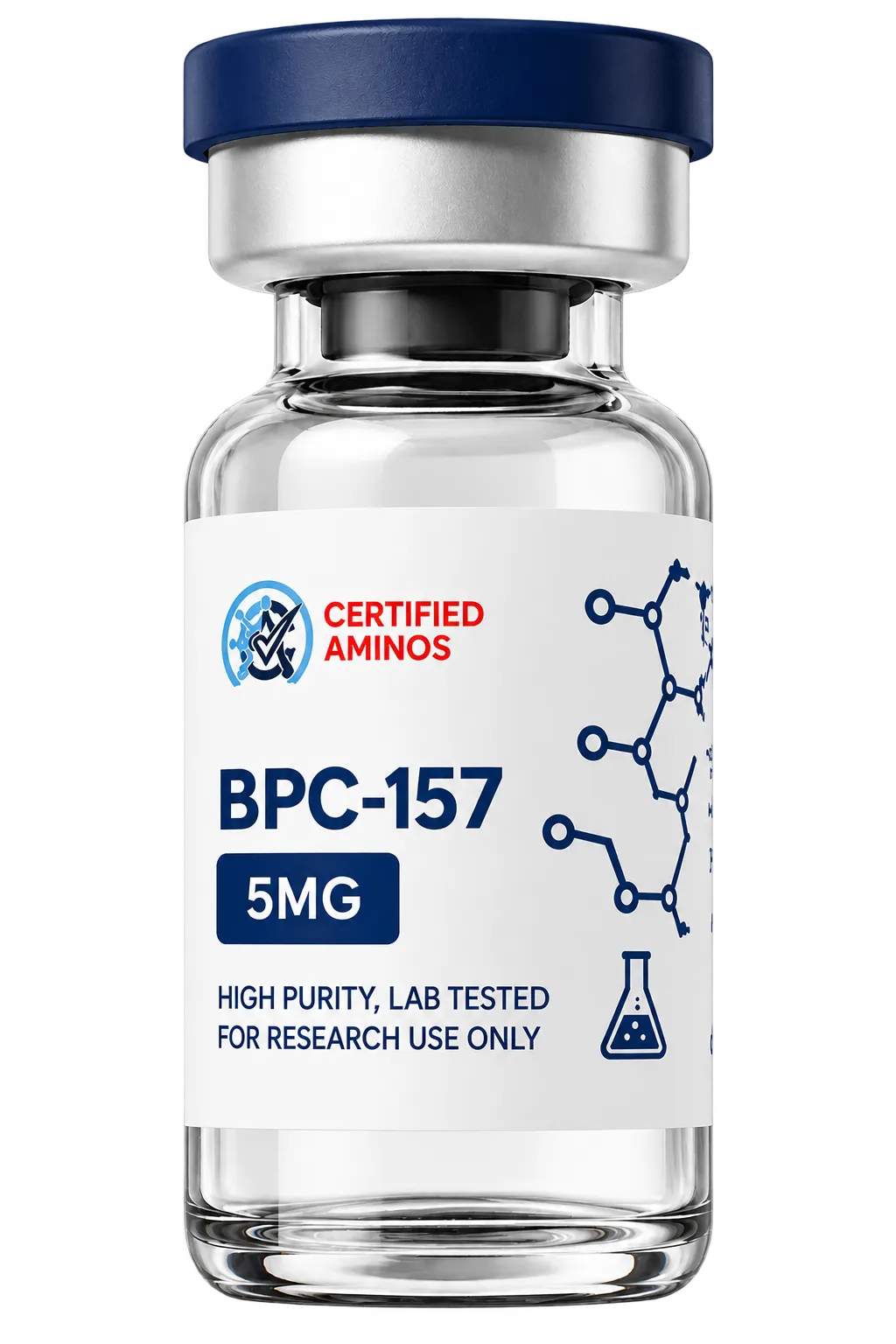
BPC-157
Highly purified synthetic peptide prepared for rigorous laboratory research.
$55.00
RESEARCH PEPTIDE
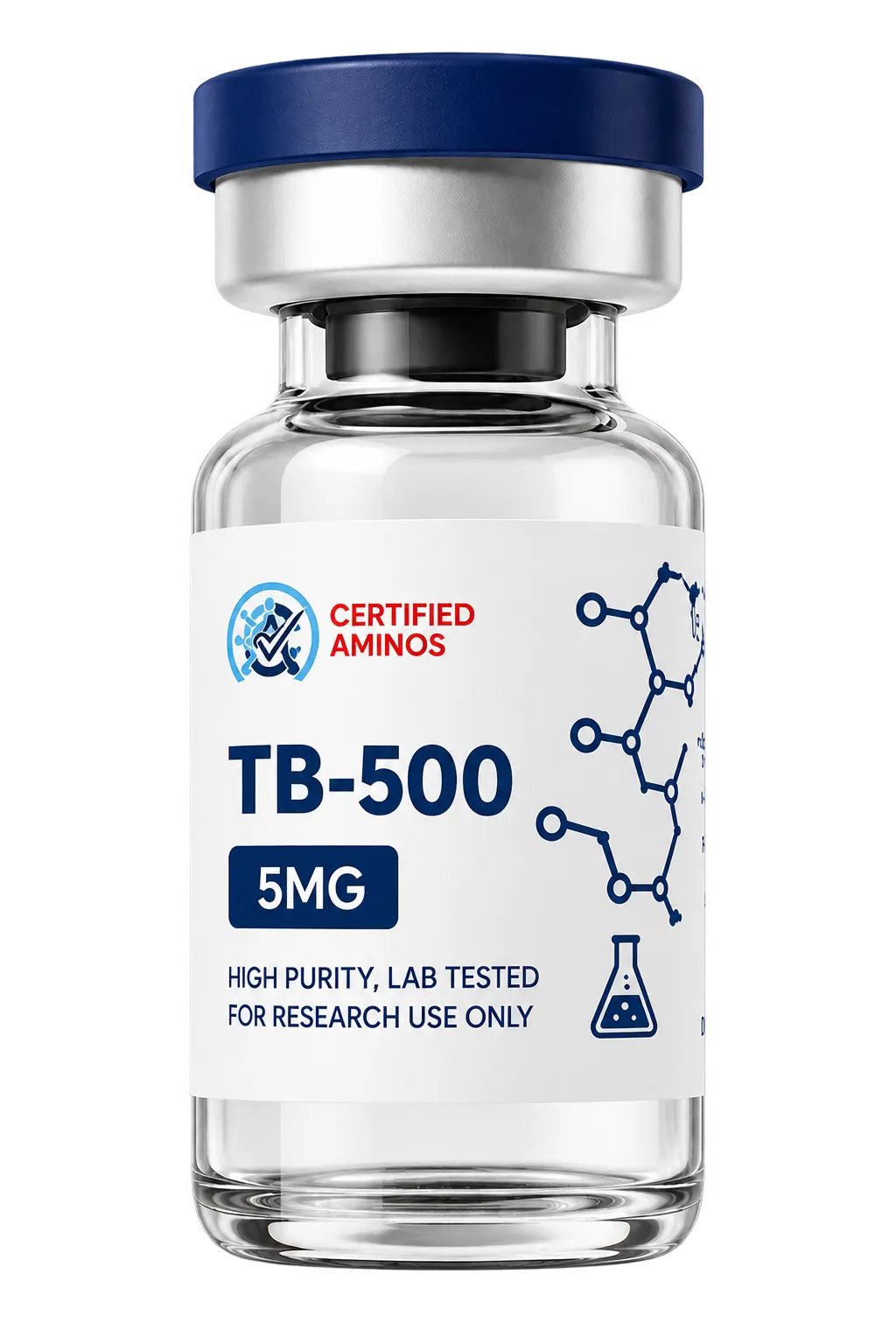
TB-500
Highly purified synthetic peptide prepared for rigorous laboratory research.
$65.00
BPC-157 is a synthetic pentadecapeptide studied mostly in animal tissue-repair models. TB-500 is a research-market name tied to a synthetic analog related to thymosin beta-4 —a different starting molecule, studied far less directly. Conflating the two, or assuming evidence for one covers the other, isn't supported by the literature.
What follows grades the evidence for each compound separately, answers the one question that actually matters for a "blend" product —is there direct evidence for the combination —and covers current FDA regulatory status, safety data, and why this page won't hand you a dosing protocol.
What Are BPC-157 and TB-500?
BPC-157 is a synthetic 15-amino-acid peptide derived from a fragment of a human gastric protein, studied in preclinical models of tissue repair. TB-500 is a name used in the research-peptide market for a synthetic compound related to thymosin beta-4 (Tβ4), a naturally occurring protein involved in cell migration and tissue regeneration. They come from different biological starting points, work through different proposed mechanisms, and carry evidence bases of very different size. They are not interchangeable, and this guide treats them as the two separate compounds they are.
What Is BPC-157?
Evidence level: extensive animal/preclinical; human evidence limited to three small pilot studies; no human RCT.
BPC-157 was first investigated for effects on the gastrointestinal lining before becoming a frequent subject of musculoskeletal research. A 2026 review in the International Journal of Molecular Sciences describes preclinical work on angiogenesis, collagen synthesis, fibroblast activity, and nitric oxide pathway modulation, with effects reported across muscle, tendon, ligament, bone, and gastrointestinal tissue in animal models (Yuan et al., 2026).
A 2025 scoping review in Current Reviews in Musculoskeletal Medicine describes BPC-157 as activating VEGFR2 and the Akt-eNOS axis, particularly in poorly vascularized tissue like tendons, but identifies only three human pilot studies to date —intra-articular use for knee pain, interstitial cystitis, and intravenous safety —and concludes human data remain “extremely limited,” recommending BPC-157 be treated as investigational until controlled trials exist (McGuire et al., 2025).
A 2025 systematic review in the HSS Journal screened 544 articles and included 36 —35 preclinical, 1 clinical —finding no published human safety data beyond a single retrospective report (Vasireddi et al., 2025).
What Is TB-500?
Evidence level: terminology is inconsistent across the market; direct TB-500 data is one exploratory rat study; full-length thymosin beta-4 has a separate, more developed clinical record that does not transfer automatically.
This is where precision matters most. “TB-500” is generally used in the research-compound market for a synthetic version or fragment of thymosin beta-4, often described as covering Tβ4's actin-binding region. But usage isn't standardized —even recent peer-reviewed work blurs the line. A 2026 rat-model study in the Journal of Joint Diseases and Related Surgery labels its TB-500 treatment arm simply “synthetic thymosin beta-4,” using the two terms almost interchangeably within the same paper.
Full-length, endogenous thymosin beta-4 has its own separate and more developed research history, including human clinical trials for dermal wound healing. That evidence belongs to Tβ4, not automatically to “TB-500” as sold in the research market, where sequence coverage, formulation, and purity aren't standardized or independently guaranteed across every source. Borrowing Tβ4's clinical track record to describe TB-500 is a common shortcut online —and not one the evidence supports. (Biçer et al., 2026)
Why Are BPC-157 and TB-500 Often Discussed Together?
Partly because both are pitched toward the same research niche —tissue repair and recovery —and partly because they're sold next to each other and discussed in the same forums, often under the nickname “Wolverine stack.” That name is shorthand in search behavior and marketing copy, not in science. It isn't an official classification, an FDA-recognized protocol, or a clinically validated combination. It describes how two products get talked about, not evidence that combining them does anything beyond what each compound does on its own. Popularity is not proof, and this page treats it that way throughout.
What Does BPC-157 Research Actually Show?
Organizing the evidence by type keeps expectations calibrated:
Cellular/in-vitro: mechanistic work on angiogenic signaling (notably VEGFR2) and fibroblast behavior —findings about pathways, not outcomes.
Animal/preclinical: the bulk of the evidence. Rodent models report improved structural and biomechanical outcomes in muscle, tendon, ligament, and bone injury models, plus gastrointestinal protection effects.
Human: limited to the three small pilot studies referenced above. None were randomized, placebo-controlled trials, and none support a claim of proven clinical benefit.
What Does TB-500 Research Actually Show?
Direct TB-500 evidence is thin. The clearest example is the 2026 rat Achilles-tendon study mentioned above, which assigned 32 rats to control, BPC-157, TB-500, and combined groups following tendon transection and repair. The TB-500-alone group showed a statistically significant improvement in maximum load to failure at four weeks versus control (p < 0.05), plus improved histopathological scores (Biçer et al., 2026). That's a real, specific, citable finding —but it's one exploratory rodent study, not replicated, and not in humans. Beyond it, no direct human studies of TB-500 were identified. “Benefits” claims circulating online typically lean on full-length Tβ4 research instead, which isn't the same evidence.
BPC-157 and TB-500 Benefits: What Is Actually Supported?
Using evidence-appropriate language rather than blanket claims:
BPC-157 has been investigated for effects on tendon, ligament, muscle, and gastrointestinal tissue repair in animal models, with angiogenesis and anti-inflammatory signaling proposed as underlying mechanisms.
TB-500 preclinical research suggests a possible biomechanical tendon-healing benefit, based on one rat study.
Both: human evidence remains limited —a handful of small pilot studies for BPC-157, essentially none directly for TB-500. No research supports either compound as a proven treatment for any human condition.
BPC-157 / TB-500 Blend: Is There Evidence for the Combination?
This is the question most searches are actually asking, and it deserves a direct answer: evidence that BPC-157 and TB-500 each show preclinical activity individually does not establish that combining them produces something better.
Only one study identified in current literature tests the two compounds together directly —the same 2026 rat Achilles-tendon model. Its result runs counter to “stack” marketing: the combined BPC-157 + TB-500 group “did not confer additional benefits compared to either agent alone,” with the authors suggesting this may reflect the two peptides converging on overlapping downstream pathways rather than adding distinct effects (Biçer et al., 2026).
In the one direct test available, combining the two didn't outperform TB-500 alone. No human study has evaluated the combination at all. Terms like “synergistic,” “doubles recovery,” or “ultimate healing stack” aren't supported by this evidence and shouldn't be read into a product simply because two individually-studied compounds share a vial.
BPC-157 and TB-500 Side Effects and Safety
Preclinical safety work on BPC-157 has generally not reported major adverse findings across tested organ systems. A small 2025 pilot study infused two adults with up to 20 mg of intravenous BPC-157 over two days and found no measurable changes in heart, liver, kidney, thyroid, or blood glucose biomarkers, with no reported side effects (Lee & Burgess, 2025). That's reassuring for exactly two people over three days, outside any randomized design —it cannot be generalized into a statement that BPC-157 is “safe” for broader human use. The HSS Journal systematic review agrees: no published human safety data exists beyond one retrospective report (Vasireddi et al., 2025).
TB-500's human safety profile is essentially undocumented in the literature reviewed here. Long-term effects of either compound, in any formulation, are unknown. Layered on top of the biological uncertainty is a quality-control variable: research peptides sold outside pharmaceutical manufacturing and distribution channels carry real variability in sourcing, synthesis, and handling —a separate risk from whatever the molecule itself might do.
BPC-157 / TB-500 Dosage: Is There a Standard Protocol?
No. There is no FDA-reviewed, clinically validated human dosing protocol for BPC-157, for TB-500, or for the two combined —and this page won't manufacture one.
Animal studies use body-weight-based microgram dosing delivered by specific routes (the 2026 rat study used intraperitoneal injection, not a format intended for human use) that cannot be mathematically converted into a human dose. Formulations vary —a spray, an injectable vial, and a reconstituted solution are not equivalent delivery methods, and research hasn't established how any of them behave in people. Forum-sourced “cycles” reflect user-reported habits, not data from a reviewed study. For these reasons, this page intentionally gives no milligram amount, injection schedule, reconstitution instruction, or cycle length for human use.
What Does Current Human Research Tell Us?
For BPC-157, three small pilot studies make up the entire known human evidence base: a retrospective look at intra-articular injection for chronic knee pain (partial relief reported in a subset of patients), a study in interstitial cystitis, and the two-person intravenous safety pilot described above. Each measured exactly what it set out to —tolerability, and in one case a retrospective pain-relief signal —and none establishes efficacy for any condition.
For TB-500, no direct human research was identified. This is a meaningful gap, not a technicality: discussions that cite “studies” on TB-500's human effects are, as far as this research could verify, drawing on thymosin beta-4's separate clinical history rather than on TB-500 itself.
Current FDA and Regulatory Status
FDA's Pharmacy Compounding Advisory Committee (PCAC) met July 23–24, 2026, to evaluate candidate bulk drug substances for the 503A Bulks List —the list determining which substances compounding pharmacies may legally use. BPC-157, TB-500, KPV, and MOTS-c (each in free base and acetate forms) were reviewed July 23; Semax, Epitalon, and Emideltide followed July 24. The committee voted to recommend six of the seven substances, including both BPC-157 and TB-500; Emideltide was not recommended.
That recommendation is exactly that: a recommendation. It is not FDA approval, not a finalized rule, and does not currently permit retail sale, prescribing, or compounding of BPC-157 or TB-500 for human treatment. HHS and FDA still have to act on the committee's advice through formal rulemaking, which had not been finalized as of this writing. Neither BPC-157 nor TB-500 is an FDA-approved drug.
How Researchers Evaluate BPC-157 / TB-500 Quality
Separate from the biological-evidence question is a practical one: how do you know what's actually in a vial? Researchers typically look for a few specific markers: HPLC testing of raw material before compounding; independent third-party testing of finished batches (ideally HPLC plus mass spectrometry) confirming molecular weight and purity against a stated threshold; and batch or lot identification tying a specific Certificate of Analysis (COA) to the specific product in hand, not the product line generally.
Worth being precise about what this does and doesn't tell you. A purity figure or HPLC result describes analytical quality —what's in the vial and how concentrated it is. It says nothing about whether that substance is safe or effective for any particular use in a living organism. Conflating those two questions is a common shortcut in peptide marketing this page avoids.
Certified Aminos BPC-157 / TB-500 Research Compound
Certified Aminos offers a BPC-157 / TB-500 Blend as a combined-vial research formulation, available in 5mg/5mg and 10mg/10mg strengths at $129. The brand describes the product as ≥99% pure by HPLC testing, with raw materials and finished batches checked through the third-party process outlined above. For researchers who'd rather work with each peptide individually, standalone BPC-157 and TB-500 vials are also available, alongside dedicated guides covering BPC-157 research and TB-500 research specifically.
Transparency note: Certified Aminos' Certificates of Analysis page describes the lab-testing process in detail but states that batch-specific COAs for the current catalogue are still being added. Researchers who need a COA for a specific batch should check that page directly or contact the company rather than assume one is posted. As with every product discussed here, the BPC-157 / TB-500 Blend is sold strictly for laboratory research use —not for human consumption —and nothing on this page or the product page is a medical claim.
Limited direct cellular data; usually studied via full-length Tβ4 instead
Mechanistic findings, not outcomes
Animal / preclinical
Extensive — tendon, muscle, ligament, bone, GI models
One 2026 rat Achilles-tendon study; significant biomechanical result at 4 weeks
Experimental models, not human-ready conclusions
Human observational
None identified beyond the pilot studies below
None identified
No association data available
Human intervention
3 small pilot studies (knee pain, interstitial cystitis, IV safety, n=2)
None identified
Preliminary only; not controlled trials
Exact BPC-157 + TB-500 combination
Tested once (rat model); no added benefit over TB-500 alone
Same study
Do not infer synergy from this evidence
For research use only. Not for human or veterinary use.
Got Questions?
Frequently Asked Questions
They're two different research peptides frequently discussed together. BPC-157 is a synthetic pentadecapeptide studied in preclinical tissue-repair models; TB-500 is a research-market name tied to a synthetic analog related to thymosin beta-4. They are not the same molecule and aren't interchangeable.