A 2025 Phase 3 trial of 1,106 sepsis patients found no mortality benefit from Thymosin Alpha-1, overturning earlier signals. What the evidence actually shows.
No FDA-approved drug product containing Thymosin Alpha-1 exists in the United States.
The largest trial to date — a 2025 Phase 3 RCT of 1,106 sepsis patients — found no significant mortality benefit, overturning the signal from smaller, earlier trials and meta-analyses.
Thymosin Alpha-1 is not interchangeable with Thymosin Beta-4, TB-500, Thymalin, or Thymulin — five different names that frequently appear together in the same searches.
"Thymosin alpha 1 peptide" and "thymosin alpha 1 benefits" are two of the highest-volume search terms in the supplied keyword data, but the newest and largest piece of evidence on this compound is a null result: a 1,106-patient Phase 3 trial published in January 2025 found no significant mortality benefit in sepsis. That gap between search interest and what the newest trial actually shows is exactly why this page exists.
Featured In This Article
RESEARCH PEPTIDE
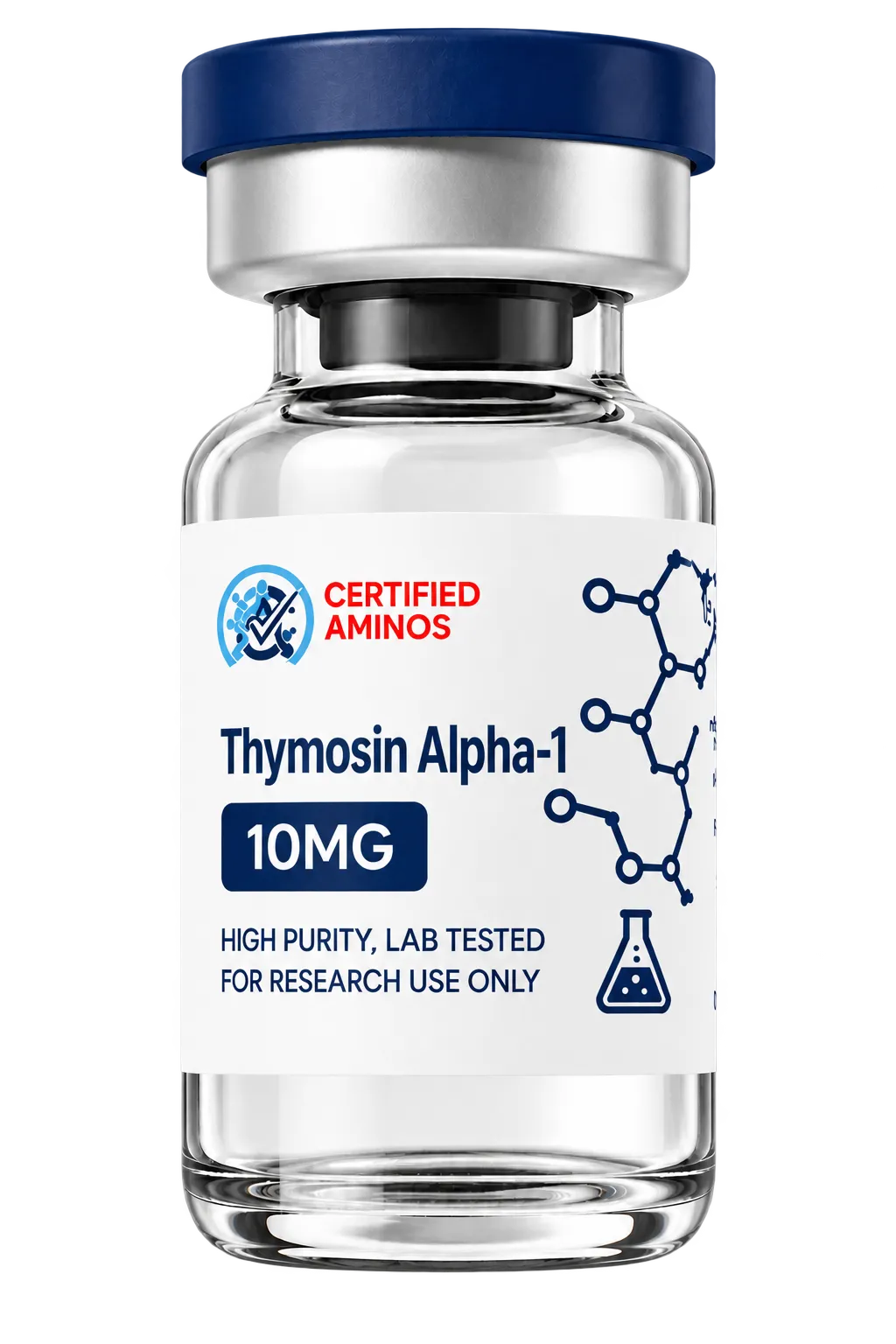
Thymosin Alpha-1
Highly purified synthetic peptide prepared for rigorous laboratory research.
$89.00
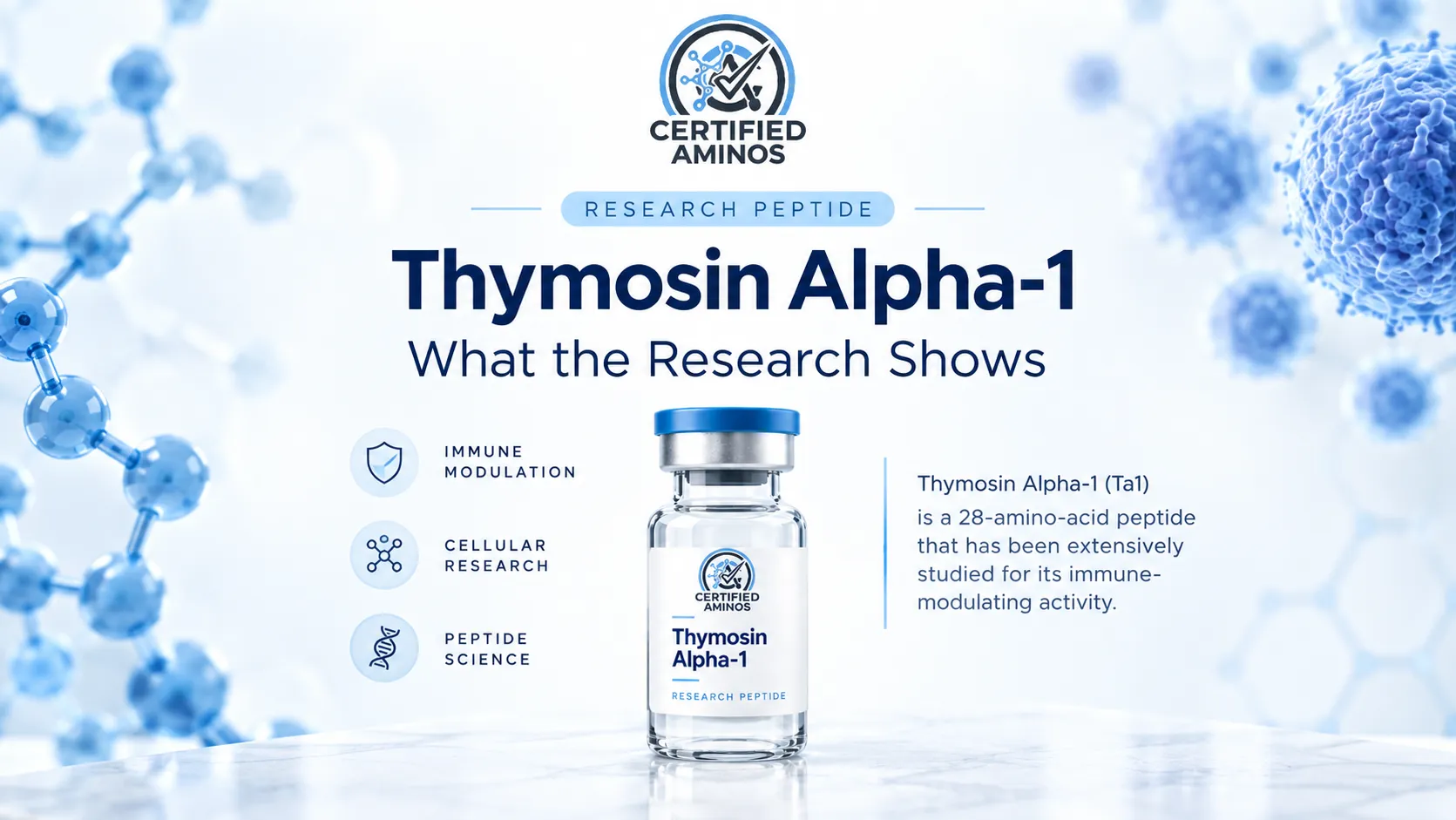
Thymosin Alpha-1 (Tα1), pharmaceutical name thymalfasin, is a 28-amino-acid peptide studied for its influence on immune-system signaling — dendritic cell maturation, Toll-like receptor pathways, and T-cell function. It is marketed internationally under the brand Zadaxin, but no FDA-approved drug product containing it exists in the United States.
What follows is an evidence-graded look at what Thymosin Alpha-1 actually is, what each tier of research shows (and where the newest, largest trial overturned the older signal), its current U.S. and international regulatory status, how it differs from Thymosin Beta-4, TB-500, Thymalin and Thymulin, and how to read a Certificate of Analysis for a research-grade product. This page does not cover human dosing.
What Thymosin Alpha-1 Actually Is
Thymosin Alpha-1 was first isolated from thymus tissue and characterized by Allan Goldstein in 1977. It belongs to a broader thymosin family of peptides, but "thymosin" is not one molecule — it is an umbrella term covering several structurally distinct compounds, which is the single biggest source of confusion in search results and vendor marketing around this peptide.
Tα1 is not the same compound as Thymosin Beta-4, TB-500, Thymalin, or Thymulin, even though all five names appear together in the same keyword searches. Each has a separate structure, mechanism, and research history — covered in the comparison table later on this page.
How It's Thought to Work
Dendritic cell maturation, Toll-like receptor signaling, and T-cell activation are the three mechanisms most consistently described in the cellular and animal literature on Tα1. A large share of its historical research, dating to the 1970s, focused specifically on T-lymphocyte maturation and function (Garaci, 2007).
These are documented biological mechanisms, not guarantees of a clinical outcome. The gap between "affects immune signaling in a dish" and "improves a health outcome in a person" is exactly where this compound's evidence base runs thin — and where the newest, largest trial landed a clear answer.
What the Evidence Actually Shows, by Tier
Rather than describing the research vaguely, here is a structured summary of where the evidence stands at each tier, as of October 2026.
Evidence tier
Study
Key finding
Limitation
Mechanistic / cellular
Multiple, reviewed in Garaci 2007
Tα1 promotes dendritic cell maturation and MHC/TLR expression
In-vitro findings do not establish a clinical effect
Small human / observational
Carraro et al., 2011 (Vaccine)
Added to an H1N1 vaccine in hemodialysis patients, associated with a stronger antibody response
Small pilot, single population, not broadly replicated
Multicenter RCT (early)
ETASS, Wu et al. 2013 (Critical Care), n=361
28-day mortality 26.0% (Tα1) vs 35.0% (control); significant only by log-rank test (P=0.049), not the primary analysis (P=0.062)
Single-blind; borderline primary result
Meta-analyses
Liu et al. 2016 (BMC Infect Dis, 19 RCTs); Gu et al. 2025 (Front Cell Infect Microbiol, 11 RCTs)
Pooled analyses found an association with reduced sepsis mortality across all included trials
Benefit weakened or disappeared in high-quality, multicenter subgroups in both reviews
Phase 3 RCT (largest to date)
TESTS, Wu et al. 2025 (The BMJ), n=1,106
No significant reduction in 28-day mortality: 23.4% (Tα1) vs 24.1% (placebo), HR 0.99, P=0.93
The trial's own conclusion: “no clear evidence” of a mortality benefit
TESTS (2025) (Evidence level: Phase 3, double-blind, placebo-controlled RCT — the largest and most rigorous Tα1 trial to date)
TESTS (The Efficacy and Safety of Thymosin α1 for Sepsis) ran across 22 centres in China between 2016 and 2020 and enrolled 1,106 adults. It is the trial the earlier, smaller signal was supposed to confirm at scale — and it did not. Its own stated conclusion: the trial “found no clear evidence to suggest that thymosin α1 decreases 28-day all-cause mortality in adults with sepsis.”
The 2016 and 2025 meta-analyses (Evidence level: systematic review / meta-analysis of RCTs; promising pooled signal, not confirmed at the highest-quality tier)
Both reviews found an association between Tα1 and lower sepsis mortality when all included trials were pooled, but both also reported that the association weakened or disappeared once the analysis was restricted to the largest, highest-quality, multicenter trials — exactly the subgroup TESTS belongs to. Read together, the pattern is consistent: smaller and earlier trials showed a signal; the single largest trial built to test it did not confirm it.
Beyond sepsis, Tα1 has also been studied — with more limited and less consistent evidence — in chronic hepatitis B and C, certain cancers alongside chemotherapy, and vaccine-response support. None of these rise to an FDA-recognized treatment indication in the United States. The evidence does not support describing Thymosin Alpha-1 as a general “immune booster,” a cure or preventive for infection as a category, or a cancer treatment.
Thymosin Alpha-1 Side Effects and Safety
Clinical trial data — including TESTS, the largest trial — found no statistically significant difference in secondary or safety outcomes between the Tα1 and placebo groups, and the trial literature generally describes it as well tolerated within supervised hospital settings. That characterization comes from a specific set of hospital-based, supervised trials; it is not a general safety guarantee for unsupervised research-product use.
Three distinctions matter here. International marketed use (Zadaxin, outside the U.S.) carries its own pharmaceutical-grade safety data, tied to that specific manufactured product. U.S. regulatory status is separate: no FDA-approved drug product containing Thymosin Alpha-1 exists, so there is no FDA-reviewed U.S. safety profile. Research-product risk is separate again — the FDA's own 2024 review of compounded Tα1 flagged immunogenicity tied to peptide impurities or aggregation as a specific concern, independent of whatever safety data exists for a differently manufactured product abroad.
No human dosing, administration, or self-use guidance is provided on this page.
Is Thymosin Alpha-1 FDA Approved?
No FDA-approved drug product containing Thymosin Alpha-1 has been identified in current FDA approval databases. The clearest recent evidence of FDA's position comes from a December 2024 Pharmacy Compounding Advisory Committee (PCAC) review: Tα1 (free-base and acetate) was nominated for the 503A Bulks List, the nomination was withdrawn, and FDA's own four-factor evaluation — characterization, historical use, safety, and effectiveness — weighed against adding it, citing incomplete impurity/aggregation/endotoxin data, immunogenicity concerns, and insufficient effectiveness evidence across all twelve reviewed uses.
Some FDA National Drug Code (NDC) listings exist for bulk Thymosin Alpha-1 acetate powder, categorized as a “Bulk Ingredient” with no NDA, ANDA, or BLA number — an NDC listing is not FDA approval. Thymosin Alpha-1 should not be described as “illegal” or “FDA banned”; neither is supported by the current record. The accurate statement: no FDA-approved drug product containing Thymosin Alpha-1 currently exists in the U.S., and FDA's 2024 compounding review found the effectiveness and safety evidence insufficient for that regulatory pathway.
What Is Zadaxin?
Zadaxin is the international brand name for thymalfasin (Thymosin Alpha-1), marketed by SciClone Pharmaceuticals in more than 30 countries — predominantly China, plus markets across the Pacific Rim, Latin America, Eastern Europe, and the Middle East — chiefly for chronic hepatitis B. That approval record does not extend to the United States: Zadaxin has not been shown to hold FDA approval, though thymalfasin holds U.S. orphan drug designations for specific rare-disease indications, which is a development incentive, not marketing approval.
Thymosin Alpha-1 Dosage: Why Research Context Matters
This page does not provide a human dose, injection frequency, cycle length, or reconstitution instructions. Published trials varied by route (subcutaneous or intravenous, medically supervised), frequency (once- versus twice-daily, which affected outcomes differently across trial subgroups), patient population (sepsis, hemodialysis, chemotherapy, chronic hepatitis patients were all studied separately), and study objective. Research parameters from a supervised clinical trial are not a self-administration protocol.
Thymosin Alpha-1 vs Thymosin Beta-4, TB-500, Thymalin, and Thymulin
All five names turn up in the same peptide searches. None of them are interchangeable.
Property
Thymosin Alpha-1
Thymosin Beta-4
TB-500
Thymulin / Thymalin
What it is
28-amino-acid thymic peptide (thymalfasin)
43-amino-acid actin-regulating protein
Synthetic fragment derived from the Thymosin Beta-4 sequence
Tissue-repair research, same category as Thymosin Beta-4
Immune and neuroendocrine interactions (Thymulin); Russian thymic-extract research history (Thymalin)
Strongest human evidence
Phase 3 RCT in sepsis (TESTS, 2025) — null result
Separate clinical research track from Tα1
Thin direct human data for the commercial fragment itself
Limited, not extensively published in indexed Western clinical literature
Evidence for one of these compounds does not transfer to another. This page does not treat them as a “stack” or recommend combining research compounds.
What “Research Use Only” Means for Thymosin Alpha-1
RUO labeling reflects a seller's stated intended research use — it is not an FDA determination, not proof of efficacy, not a safety review, and not permission for self-administration. FDA's specialized “research use only” language originates largely from in-vitro diagnostic product rules and is not a universal legal definition that automatically applies the same way to every peptide sold under that label; the practical meaning depends on the specific seller's own wording.
How to Read a Thymosin Alpha-1 Certificate of Analysis
Four checks for any Thymosin Alpha-1 COA:
1. The lot number matches the vial. A generic certificate that doesn't name your batch is not documentation for your product.
2. Identity and purity are reported separately. Identity (mass spectrometry) confirms what's there is what's claimed. Purity (HPLC) confirms unwanted material is below threshold under the stated method. They answer different questions.
3. A purity number is not a safety or efficacy claim. A 99% HPLC result reports purity under that method. It does not establish clinical safety, efficacy, or FDA approval.
4. The named testing lab must be verifiable. A COA is only as credible as the lab that produced it; an unverifiable lab name makes the certificate unverifiable too.
Certified Aminos Thymosin Alpha-1 Research Compound
Certified Aminos lists Thymosin Alpha-1 in its Healing & Recovery category, described on the current product page as “a thymic peptide studied for its immunomodulatory activity, particularly its influence on T-cell function.” The listing states third-party, independent HPLC-based purity testing at ≥99%, with Certificate of Analysis documentation referenced for batch traceability.
Strength, formulation, and current availability should be confirmed on the live product page before purchase — nothing here should be read as a claim of FDA approval, clinical proof, or efficacy for any condition.
Three Things Worth Holding Onto
Thymosin Alpha-1 and Zadaxin are the same molecule under different names, and neither holds FDA approval in the United States. The strongest human evidence — a 1,106-patient Phase 3 trial — found no significant mortality benefit in sepsis, even though smaller, earlier trials and meta-analyses had reported a pooled signal. And it is not the same compound as Thymosin Beta-4, TB-500, Thymalin, or Thymulin, whatever a search result or vendor listing implies.
For research use only. Not for human or veterinary use.
Got Questions?
Frequently Asked Questions
Thymosin Alpha-1 (Tα1), also called thymalfasin, is a synthetic peptide studied for its role in immune-system signaling, including effects on dendritic cells and T-cell activity. It is researched in preclinical, human, and clinical-trial settings, with evidence and regulatory status varying by use and country.