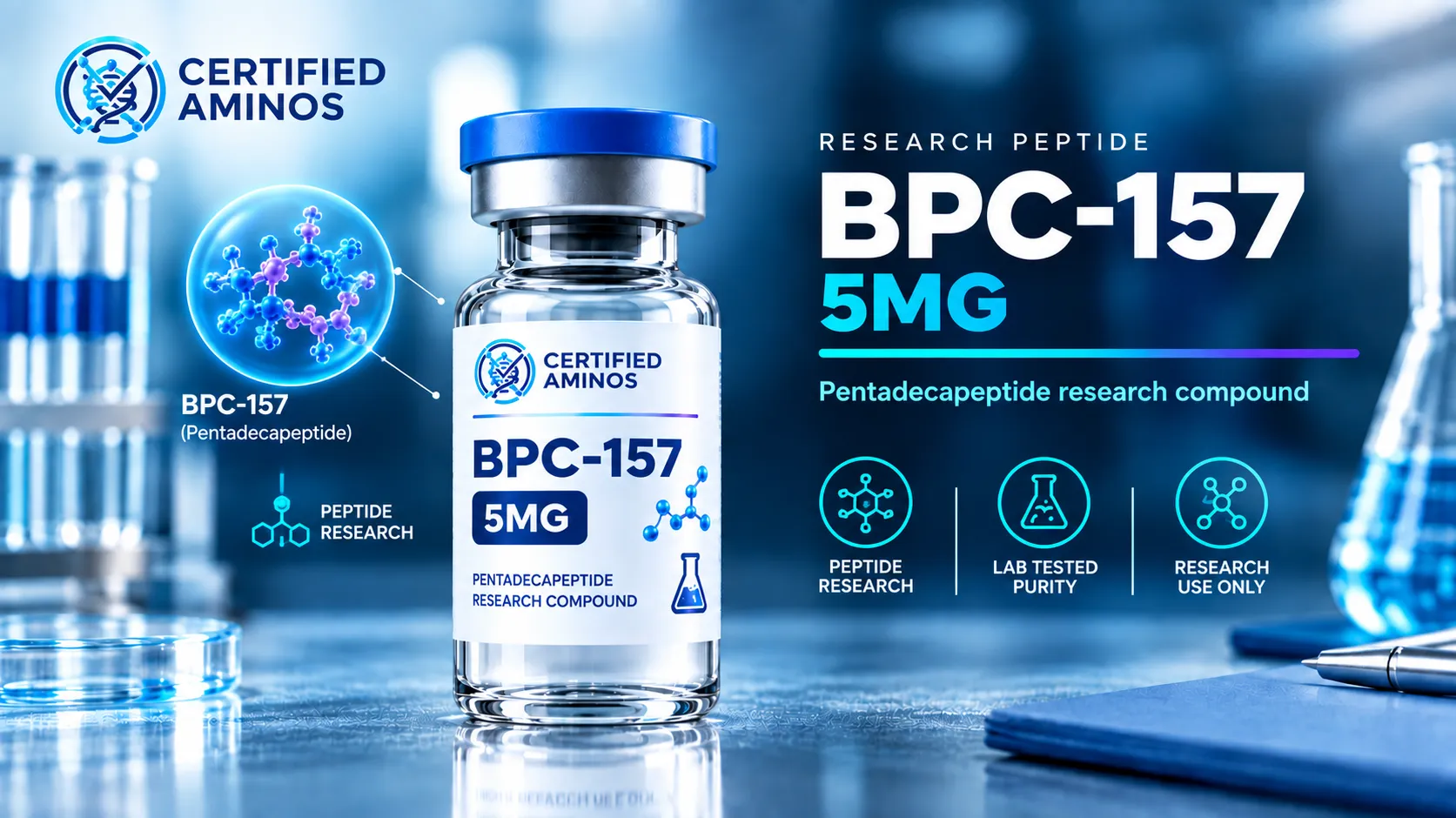
BPC-157 is a synthetic pentadecapeptide — a chain of 15 amino acids — modeled on a partial sequence identified in human gastric juice. It has one of the larger preclinical research bodies of any compound sold under Research Use Only (RUO) terms, and one of the thinner human evidence bases relative to how often it's discussed online and on forums.
This page doesn't cover dosing, injection, or administration — that's not what research literature is for, and it isn't what an RUO product is sold for.
What Is BPC-157?
BPC-157 ("Body Protection Compound-157") is a synthetic peptide, 15 amino acids long, derived from a partial sequence of a human gastric juice protein. Researchers have studied it since the 1990s, almost entirely in animal models, as a tool for investigating tissue-repair and protective signaling pathways. It is sold commercially as a research chemical — not as an approved drug, and not as a supplement intended for human use.
Is BPC-157 a Peptide?
Yes. BPC-157 is classified as a synthetic peptide, specifically a pentadecapeptide (a 15-amino-acid chain). That puts it in the same broad compound class as TB-500, GHK-Cu, and KPV — though each of those has its own separate research record, mechanism, and evidence level, which is why this page treats them separately rather than as interchangeable "peptide" benefits.
How Does BPC-157 Work?
The mechanisms proposed for BPC-157 are still largely hypothesis-level rather than settled science. Preclinical work has associated it with upregulation of growth-factor expression (including VEGF-related angiogenesis signaling), modulation of the nitric oxide system, and effects on cell migration in injury models. These are mechanistic hypotheses drawn from cell-culture and animal studies — they describe plausible biological pathways, not confirmed effects in human physiology.
What Is BPC-157 Being Studied For?
Across the preclinical literature, BPC-157 shows up most often as a research tool in the following areas — framed here as research topics, not established outcomes:
- Angiogenesis (new blood vessel formation) models
- Tendon and ligament healing models, predominantly in rodents
- Muscle-injury models
- Gastrointestinal injury and ulcer models — the original research context the compound was studied in
What Does Current BPC-157 Research Show?
Rather than describing the research vaguely, here's where the evidence actually stands, graded by type, as of this writing:
Evidence level: animal preclinical, extensive; human observational, thin; no human randomized controlled trial identified.
BPC-157 has one of the larger preclinical bodies of evidence of any synthetic peptide sold for research use. The human record is much thinner by comparison: a retrospective case series and a few small pilot reports exist, but no randomized controlled trial has demonstrated an effect for any indication in humans. Worth noting for context: BPC-157 has been reported on WADA's Prohibited List in recent years under S0 ("non-approved substances"); confirm this against the current-year WADA list before citing it, since prohibited lists are reissued annually and this hasn't been independently re-verified for this page.
BPC-157 and Tissue/Recovery Research
Most of the tissue-repair literature around BPC-157 comes from rodent models of tendon, ligament, and muscle injury, largely from research groups studying gastroprotective peptides more broadly. These studies describe biological activity in animals under controlled lab conditions — they do not establish a recovery benefit in humans, and no study has validated a specific human dose, route, or protocol.
BPC-157 and Gastrointestinal Research
BPC-157's original research context was gastric protection: early studies examined its activity in animal ulcer and gut-injury models, consistent with its origin as a fragment derived from a gastric juice protein. This remains one of the more established preclinical threads for the compound, but "established preclinical thread" still means animal-model evidence, not a human gastrointestinal treatment.
What Are the Limitations of BPC-157 Research?
The honest limitations, stated plainly:
- No human randomized controlled trial has been identified for any indication — verify this is still current before publication.
- Preclinical-to-human extrapolation is not established; animal-model results do not reliably predict human outcomes for peptides generally.
- The existing human data is observational and small-sample, not controlled.
- Commercial research material varies by supplier in purity, identity confirmation, and documentation — see the evaluation section below.
BPC-157 vs TB-500
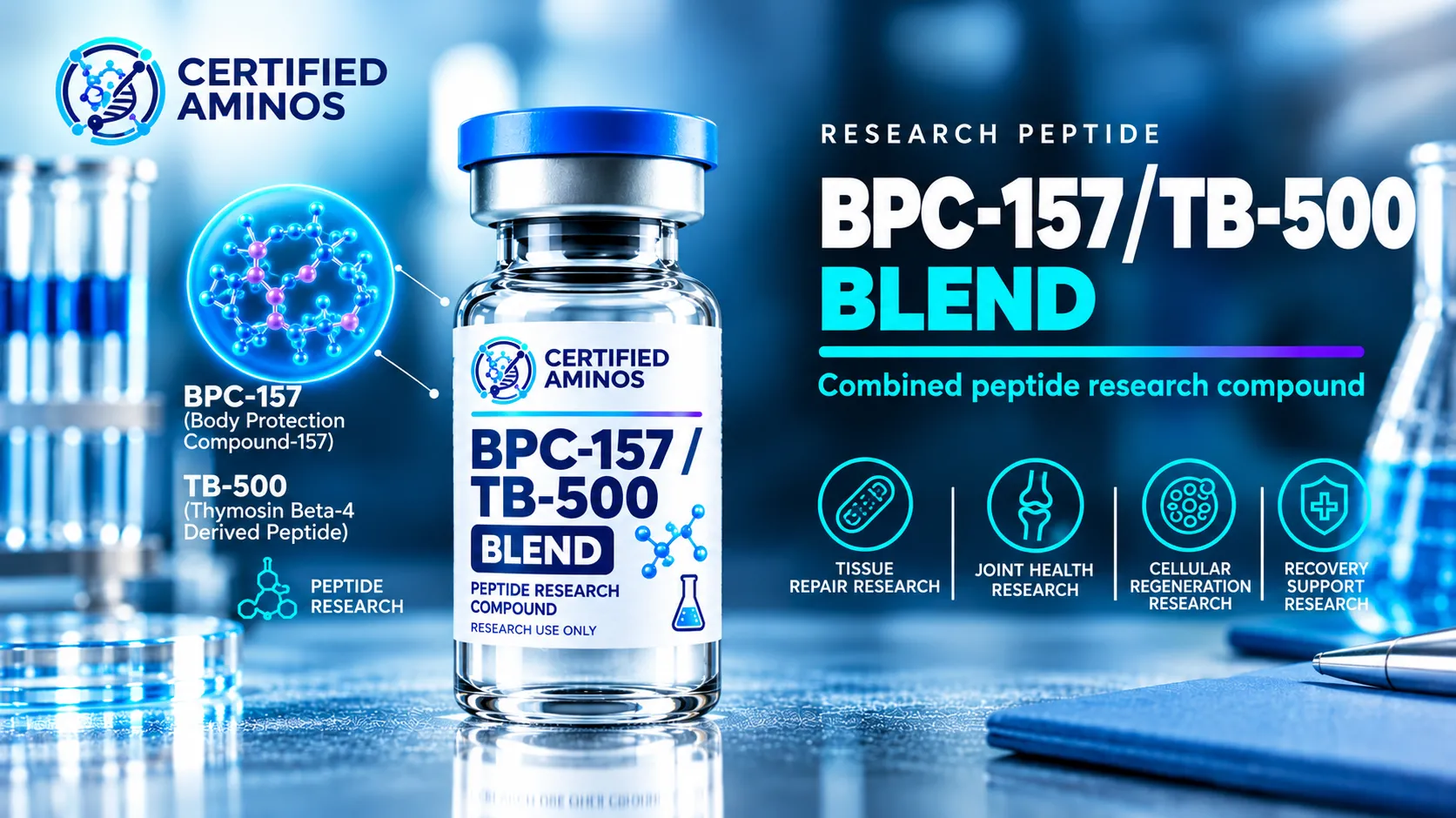
BPC-157 and TB-500 are frequently searched and sold together, but they are different molecules with different research records. Treating one compound's evidence as support for the other is a common error this page avoids.
The molecule issue with TB-500 is worth repeating: most commercial "TB-500" is the short fragment, not the full-length protein that carries the human clinical history. Citing full-length thymosin beta-4 trials to support the commercial fragment is citing a different molecule. BPC-157 also appears as one component in named multi-peptide stacks — including the Glow Blend and KLOW Blend — but each component being individually studied does not mean the blend itself has been tested as a combination. For the full breakdown of what is and isn't known about those formulations, see our Glow Blend research guide.
BPC-157 Spray / Nasal-Spray Research
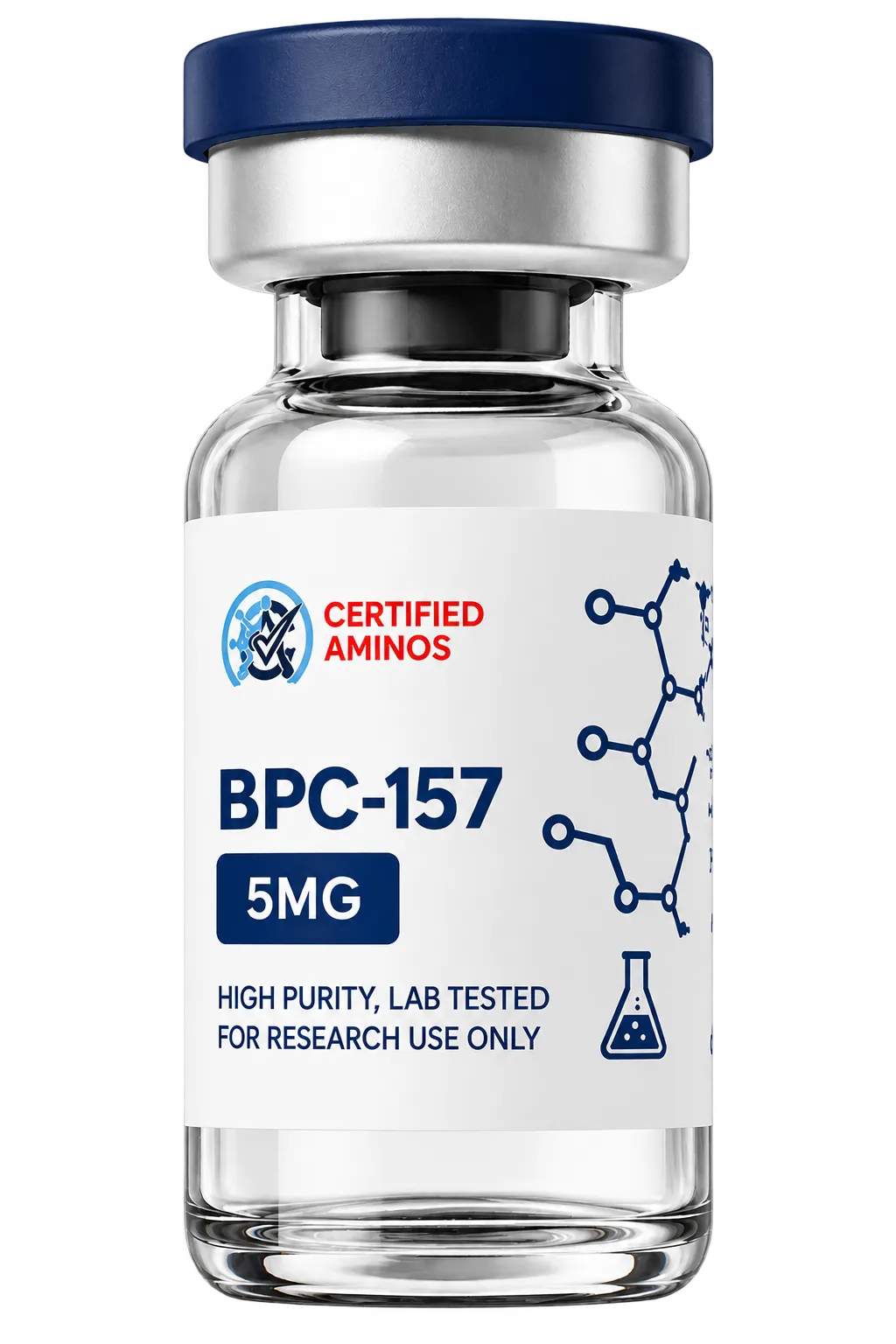
"BPC-157 nasal spray" is one of the highest-interest search terms connected to this compound — but no peer-reviewed study identified for this page establishes pharmacokinetics or effectiveness for BPC-157 delivered by nasal spray specifically. Search demand reflects what people are curious about, not what has been demonstrated in a lab. Certified Aminos offers BPC-157 as an injectable research compound (BPC-157, 5MG/10MG) and does not carry a nasal-spray formulation — that's worth saying plainly rather than implying otherwise.
Is BPC-157 FDA Approved?
Short answer: BPC-157 has no FDA drug approval. Separately, in 2023 the FDA's own expert panel (the Pharmacy Compounding Advisory Committee) reviewed it for a compounding-eligibility list — that's a different, more specific status than a flat "not approved," and it's the detail most other BPC-157 content leaves out.
That single fact gets blurred with two other, separate issues, and this page keeps all three distinct:
- FDA drug approval — BPC-157 has none.
- FDA Pharmacy Compounding Advisory Committee (PCAC) activity — the agency has, at points, reviewed bulk substances like BPC-157 for eligibility on compounding lists. A committee recommendation is advisory, not final agency action, and the current status should be confirmed directly against FDA.gov before publication rather than assumed from this brief.
- Research Use Only (RUO) labeling — a supplier's own classification of its product, not a regulatory approval of any kind.
None of these three is a substitute for the other two.
What Does Research Use Only (RUO) Mean?
Research Use Only means a product is sold for laboratory and research purposes, not for human consumption, diagnosis, treatment, or prevention of any condition. An RUO label says nothing about a compound's safety or effectiveness in people — it's a distribution classification, not a clinical judgment. See our RUO FAQ for how this applies across our catalog.
How Should Researchers Evaluate BPC-157 Research Material?
Whatever the source, research-grade peptide material is worth checking the same way every time:
- A certificate of analysis (COA) tied to the specific lot, not a generic specification sheet.
- Identity confirmation by mass spectrometry and purity assessment by HPLC — not just a purity percentage with no method stated.
- A printed lot number you can cross-reference against the supplier's current certificates.
- Documented storage conditions — lyophilized peptides are typically light-protected and require cold-chain handling.
- A supplier willing to answer direct questions about testing and sourcing.
See the current BPC-157 product page for lot-specific documentation.
BPC-157 is a Research Use Only (RUO) compound. It is not approved by the FDA for any human or animal use, and nothing in this article should be interpreted as medical advice, a treatment recommendation, or a guarantee of any outcome. This article is intended solely to summarize published scientific research for qualified researchers and laboratory professionals. Products sold by Certified Aminos are intended strictly for laboratory and scientific research and are not for human or animal consumption.