Tirzepatide: Why It's Classified as a Peptide, Not a Drug
Metabolic researchOctober 6, 20268 min read
Tirzepatide hits two receptors at once — GIP and GLP-1. Mounjaro and Zepbound are its FDA-approved forms; here's how it stacks up against semaglutide and retatrutide.
Tirzepatide is a synthetic peptide and a genuine dual GIP/GLP-1 receptor agonist — a structural fact, not a marketing claim.
The SURPASS and SURMOUNT trials are real human-clinical evidence, but they tested the regulated pharmaceutical product under medical supervision, not a research-use-only compound.
"Tirzepatide" covers three legally and practically distinct categories — FDA-approved branded drug, pharmacy-compounded product, and RUO research compound — and conflating them is the single most common source of confusion about this molecule.
Most of what's written about tirzepatide treats it purely as a brand-name weight-loss drug — not as the engineered dual-receptor peptide it actually is. That gap is what this page is for.
Featured In This Article
RESEARCH PEPTIDE
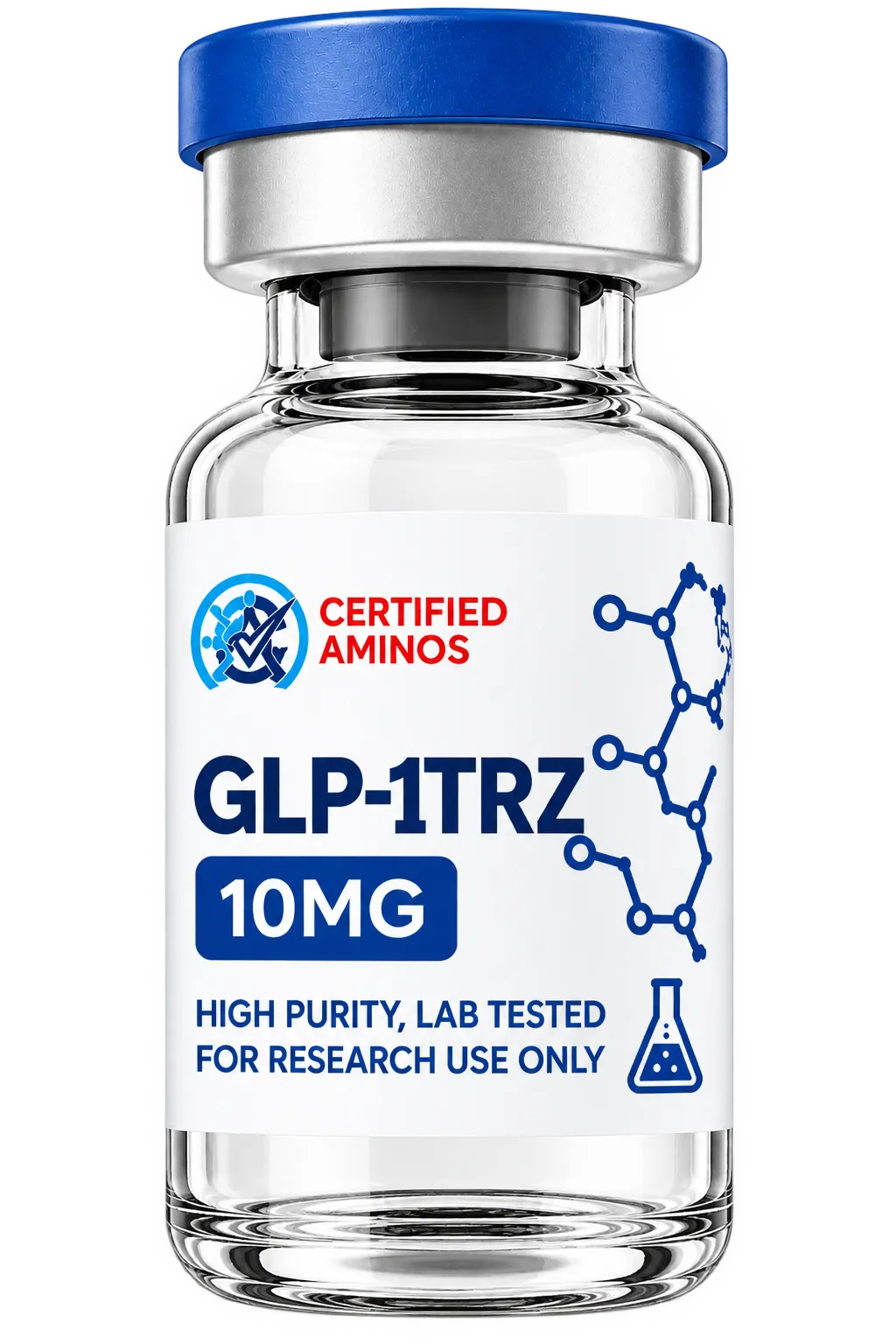
GLP-1TRZ
Highly purified synthetic peptide prepared for rigorous laboratory research.
$149.00
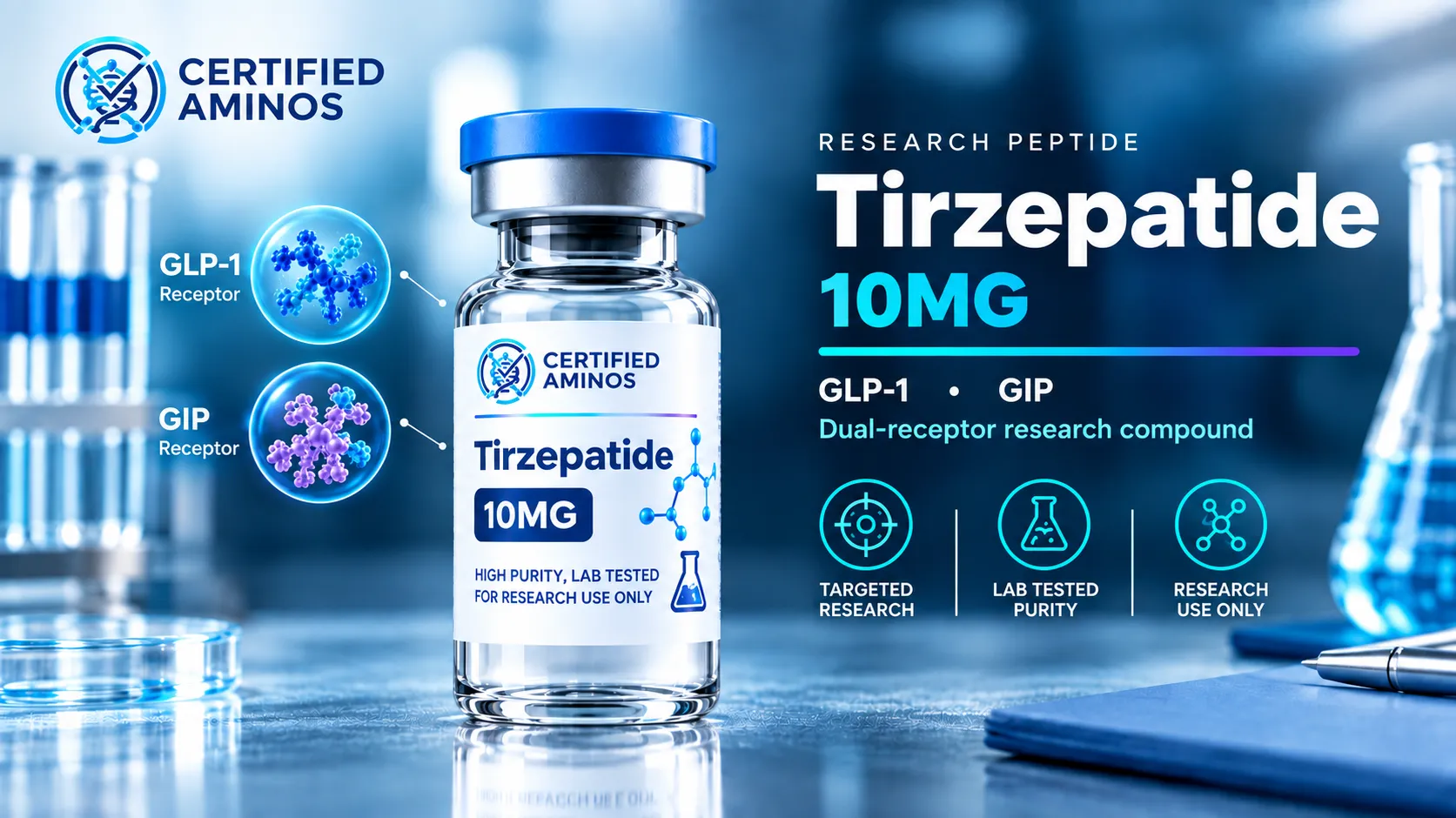
Tirzepatide is a synthetic peptide: specifically, a dual agonist engineered to activate two different receptors at once, the GIP receptor and the GLP-1 receptor. That dual-receptor design is what separates it from earlier single-target compounds like semaglutide, and it's the reason tirzepatide research gets discussed differently from standard GLP-1 literature.
What tirzepatide is
Tirzepatide is the active compound sold under the brand names Mounjaro (approved for type 2 diabetes) and Zepbound (approved for chronic weight management), both developed by Eli Lilly. Tirzepatide as a research compound — the form sold by suppliers like Certified Aminos — shares the same peptide sequence but is manufactured and sold separately, for laboratory research only, not as a substitute for either branded drug.
This article is about the molecule itself — its structure, its mechanism, and what the research trail actually supports — not about either brand name as a treatment.
Is tirzepatide a peptide?
Yes. Tirzepatide is a synthetic peptide built on an amino-acid backbone related to the body's own incretin hormones, GIP and GLP-1. It isn't a small-molecule drug in the traditional sense — it's a chain of amino acids engineered to fold and bind the way those natural hormones do, modified with a fatty-acid side chain that slows its clearance from the body and extends its activity enough to support once-weekly dosing in its approved pharmaceutical form.
That peptide classification is also why tirzepatide gets discussed alongside other research peptides like semaglutide and retatrutide rather than alongside conventional small-molecule pharmaceuticals — all three share the engineered-incretin design logic, just with different receptor targets.
How tirzepatide works: the dual-receptor mechanism
GIP (glucose-dependent insulinotropic polypeptide) and GLP-1 (glucagon-like peptide-1) are both incretin hormones — signals the gut releases after eating that help regulate insulin release and appetite. Most earlier research compounds in this space, semaglutide among them, work by activating the GLP-1 receptor alone.
Tirzepatide is built to activate both the GIP receptor and the GLP-1 receptor at the same time — a dual-agonist design. The hypothesis behind pairing them is that GIP and GLP-1 signaling may complement each other in regulating insulin secretion, glucagon suppression, and appetite, and that activating both could produce effects beyond what either receptor alone achieves. That combined mechanism is well documented at the pharmacological level. What it translates to clinically is a separate question, addressed by the trial data in the next section.
What the clinical trials actually studied
Tirzepatide's clinical evidence comes from two pharmaceutical trial programs run by Eli Lilly: the SURPASS trials, conducted in adults with type 2 diabetes, and the SURMOUNT trials, conducted in adults with obesity or who were overweight with a related health condition. Both programs are published, peer-reviewed, randomized controlled trials — the strongest evidence tier available — but it's worth being precise about what they tested: the branded pharmaceutical product, not a research-use-only compound.
Trial program
Population studied
What it measured
Evidence type
Key limitation for research-compound buyers
SURPASS trials
Adults with type 2 diabetes
HbA1c (blood sugar control) reduction vs. placebo and active comparators
Human clinical — phase 3 RCTs
Tested the branded pharmaceutical formulation and dosing regimen, not a research-use-only compound
SURMOUNT trials
Adults with obesity, or overweight with a related condition
Body-weight reduction vs. placebo
Human clinical — phase 3 RCTs
Same — branded formulation and clinical dosing protocol, administered and monitored by physicians
Explains how it works; doesn't establish outcomes on its own
Across both trial programs, tirzepatide produced statistically significant reductions in HbA1c and body weight relative to placebo, and in several comparisons, relative to other GLP-1 therapies as well. That is a human clinical finding — but it was measured using the FDA-regulated pharmaceutical product, under medical supervision, at doses determined through a formal escalation protocol. None of that transfers automatically to a research-use-only compound sourced independently of that regulatory pathway.
Tirzepatide vs. semaglutide
Semaglutide, sold under the brand names Ozempic and Wegovy, is also a synthetic peptide, and also an incretin-receptor agonist — but it activates the GLP-1 receptor only. Tirzepatide's second target, the GIP receptor, is the structural difference between the two.
SURPASS-2 compared the two directly in people with type 2 diabetes (Frías et al., published in NEJM); consult that publication for specific results rather than a secondary summary
See above
Neither compound is categorically "better" — they're different mechanistic approaches to the same hormone system, tested in separate (and in one case, overlapping) trial programs. Anyone citing a specific numeric advantage for either compound should be citing the primary trial publication, not a secondary blog post.
Tirzepatide vs. retatrutide — one receptor further
Retatrutide extends the same design logic one step further: where tirzepatide is a dual GIP/GLP-1 agonist, retatrutide adds a third receptor target, glucagon, making it a triple agonist. It's a later-stage research compound with a different evidence profile and development timeline than tirzepatide's completed pivotal trials. For the full research breakdown, see Certified Aminos' retatrutide research guide.
Safety data and its limits
In the SURPASS and SURMOUNT trials, the most frequently reported adverse events were gastrointestinal — nausea, diarrhea, vomiting, and reduced appetite — and were most common during the dose-escalation phase of treatment. That profile is well documented in the published trial literature and in tirzepatide's FDA prescribing information.
That safety data describes the branded pharmaceutical product, administered under medical supervision at protocol-defined doses. It is not a safety claim about a research-use-only compound used outside that context, and none is made here.
Is tirzepatide FDA approved?
The branded pharmaceutical forms are: Mounjaro, approved for type 2 diabetes, and Zepbound, approved for chronic weight management. Both carry FDA approval for those specific indications, under those specific brand names.
Tirzepatide sold as a research compound is a different product category entirely — it is not itself an FDA-approved drug product, is not labeled for human administration, and carries none of the approvals attached to Mounjaro or Zepbound. That distinction matters more than the shared molecule name suggests.
Pharmaceutical tirzepatide, compounded tirzepatide, and RUO research compounds
Three distinct categories get discussed under the same word, and conflating them is where most confusion about tirzepatide starts:
FDA-approved pharmaceutical tirzepatide — Mounjaro and Zepbound, manufactured by Eli Lilly, prescribed and dispensed through standard pharmaceutical channels.
Pharmacy-compounded tirzepatide — versions prepared by compounding pharmacies under their own regulatory framework, intended for patients, typically used during periods of branded-drug shortage. Current rules governing this category have shifted over time; readers who need an authoritative answer on present-day compounding status should check the FDA's current compounding guidance directly rather than relying on this or any other secondary source.
Research-use-only (RUO) tirzepatide — the category this site's product falls under: sold for laboratory and research purposes only, not for human consumption, and not reviewed or approved by the FDA as a drug product. The distinction from the other two categories is regulatory and intended-use, not a difference in the underlying peptide sequence.
How to evaluate a tirzepatide research compound
Whatever supplier a researcher is evaluating, the same general criteria apply to any peptide research compound:
Identity confirmation (does analytical testing confirm the vial contains what it claims), purity documentation, batch and lot-specific records, a Certificate of Analysis (COA) tied to that specific lot, disclosure of the testing method used (commonly HPLC for purity, mass spectrometry for identity), and general supplier transparency about all of the above.
Certified Aminos lists tirzepatide as a research compound on its tirzepatide product page. As with any supplier, lot-specific purity and testing details — and current pricing and availability — change between batches. Check the current lot's documentation on the certificates page before relying on any specific purity figure.
Why this article won't give you a dosing schedule
This site sells tirzepatide for research use only, not for human administration, and this article does not provide dosing schedules, injection protocols, titration guidance, or any other instruction for using tirzepatide on a person. The clinical trials covered above used a formal, medically supervised dose-escalation protocol specific to the pharmaceutical product — that protocol doesn't transfer to a research-use-only compound used outside clinical supervision, and no educational article should imply otherwise. If you're looking for treatment guidance, that conversation belongs with a licensed medical provider, not a product blog.
Tirzepatide is a Research Use Only (RUO) compound. It is not approved by the FDA for any human or animal use, and nothing in this article should be interpreted as medical advice, a treatment recommendation, or a guarantee of any outcome. This article is intended solely to summarize published scientific research for qualified researchers and laboratory professionals. Products sold by Certified Aminos are intended strictly for laboratory and scientific research and are not for human or animal consumption.
Got Questions?
Frequently Asked Questions
Yes. It's a synthetic peptide engineered to activate both the GIP receptor and the GLP-1 receptor, with a fatty-acid modification that extends how long it stays active in the body.