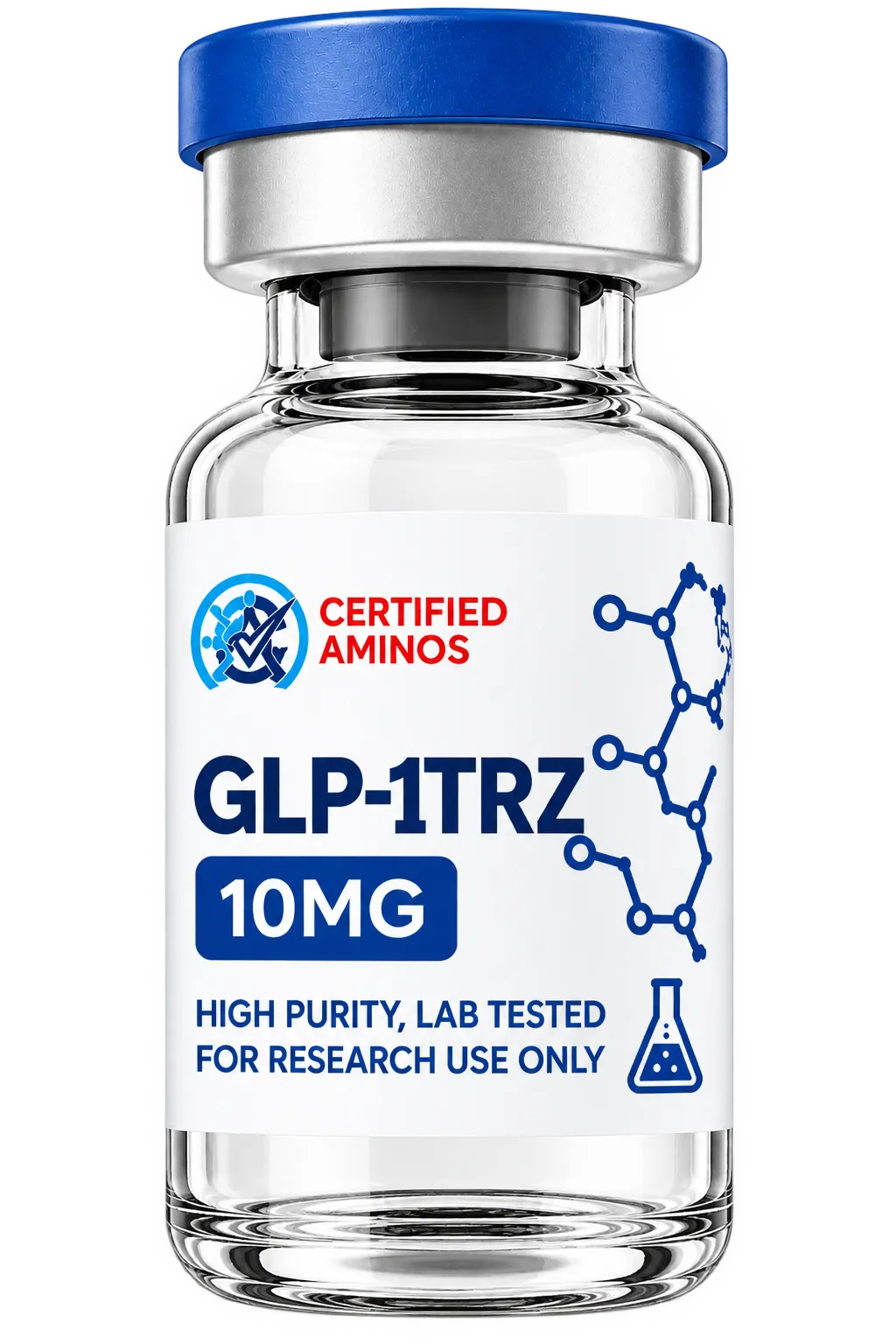
GLP-1TRZ is Certified Aminos' research listing for a dual GIP/GLP-1 receptor agonist, studied for combined incretin-signaling effects in metabolic research. Ships in 10, 20, 30, and 60 mg vials for laboratory use only. A batch-specific identity and purity COA is not yet linked on this page — request current lot documentation before use.
HPLC certified
Independent analysis
Highest standard
Full traceability
Each order ships as a GLP-1TRZ research peptide in your choice of 10, 20, 30, or 60 mg vials, manufactured for laboratory use only.
| Compound | GLP-1TRZ |
|---|---|
| Mechanism Class | Dual GIP/GLP-1 receptor agonist (the mechanism class of tirzepatide) |
| CAS Number | Not established for this product |
| Molecular Formula | Not established for this product |
| Molecular Weight | Not established for this product |
| PubChem CID | Not established for this product |
| Physical Form | Not published on this listing — confirm with supplier |
| Purity | Not independently verified — no batch-specific COA is currently published |
| Identity | Not independently confirmed by mass spectrometry or an equivalent method |
| Available Sizes | 10 mg / 20 mg / 30 mg / 60 mg |
| Intended Use | Laboratory research only (RUO) |
No CAS number, molecular formula, molecular weight, or PubChem CID has been established for GLP-1TRZ itself, and none should be assumed from the tirzepatide literature without a supplier-confirmed identity match. When a batch-specific COA becomes available, match its lot number to the vial received and confirm its identity method before treating any purity or identity statement as established for that lot.
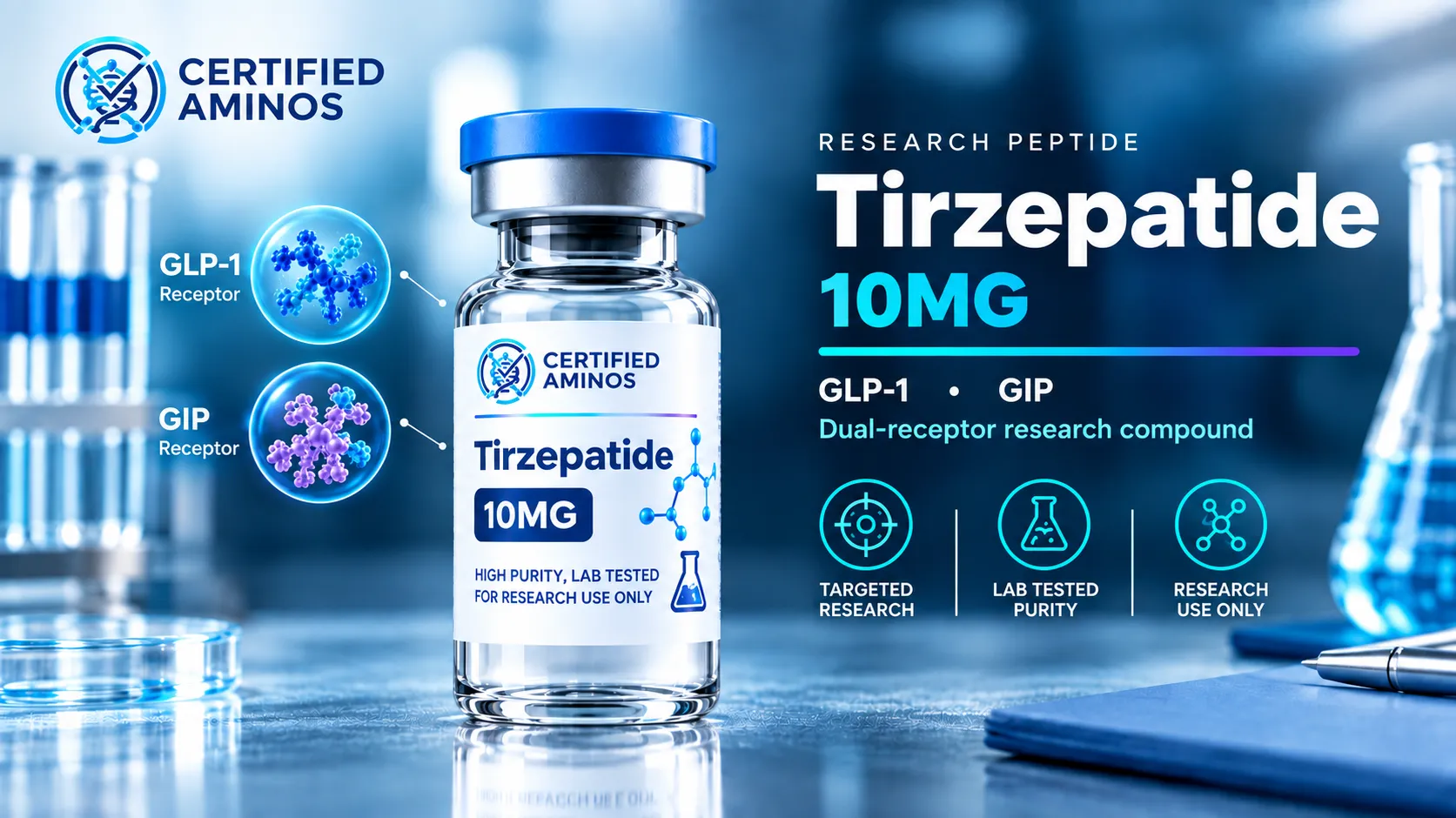
Tirzepatide hits two receptors at once — GIP and GLP-1. Mounjaro and Zepbound are its FDA-approved forms; here's how it stacks up against semaglutide and retatrutide.
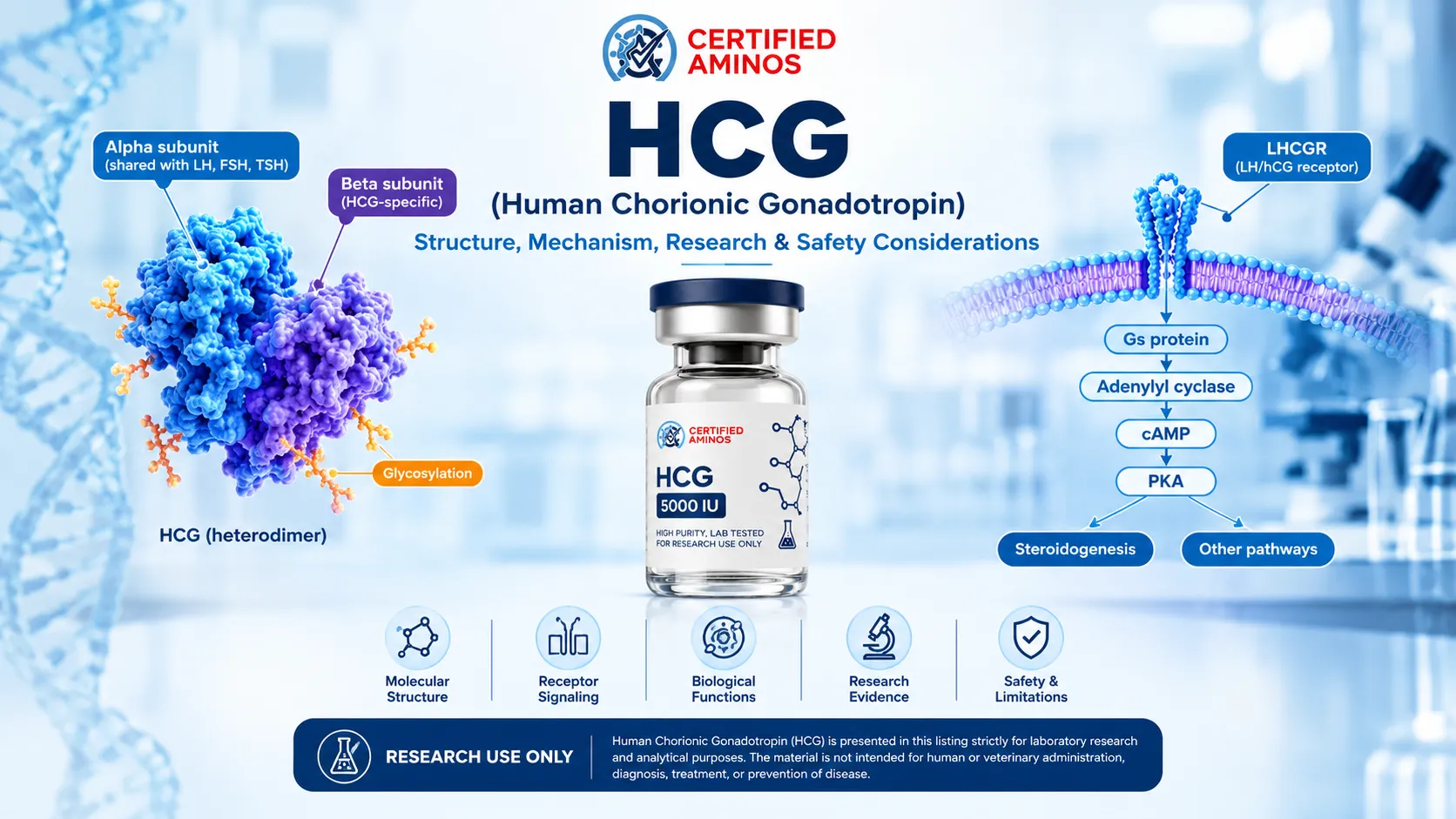
HCG and LH bind the exact same receptor — yet research shows they send measurably different signals once they do. Here's what's actually established about HCG's structure, mechanism, and the FDA's position on HCG weight-loss claims.
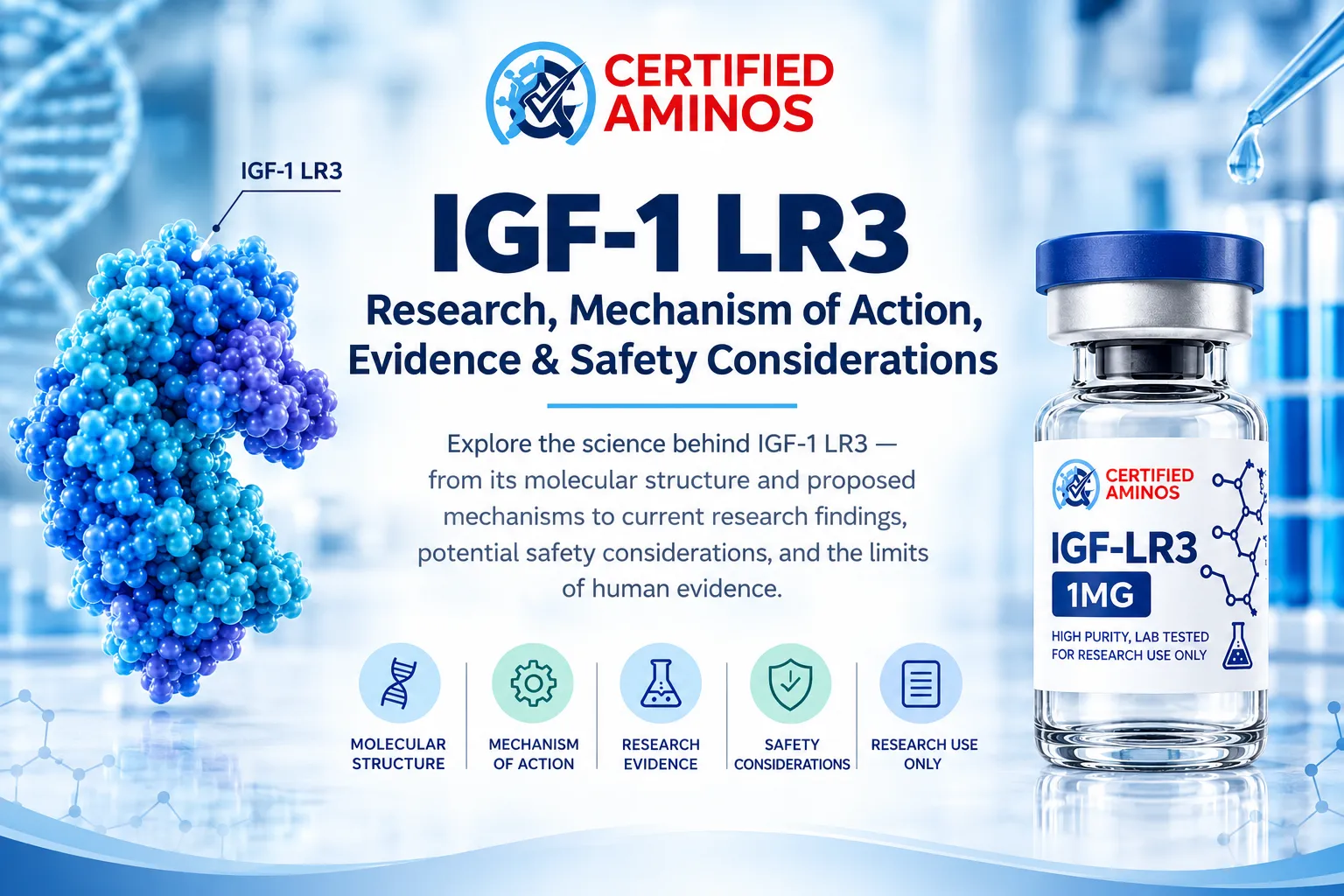
No peer-reviewed human study of IGF-1 LR3 exists — a 2026 literature review placed it in its lowest evidence tier. Here's what the cell and animal research actually shows, and where it stops.