Tesamorelin: The One FDA-Approved Research Peptide
Growth researchOctober 6, 20268 min read
Egrifta, Tesamorelin's FDA-approved drug form, treats HIV lipodystrophy. How it differs from Ipamorelin and Sermorelin — and why RUO material isn't covered.
Tesamorelin (Egrifta) is FDA-approved — the only compound on this site with that distinction — but only for one narrow use: reducing visceral fat in HIV-associated lipodystrophy.
The approval doesn't carry over to RUO material. A pharmaceutical company's manufacturing and trial data say nothing about a separately supplied research vial.
It shares a drug class with Sermorelin (both GHRH analogs) but works through a completely different receptor than Ipamorelin (a ghrelin-receptor agonist).
The pivotal trial (NCT00123253) measured visceral fat as its primary endpoint; the extension trial (NCT00608023) measured glucose tolerance as primary, with fat as secondary.
Research summary only, with no dosing or use guidance. A tesamorelin-based drug is FDA-approved for one specific indication — that approval does not extend to Tesamorelin sold separately as Research Use Only material.
Featured In This Article
RESEARCH PEPTIDE
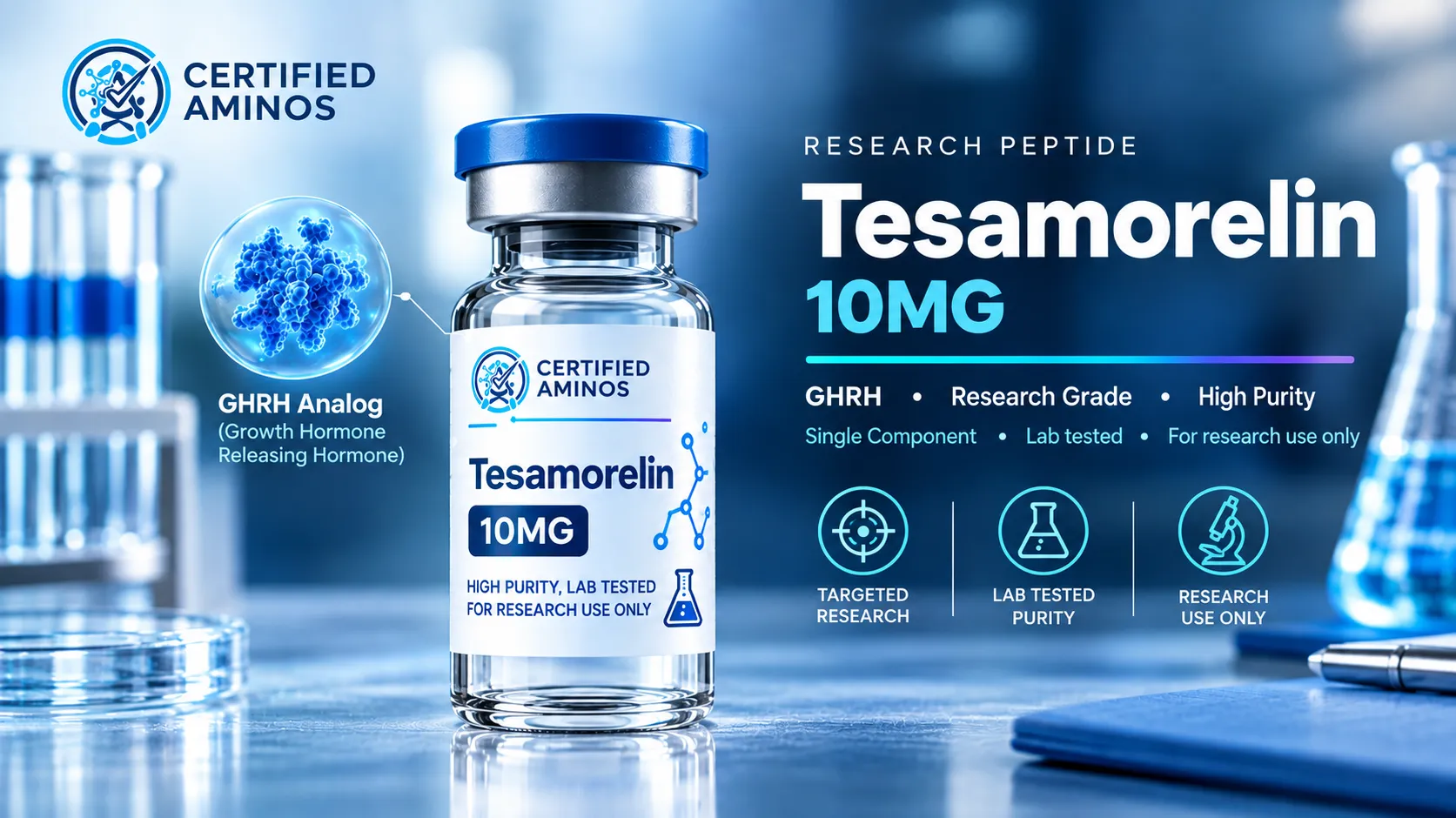
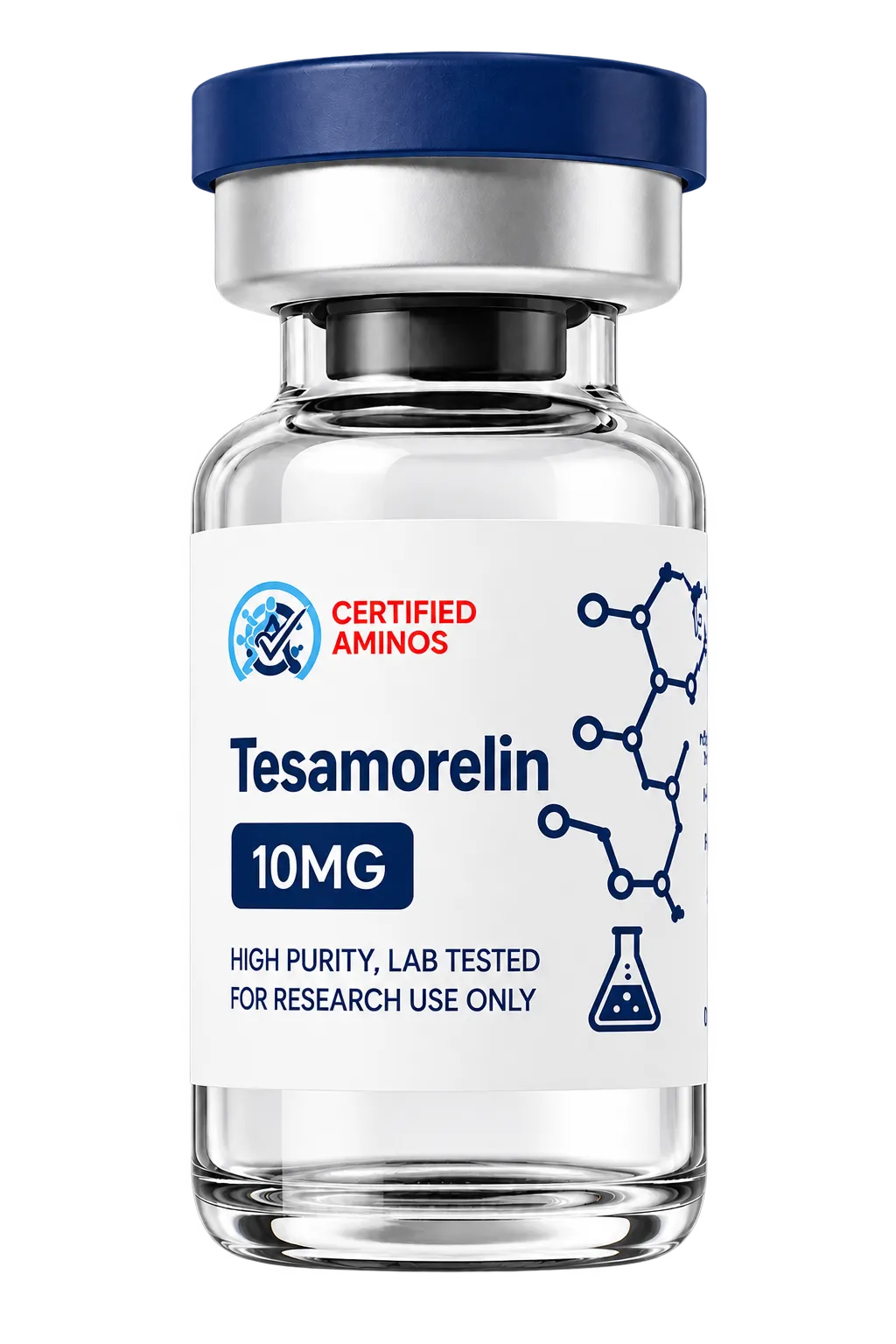
Tesamorelin
Highly purified synthetic peptide prepared for rigorous laboratory research.
$99.00
Is Tesamorelin FDA Approved?
Yes. Unusually for a research peptide, a tesamorelin-based pharmaceutical product has FDA approval for a specific indication in adults with HIV-associated lipodystrophy. That approval belongs entirely to the branded pharmaceutical product — it does not mean Tesamorelin sold separately as a Research Use Only (RUO) material is FDA approved or intended for human use.
What Is Tesamorelin?
Two different things carry the name "Tesamorelin." Egrifta, the FDA-approved drug, treats excess abdominal fat in HIV patients — approved in 2010, confirmed by two Phase 3 trials. Separately, Tesamorelin is sold as a Research Use Only compound for laboratory research, with no FDA approval of its own. Mixing the two up is the single most common error in how this peptide gets written about.
Tesamorelin is a synthetic, stabilized analog of growth hormone-releasing hormone (GHRH), studied for its ability to stimulate endogenous growth hormone secretion. It is a peptide, not a growth hormone itself: it acts upstream, signaling the pituitary gland to release the body's own growth hormone (GH) rather than supplying GH directly.
How Does Tesamorelin Work?
Tesamorelin binds growth hormone-releasing hormone receptors (GHRH-R) on pituitary somatotroph cells. GHRH-receptor activation is associated with adenylyl cyclase/cyclic AMP signaling and stimulation of growth hormone release. Because Tesamorelin stimulates the endogenous GH axis rather than supplying GH directly, its pharmacology differs from direct administration of growth hormone; the mechanism alone does not establish an identical physiological or clinical response.
Structurally, Tesamorelin is a modified GHRH analog with an N-terminal modification that increases resistance to enzymatic degradation compared with native GHRH. This stabilization contributes to its pharmacologic activity and distinguishes it from the short-lived native hormone.
Downstream, increased GH signaling can increase hepatic IGF-1 production, while GH also has effects on lipid metabolism. Tesamorelin research has focused particularly on visceral adipose tissue in the population studied in the pivotal clinical program — these mechanisms describe biological activity, not a guaranteed outcome in any individual.
What Does Current Tesamorelin Research Show?
Not every piece of Tesamorelin evidence carries the same weight. The research breaks into three tiers, and conflating them is where most generic Tesamorelin content goes wrong:
Evidence type
What exists
Key limitation
Mechanistic / receptor-level
Receptor-binding and signaling studies establishing GHRH-R activation
Confirms mechanism, not clinical outcome
Human clinical trials (RCTs)
Randomized, placebo-controlled Phase 3 trials in HIV-associated lipodystrophy (NCT00123253 and extension NCT00608023)
Specific clinical population — doesn't establish effects elsewhere
Exploratory / other populations
Smaller studies touching broader GH-axis and body-composition questions
Thinner evidence base; hypothesis-generating, not established
The clinical literature supports the finding that tesamorelin can reduce visceral adipose tissue in the studied HIV-associated lipodystrophy population. That evidence does not extend the approved indication to other populations, or establish unrelated outcomes such as general weight-loss treatment.
Tesamorelin and Visceral Adipose Tissue Research
Visceral adipose tissue (VAT) is fat stored around internal organs, distinct from subcutaneous fat beneath the skin. VAT was the specific tissue compartment measured by CT imaging in the pivotal tesamorelin trials, in a population of adults with HIV-associated lipodystrophy — a condition with its own distinct metabolic and fat-redistribution profile. Extending those VAT findings to a different population, or to body-composition goals the trials didn't measure, isn't something the existing evidence supports.
Tesamorelin vs Ipamorelin
People lump these two together constantly because they're both "GH peptides." They're not interchangeable — different receptor, different evidence base entirely:
Randomized Phase 3 trials in a defined population (HIV-associated lipodystrophy)
Primarily mechanistic and early clinical research; no equivalent Phase 3 program for the same indication
Regulatory status
FDA-approved pharmaceutical form exists for a specific indication
No FDA-approved pharmaceutical indication
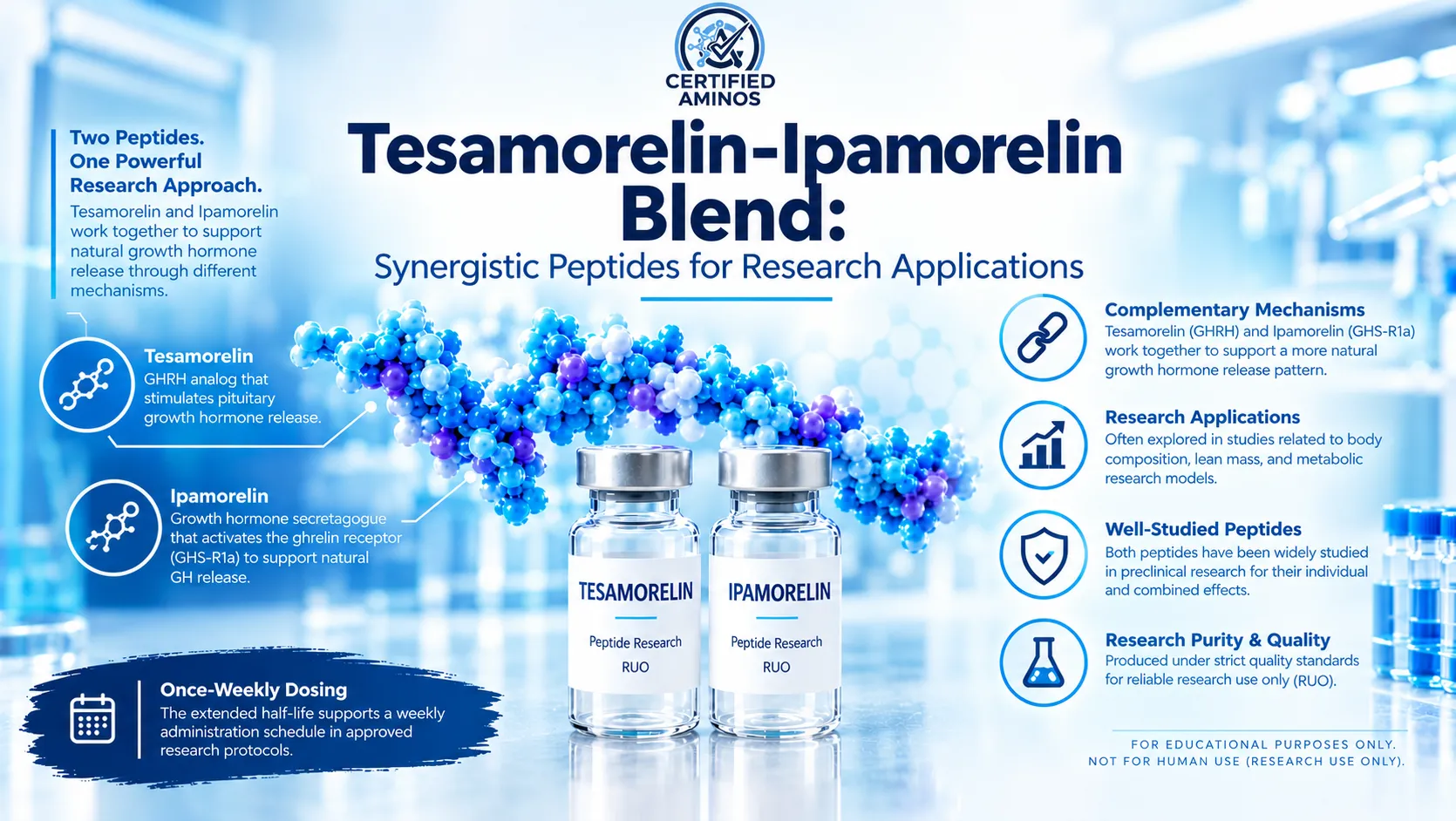
This is a mechanistic comparison, not a recommendation to combine the two or a verdict on which is “better.” Some vendors, including Certified Aminos, list a Tesamorelin/Ipamorelin blend as a separate product; that commercial pairing doesn’t itself constitute evidence that the combination has been studied as a formulation.
Tesamorelin vs Sermorelin
Same drug class, same receptor — but not the same compound. Here's where Tesamorelin and Sermorelin actually split:
Tesamorelin
Sermorelin
Structural context
Near-full-length GHRH analog with a stabilizing N-terminal modification
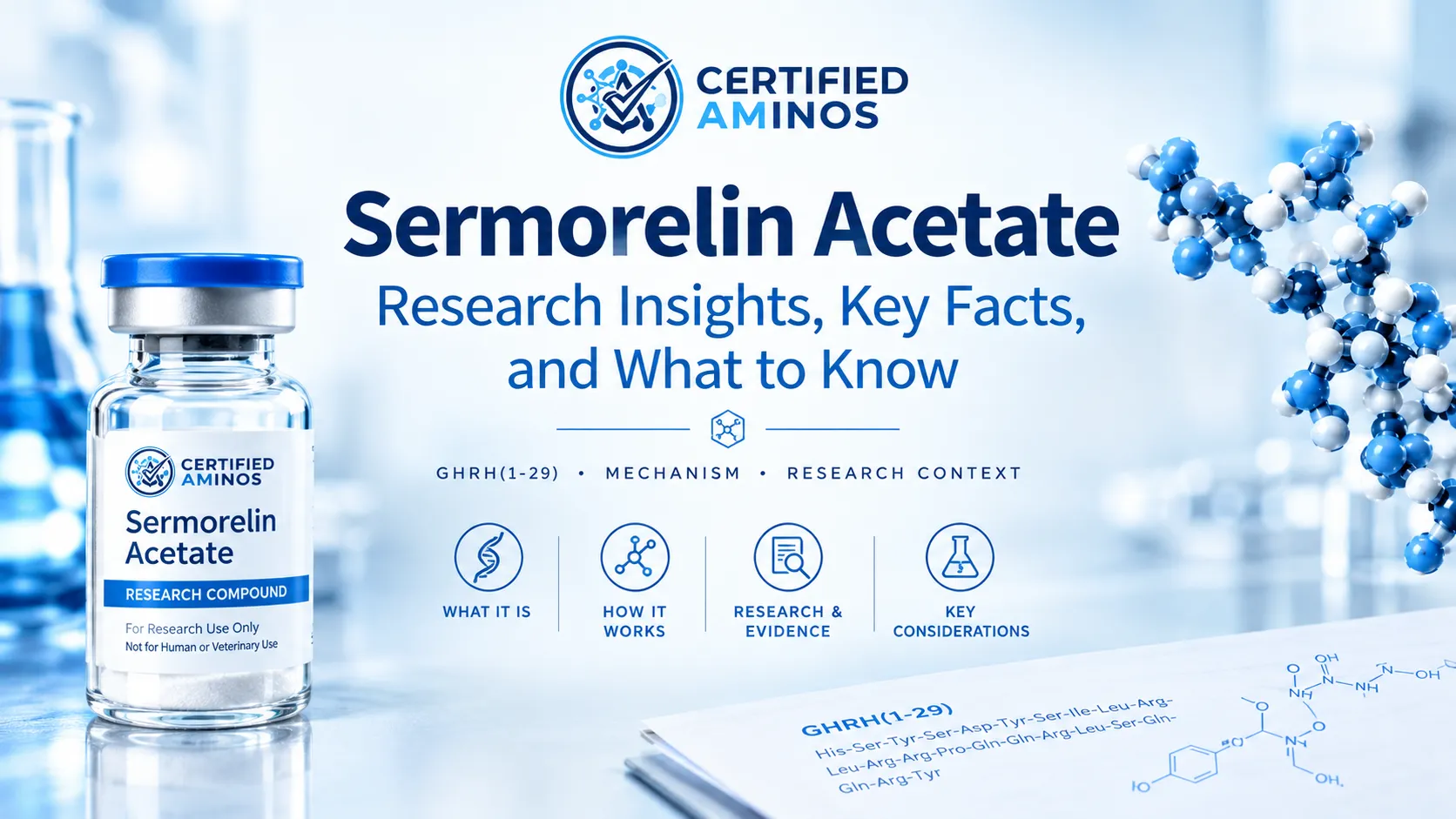
Shorter GHRH(1-29) fragment analog
Structural stability
Modified to resist enzymatic breakdown, extending activity
Shorter GHRH(1-29) structure with different pharmacokinetic characteristics
Clinical/regulatory history
Current FDA-approved pharmaceutical indication exists
Had an FDA-approved pharmaceutical history as Geref (sermorelin acetate), approved 1991; current product availability should be checked independently
Evidence base
Phase 3 RCTs in a defined clinical population
Smaller and older clinical literature
Historical approval should not be confused with current commercial availability or approval of any present-day RUO product. This comparison is mechanistic and evidentiary, not treatment guidance.
What Are the Limitations of Tesamorelin Research?
Population: the pivotal trials enrolled adults with HIV-associated lipodystrophy specifically — not a general population, and not any other body-composition context.
Duration: controlled trial data generally covers periods on the order of 26 to 52 weeks; long-term data beyond that window is comparatively limited.
Safety: the FDA prescribing information for approved tesamorelin products identifies risks including elevated IGF-1, fluid retention, glucose intolerance/diabetes, hypersensitivity reactions, and concerns related to malignancy; clinical studies also reported injection-site reactions, arthralgia, and peripheral edema. The approved label also states that long-term cardiovascular safety has not been established. These findings apply to the approved pharmaceutical context and should not be used to infer the safety of independently supplied RUO material.
Study design and endpoints: the original pivotal trial (NCT00123253) was built around one primary endpoint — visceral fat by CT imaging. Its extension study (NCT00608023) shifted focus: fasting glucose and glucose tolerance became the primary endpoints, with visceral fat measured as a secondary outcome. Both trials matter; they're not measuring the identical thing, and treating them as interchangeable overstates how much evidence backs the VAT finding specifically.
What Does Research Use Only (RUO) Mean for Tesamorelin?
Research Use Only is an intended-use designation: it states that the material is labeled and supplied for laboratory research, not for human or animal diagnostic or therapeutic use. It is not a judgment about safety or efficacy, and it is not a lesser or informal version of FDA approval — it is a different category entirely.
Researchers should not read RUO labeling as permission for human use, and should not treat the published scientific literature on Tesamorelin as a substitute for product-specific documentation on any given batch. A peer-reviewed study describes the molecule in a controlled clinical context; it says nothing about the identity, purity, or handling of a specific vial from a specific supplier.
How to Check a Tesamorelin COA
These checks matter more for a single-peptide product like Tesamorelin than they might seem to at first glance, precisely because the clinical evidence attached to the molecule is unusually strong. Strong published evidence for the molecule in a pharmaceutical context can make a research buyer assume any vial labeled “Tesamorelin” carries the same guarantees. It doesn't — each supplier's material is its own product, documented or not, independent of what the broader scientific literature says about the compound itself.
Lot-matched documentation. A certificate of analysis (COA) should reference the specific lot number printed on the vial, not a generic document reused across batches.
Identity and purity, stated separately. Identity (commonly supported by mass spectrometry) confirms the material is what it claims to be. Purity (commonly assessed by HPLC) reports how much of what's present is the intended compound. A purity percentage alone doesn't confirm identity, and neither confirms sterility or human-use safety.
A verifiable testing lab. The lab named on a COA should be independently verifiable. A certificate from a lab that can't be confirmed to exist is not meaningful documentation.
Testing date and traceability. A current, dated COA tied to the batch in hand matters more than a general claim that products are tested.
Researchers evaluating Tesamorelin research peptide from any supplier should request and review that documentation directly rather than relying on marketing claims alone.
The short version, one more time: a real FDA approval exists, and it belongs entirely to the pharmaceutical product. It tells you nothing about a separately sourced research vial — that's established through its own documentation, covered above.
Tesamorelin is a Research Use Only (RUO) compound. It is not approved by the FDA for any human or animal use, and nothing in this article should be interpreted as medical advice, a treatment recommendation, or a guarantee of any outcome. This article is intended solely to summarize published scientific and clinical research for qualified researchers and laboratory professionals. Products sold by Certified Aminos are intended strictly for laboratory and scientific research and are not for human or animal consumption.
Got Questions?
Frequently Asked Questions
Yes. FDA has approved tesamorelin pharmaceutical products (Egrifta) for reducing excess abdominal fat in HIV-infected adults with lipodystrophy. That approval belongs to the branded pharmaceutical product and does not extend to Tesamorelin sold separately as Research Use Only material.