SS-31 is the research code name for elamipretide (MTP-131), a synthetic tetrapeptide studied for its interaction with mitochondrial membranes. It is a separate product from Forzinity, an FDA-approved medicine that shares the generic name elamipretide but comes from a different manufacturer. This listing is sold strictly for laboratory Research Use Only (RUO) -- not for human or veterinary use.
HPLC certified
Independent analysis
Highest standard
Full traceability
Each order ships as an SS-31 research peptide, available in 10mg or 50mg vials, manufactured for laboratory use only.
| Compound Name | SS-31 (Elamipretide, MTP-131) |
|---|---|
| Sequence | D-Arg-Dmt-Lys-Phe-NH2 -- confirmed via two independent chemical-database sources |
| CAS Number | 736992-21-5 |
| Molecular Formula | C32H49N9O5 |
| Molecular Weight | ~639.8 g/mol |
| Related Product Distinction | Elamipretide is also the generic name of Forzinity, an FDA-approved drug from Stealth BioTherapeutics for Barth syndrome. Forzinity is a separate, GMP-manufactured clinical product -- it is not what is sold on this listing |
| Purity | Not independently verified -- no batch-specific COA is currently published |
| Identity | Not independently confirmed by mass spectrometry or an equivalent method for this specific listing |
| Available Sizes | 10mg, 50mg |
| Intended Use | Laboratory research only (RUO) |
When your order arrives, match the lot number printed on the vial to the lot number on the COA before beginning any work. Until a batch-specific COA is published for this product, treat any purity or identity figure shown elsewhere on this listing as a supplier claim, not an independently verified result.
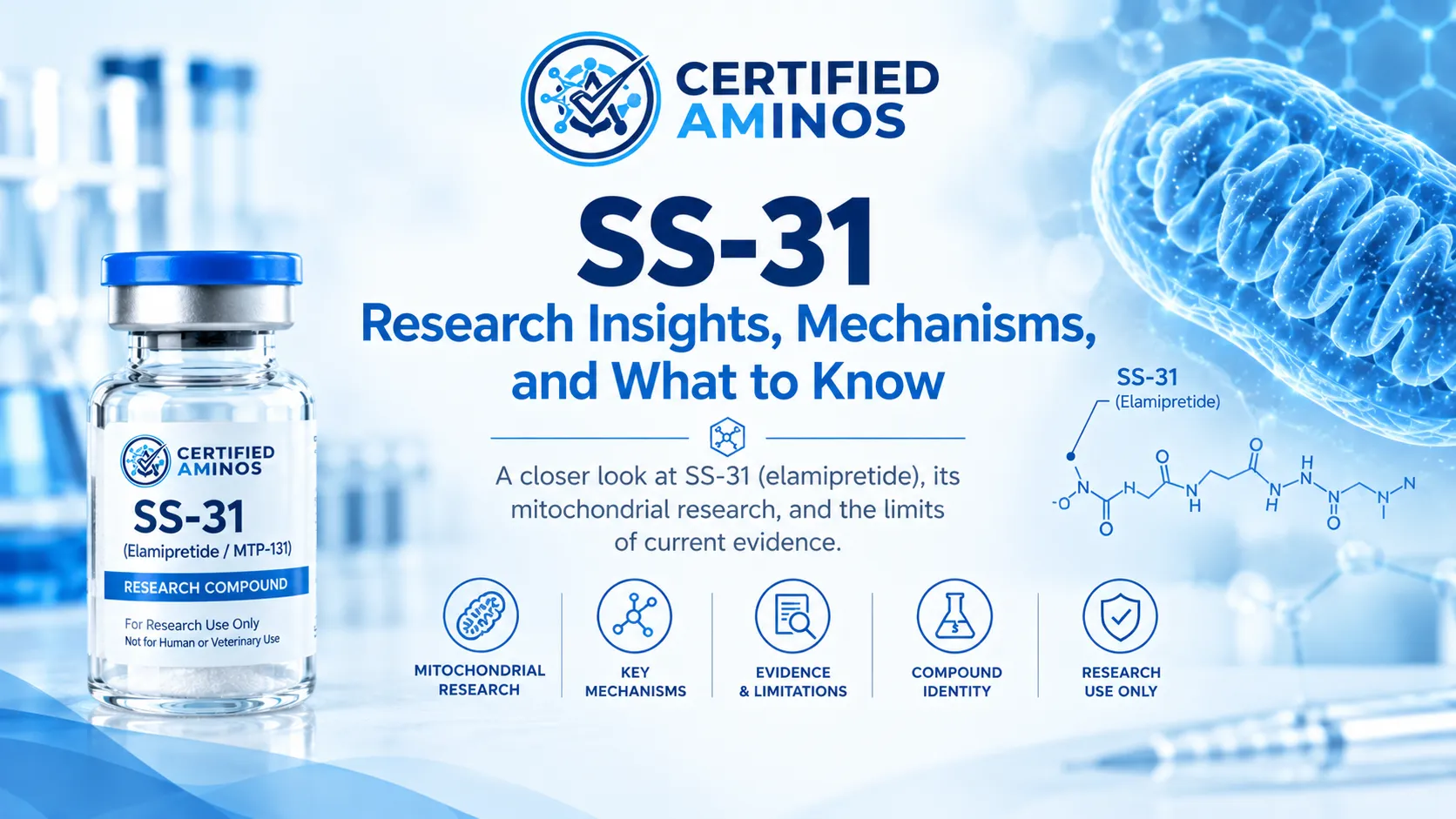
SS-31 is the research name for elamipretide. Forzinity's FDA approval rests on something more specific than most coverage states — here's what the evidence actually shows.
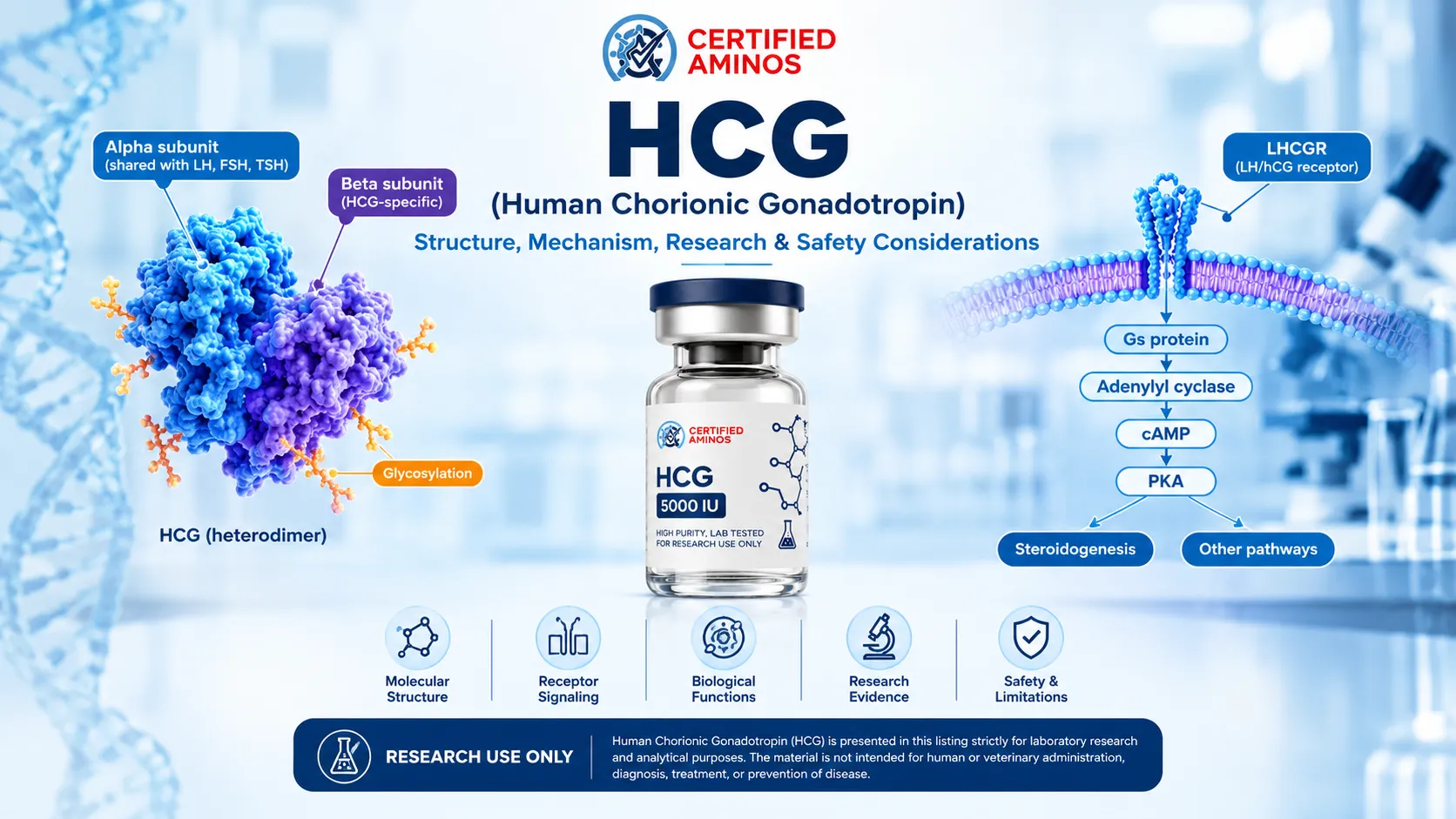
HCG and LH bind the exact same receptor — yet research shows they send measurably different signals once they do. Here's what's actually established about HCG's structure, mechanism, and the FDA's position on HCG weight-loss claims.
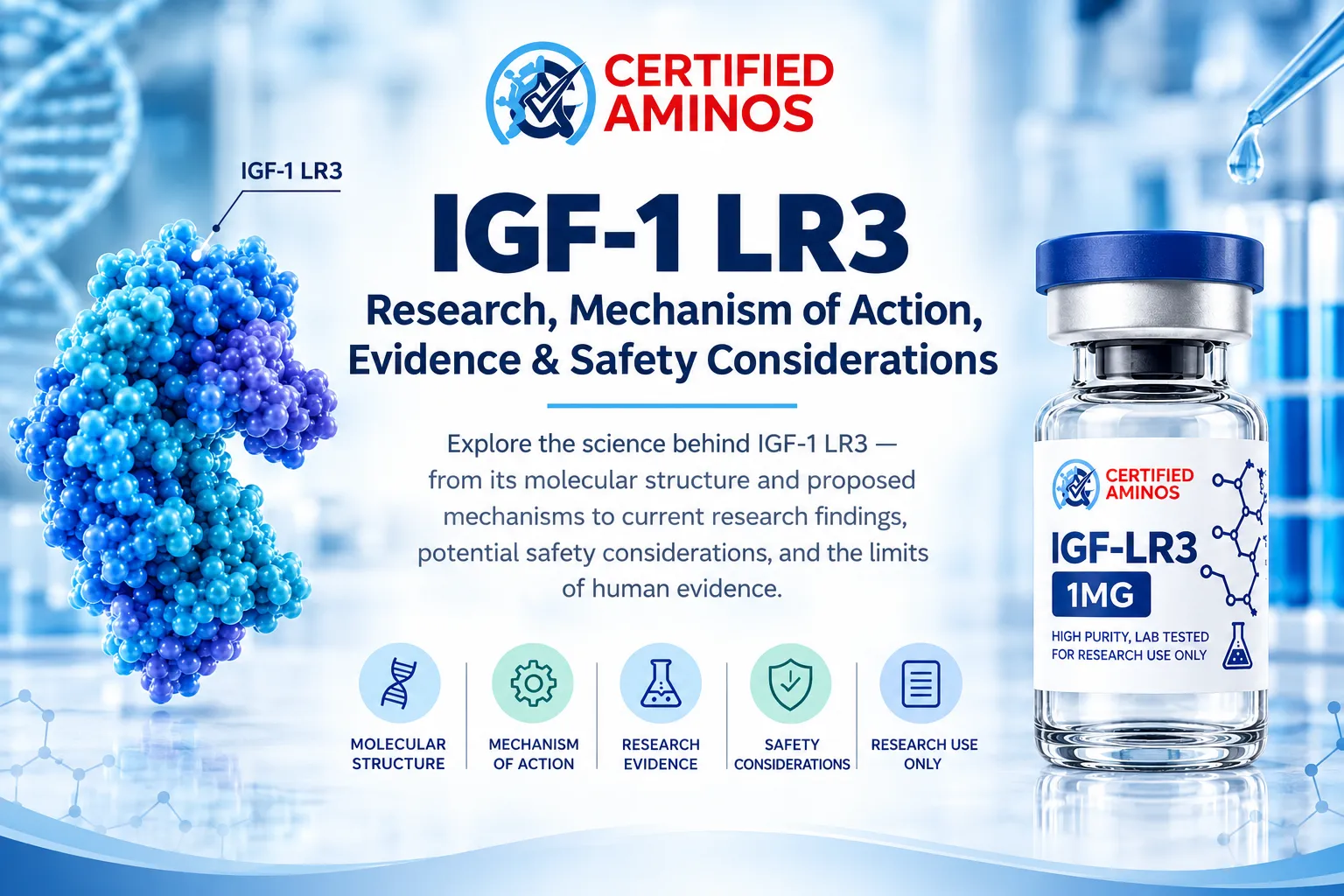
No peer-reviewed human study of IGF-1 LR3 exists — a 2026 literature review placed it in its lowest evidence tier. Here's what the cell and animal research actually shows, and where it stops.