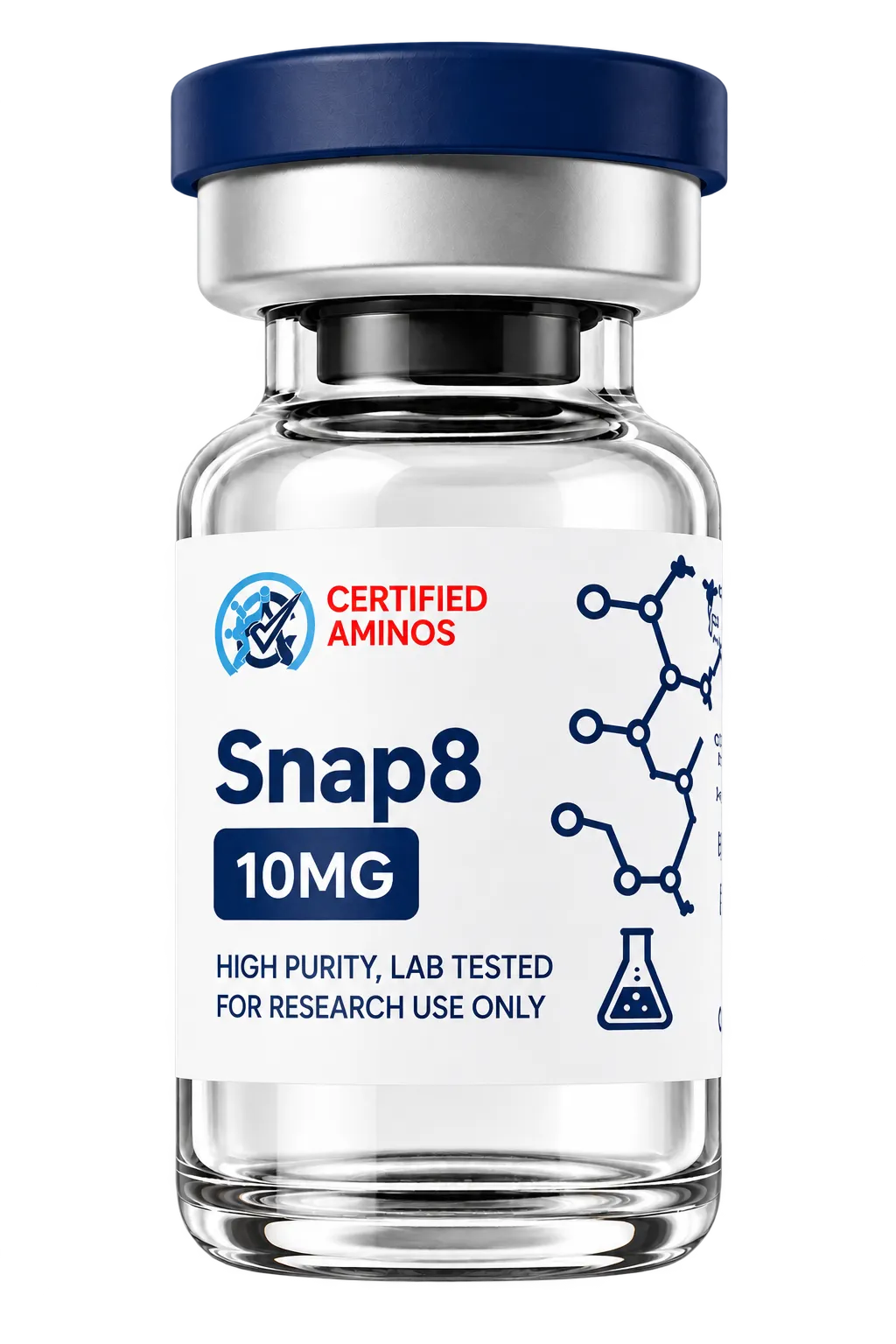
SNAP-8 (Acetyl Octapeptide-3) is Certified Aminos' research listing for a synthetic octapeptide marketed industry-wide as interfering with SNARE-complex-mediated neurotransmitter release at the neuromuscular junction. That specific mechanism traces to manufacturer and patent literature rather than independently published peer-reviewed research. Two peer-reviewed human studies have tested multi-ingredient cosmetic formulations containing this peptide, not the isolated compound. Available in 10mg and 20mg for laboratory research use only.
HPLC certified
Independent analysis
Highest standard
Full traceability
Each order ships as a SNAP-8 research peptide vial, available in 10mg or 20mg, manufactured for laboratory use only.
| Product Name | SNAP-8 (Acetyl Octapeptide-3) |
|---|---|
| Common Synonyms | Acetyl Octapeptide-3, SNAP-8 |
| CAS Number | 868844-74-0 -- a commonly published literature value; not independently confirmed through the chemical databases checked (ChEMBL has no entry under either name) |
| Mechanism Claim Status | Marketed as interfering with SNARE-complex-mediated neurotransmitter release ("Botox-like"); sourced from manufacturer/patent literature, not confirmed by an independent peer-reviewed mechanistic study |
| Purity | Not independently verified -- no batch-specific COA is currently published |
| Identity | Not independently confirmed by mass spectrometry or an equivalent method |
| Available Sizes | 10mg, 20mg |
| Intended Use | Laboratory research only (RUO) |
When your order arrives, match the lot number printed on the vial to the lot number on the COA before beginning any work. Until a batch-specific COA is published for this product, treat any purity or identity figure shown elsewhere on this listing as a supplier claim, not an independently verified result.
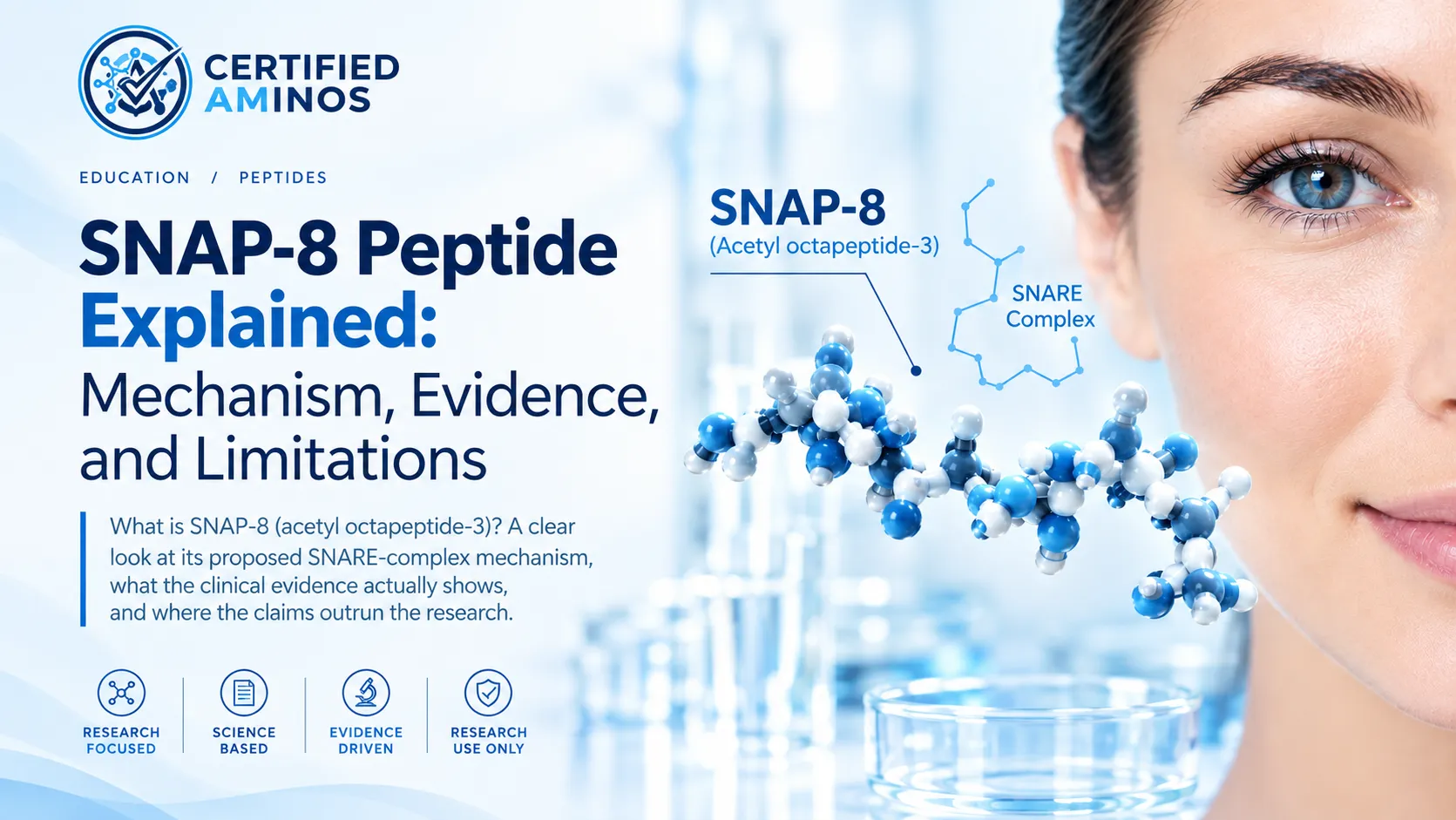
SNAP-8 is marketed as a Botox alternative — here's where its SNARE-complex mechanism actually comes from and what the human evidence can't yet establish.
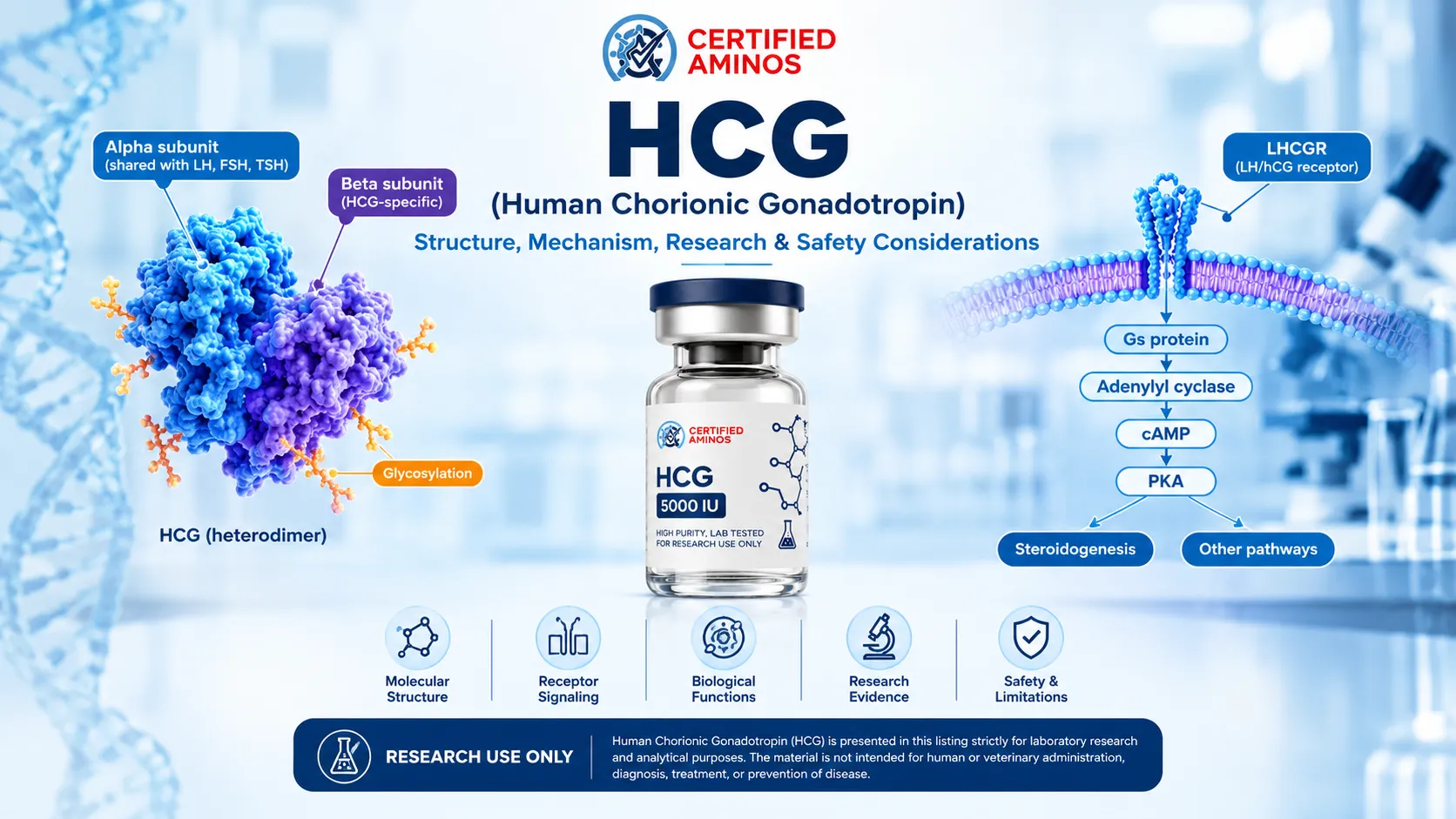
HCG and LH bind the exact same receptor — yet research shows they send measurably different signals once they do. Here's what's actually established about HCG's structure, mechanism, and the FDA's position on HCG weight-loss claims.
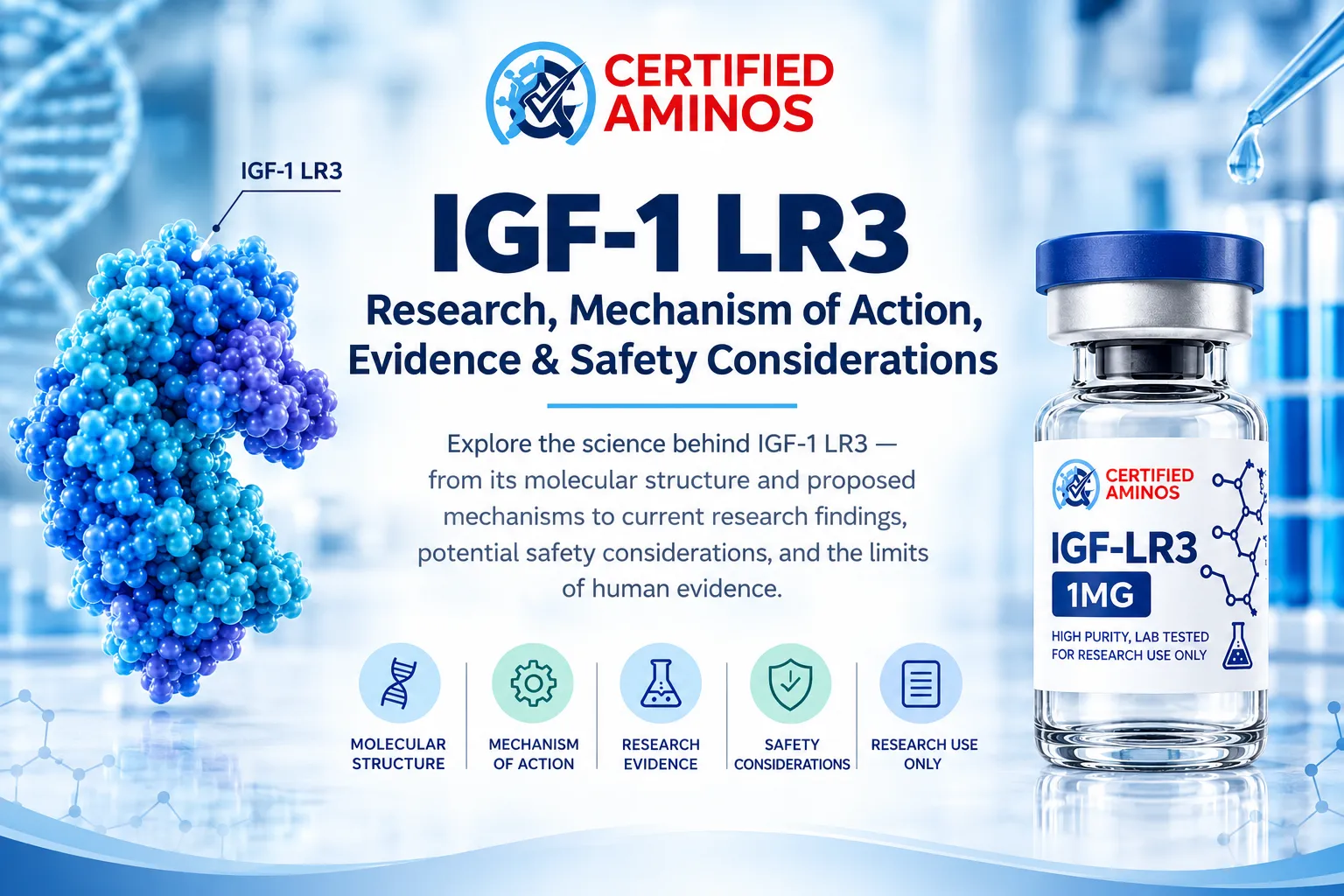
No peer-reviewed human study of IGF-1 LR3 exists — a 2026 literature review placed it in its lowest evidence tier. Here's what the cell and animal research actually shows, and where it stops.