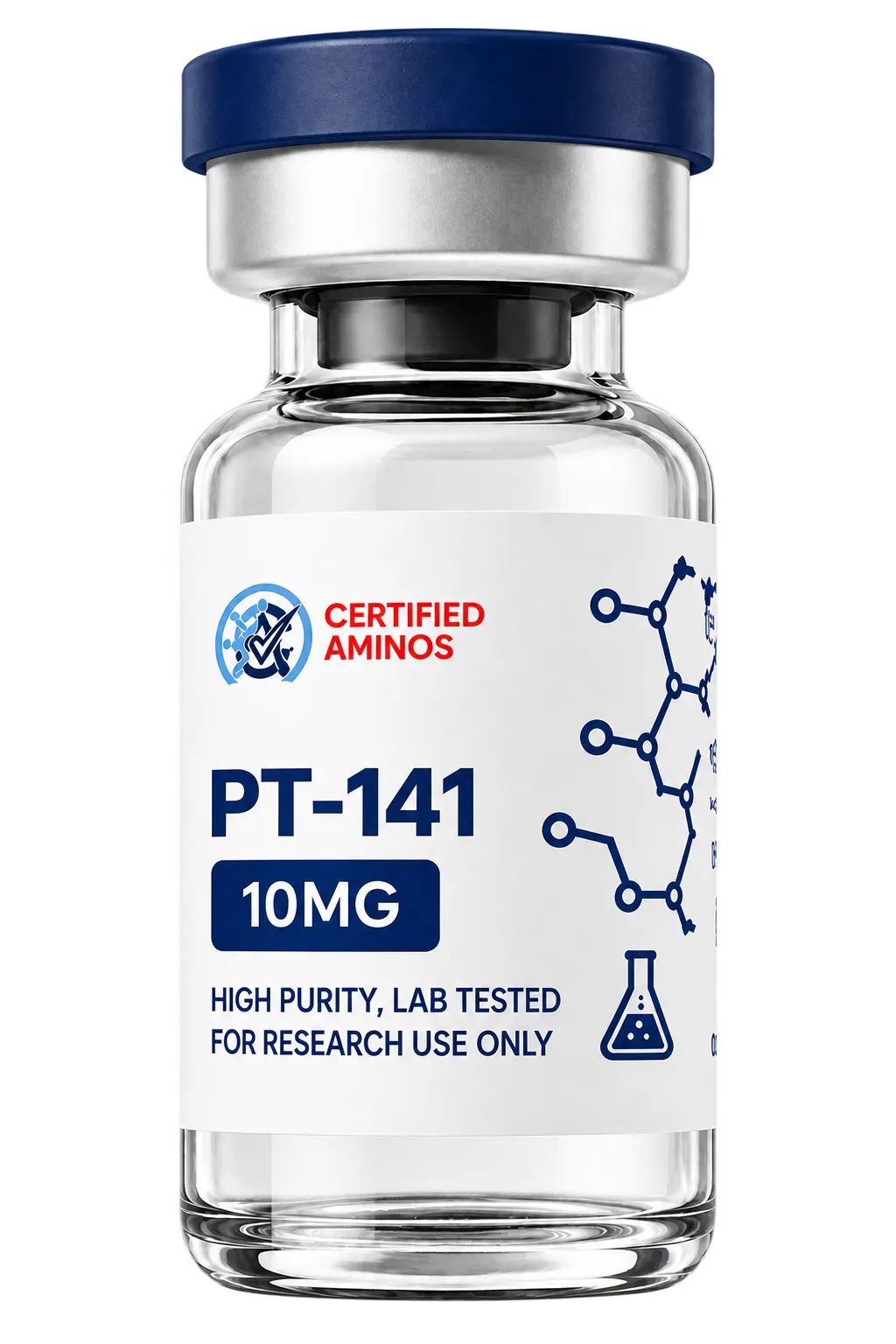
PT-141 is Certified Aminos' research listing for a melanocortin-receptor agonist, studied for CNS-mediated effects in laboratory and animal models. The relationship between this listing's material and bremelanotide, the compound name used in scientific and regulatory literature, has not been independently confirmed against a batch-specific certificate of analysis. Available in 10mg for laboratory research use only.
HPLC certified
Independent analysis
Highest standard
Full traceability
Each order ships as a PT-141 research peptide in a 10mg vial, manufactured for laboratory use only.
| Product Name (commercial designation) | PT-141 |
|---|---|
| Literature/Regulatory Name | Bremelanotide — used interchangeably with "PT-141" in scientific and regulatory materials, though this listing's exact chemical form has not been independently confirmed to match |
| Salt Form | Not independently confirmed. Bremelanotide exists in different salt forms, including bremelanotide acetate (the form in the FDA-approved drug Vyleesi); which form, if any, is present in this listing is not established. |
| Approved Pharmaceutical Comparator | Vyleesi (bremelanotide acetate) is FDA-approved only for premenopausal women with acquired, generalized hypoactive sexual desire disorder (HSDD). That approval does not extend to this research listing, to men, or to any performance-related use. |
| CAS Number / Molecular Weight | Not established for this specific listing |
| Purity | Not independently verified — no batch-specific COA is currently published |
| Identity | Not independently confirmed by mass spectrometry or an equivalent method |
| Available Size | 10 mg |
| Intended Use | Laboratory research only (RUO) |
An approved drug existing under a related name does not confirm this listing's salt form, purity profile, or manufacturing standard — those are separate questions. When your order arrives, match the lot number on the vial to the lot number on the COA before beginning any work.
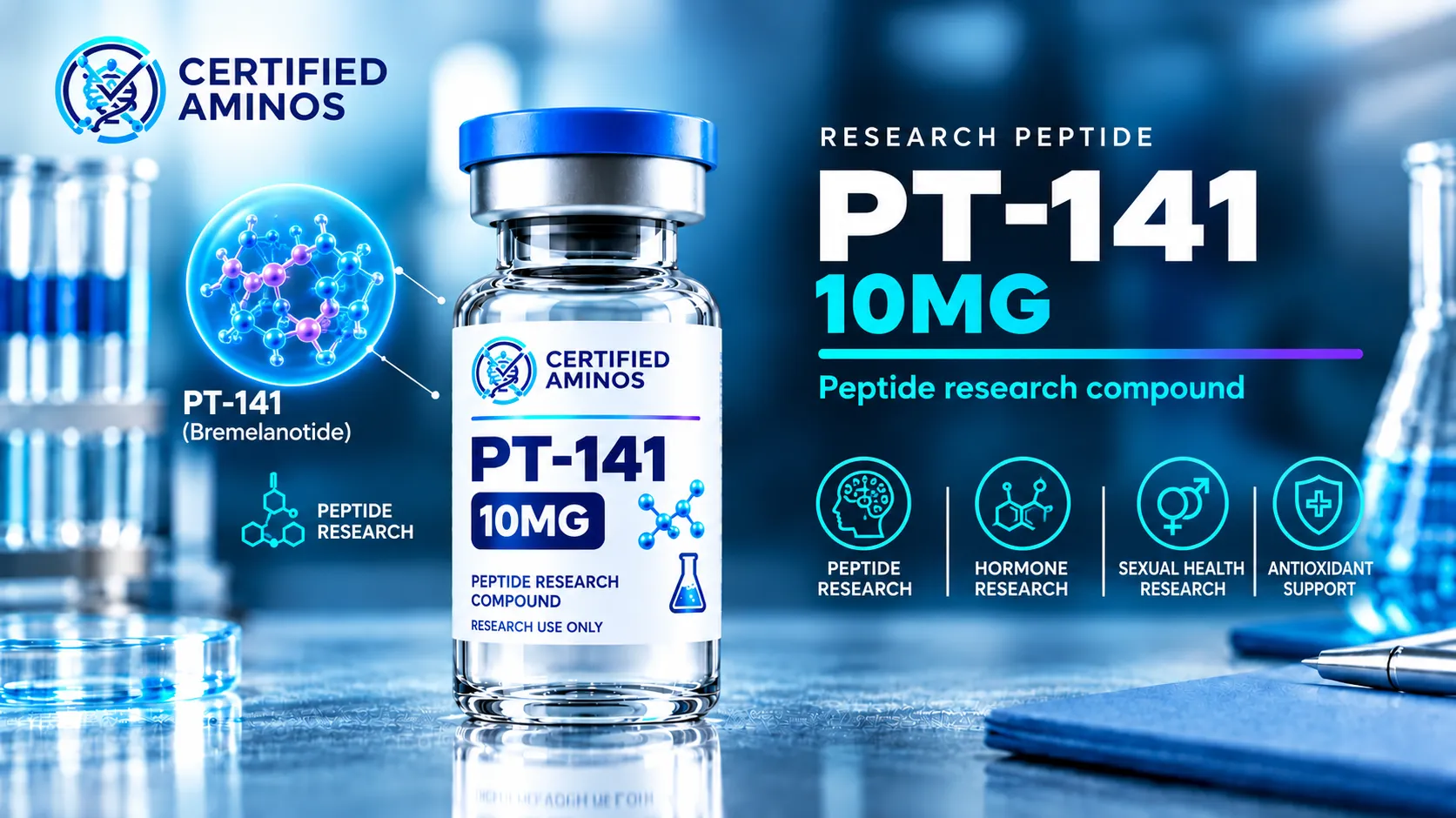
PT-141, bremelanotide, and Vyleesi get treated as interchangeable — they aren't. What the trials actually show, by population, and how to verify an RUO batch.
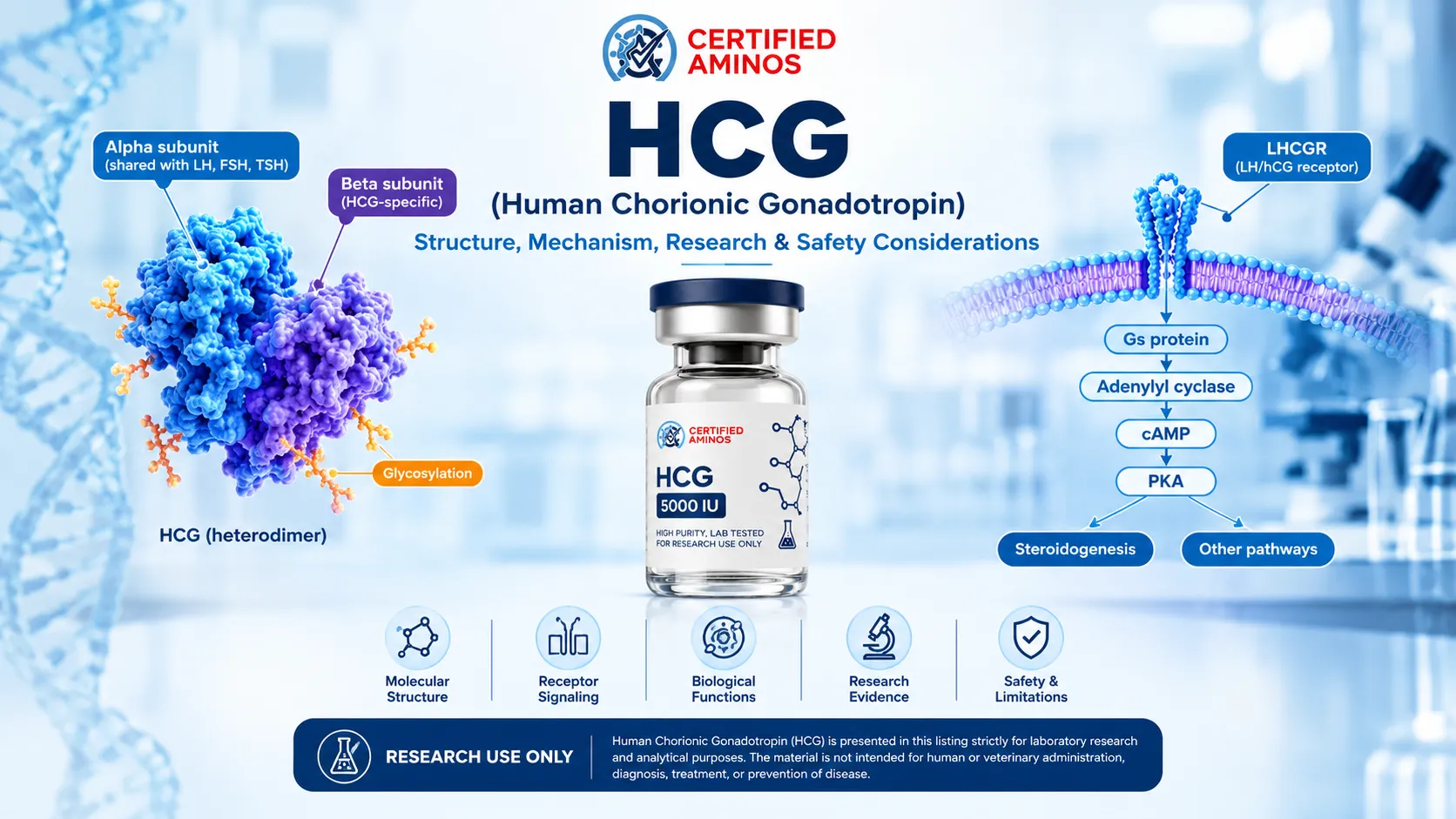
HCG and LH bind the exact same receptor — yet research shows they send measurably different signals once they do. Here's what's actually established about HCG's structure, mechanism, and the FDA's position on HCG weight-loss claims.
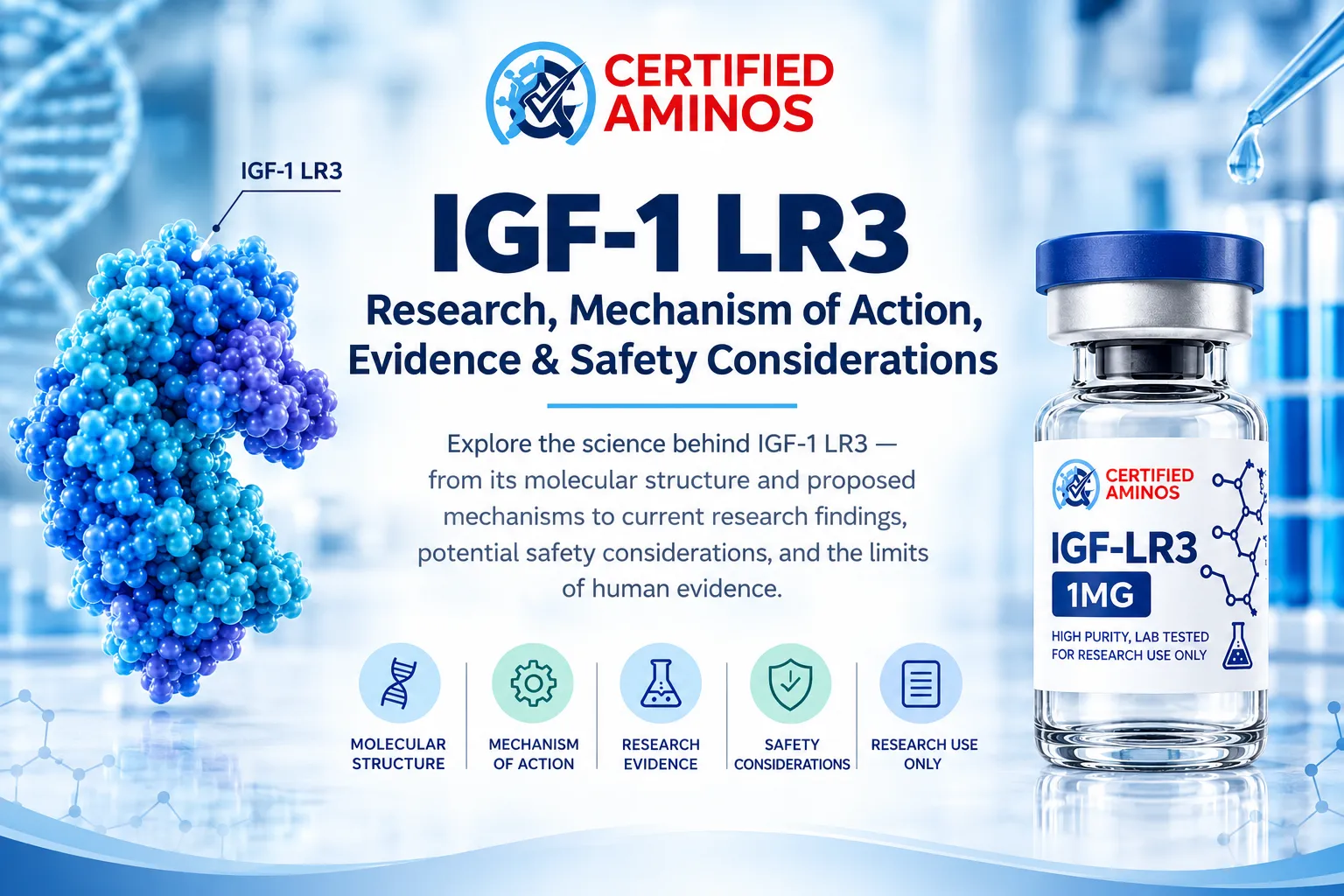
No peer-reviewed human study of IGF-1 LR3 exists — a 2026 literature review placed it in its lowest evidence tier. Here's what the cell and animal research actually shows, and where it stops.