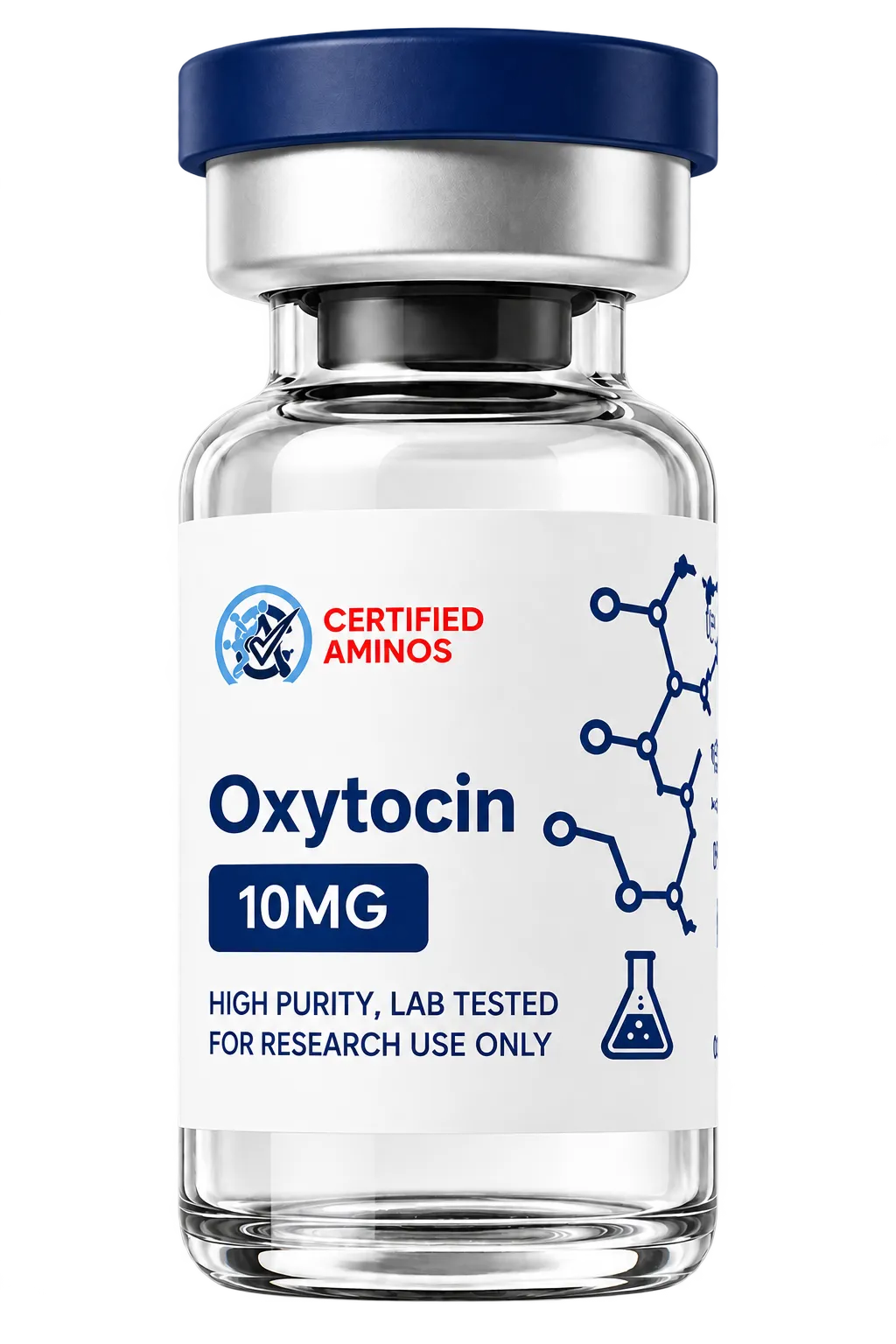
Oxytocin Acetate is Certified Aminos' research listing for the acetate-salt form of the cyclic nonapeptide hormone oxytocin, studied in behavioral and physiological models for receptor-mediated effects spanning social behavior and peripheral reproductive physiology. Available in 10mg for laboratory research use only.
HPLC certified
Independent analysis
Highest standard
Full traceability
Each order ships as an Oxytocin Acetate research peptide in a 10mg vial, manufactured for laboratory use only.
| Product Name | Oxytocin Acetate |
|---|---|
| Sequence | Cys-Tyr-Ile-Gln-Asn-Cys-Pro-Leu-Gly-NH2, cyclic via a Cys1-Cys6 disulfide bridge -- confirmed via an independent chemical database |
| Related Regulatory Note | Oxytocin itself is an FDA-approved drug (Pitocin, Syntocinon) carrying an active FDA black box warning for risks including uterine rupture when used to induce or augment labor. This listing is a separately supplied RUO research material, not that approved drug product, and makes no claim about its safety profile |
| CAS Number | Not established for this listing |
| Purity | Not independently verified -- no batch-specific COA is currently published |
| Identity | Not independently confirmed by mass spectrometry or an equivalent method |
| Available Size | 10mg |
| Intended Use | Laboratory research only (RUO) |
When your order arrives, match the lot number printed on the vial to the lot number on the COA before beginning any work. Until a batch-specific COA is published for this product, treat any purity or identity figure shown elsewhere on this listing as a supplier claim, not an independently verified result.
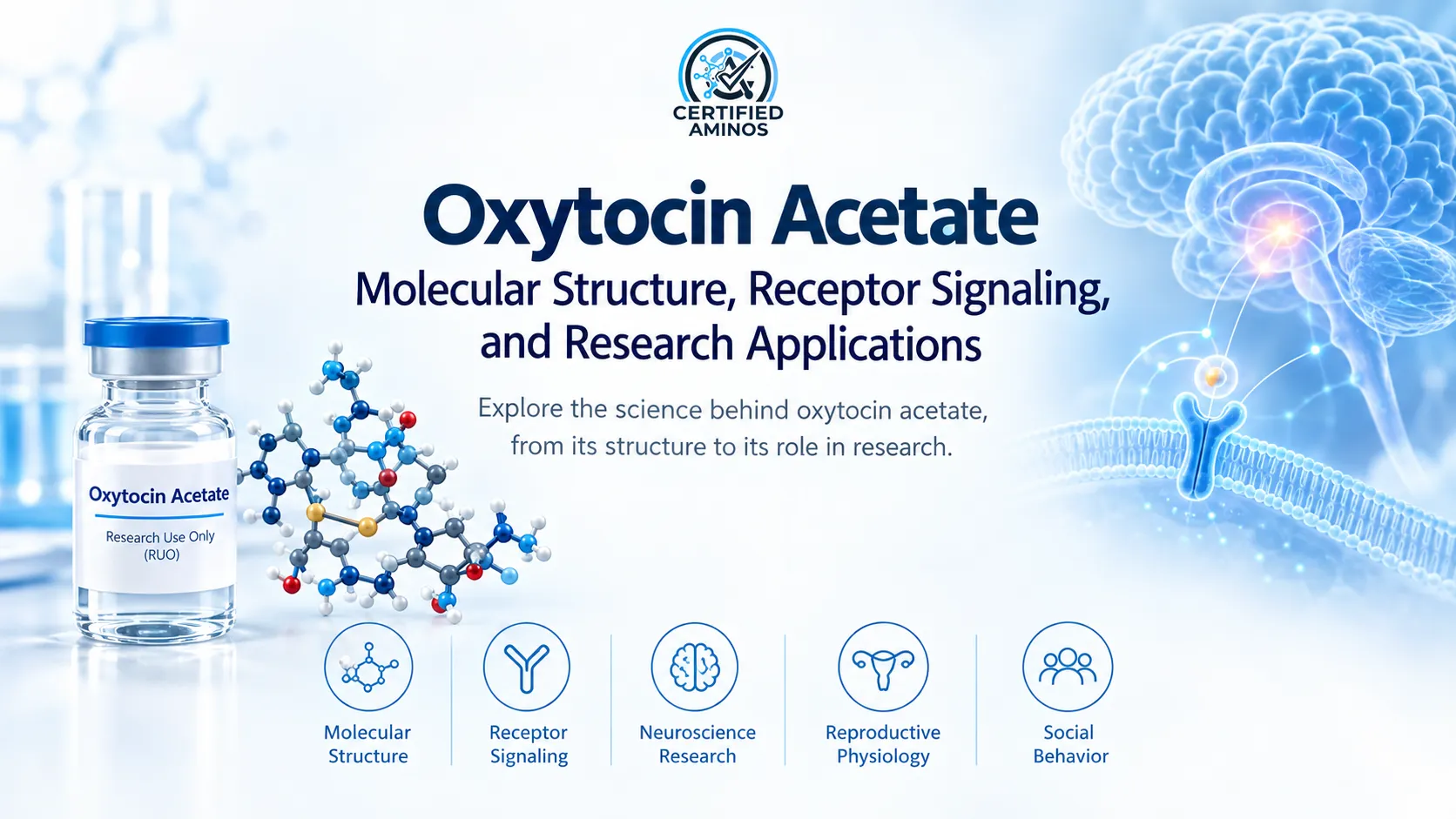
Oxytocin acetate is the research form of the hormone sold as Pitocin, an FDA-approved drug with a real boxed warning — here's the receptor biology and what the research shows.
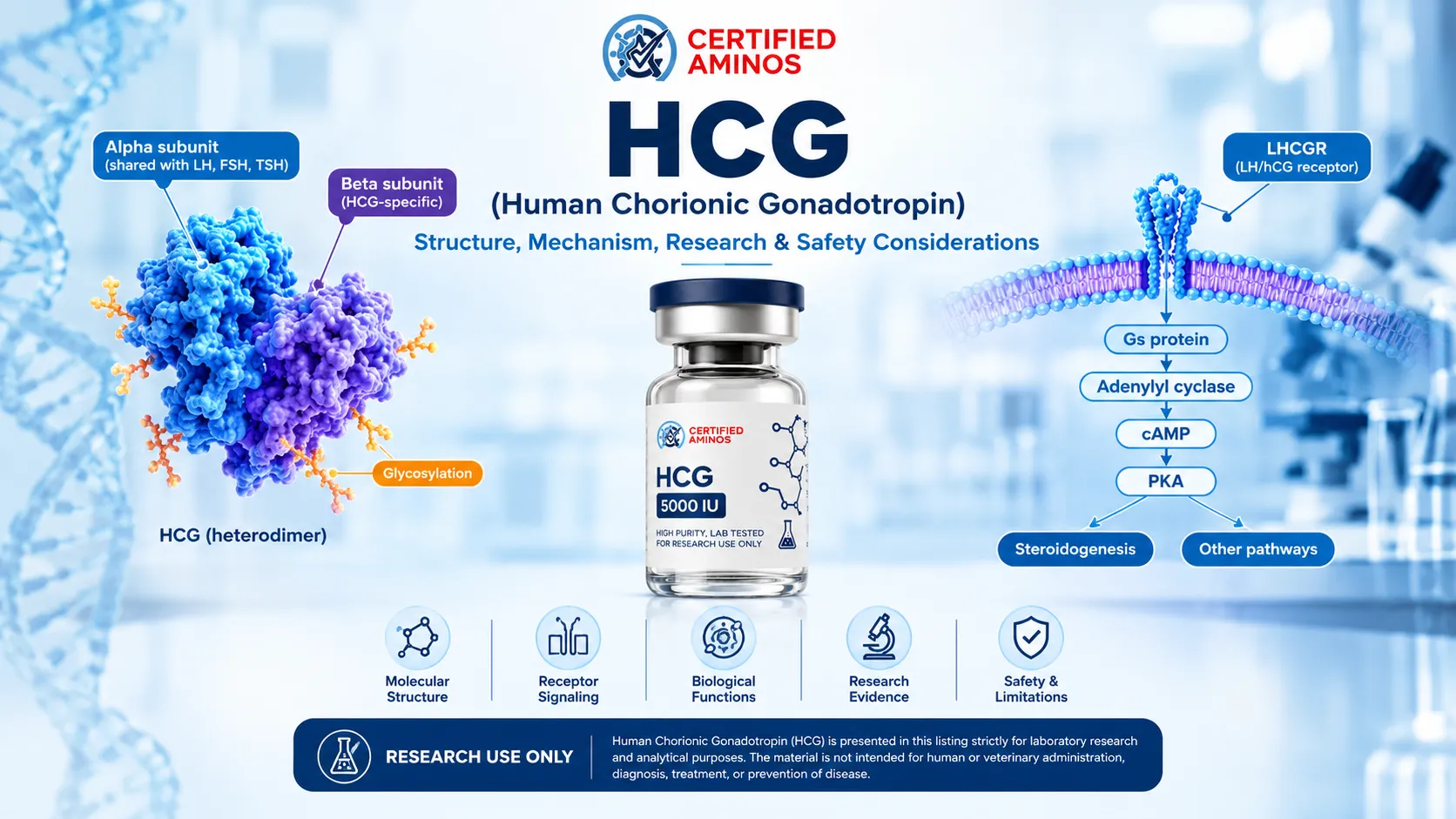
HCG and LH bind the exact same receptor — yet research shows they send measurably different signals once they do. Here's what's actually established about HCG's structure, mechanism, and the FDA's position on HCG weight-loss claims.
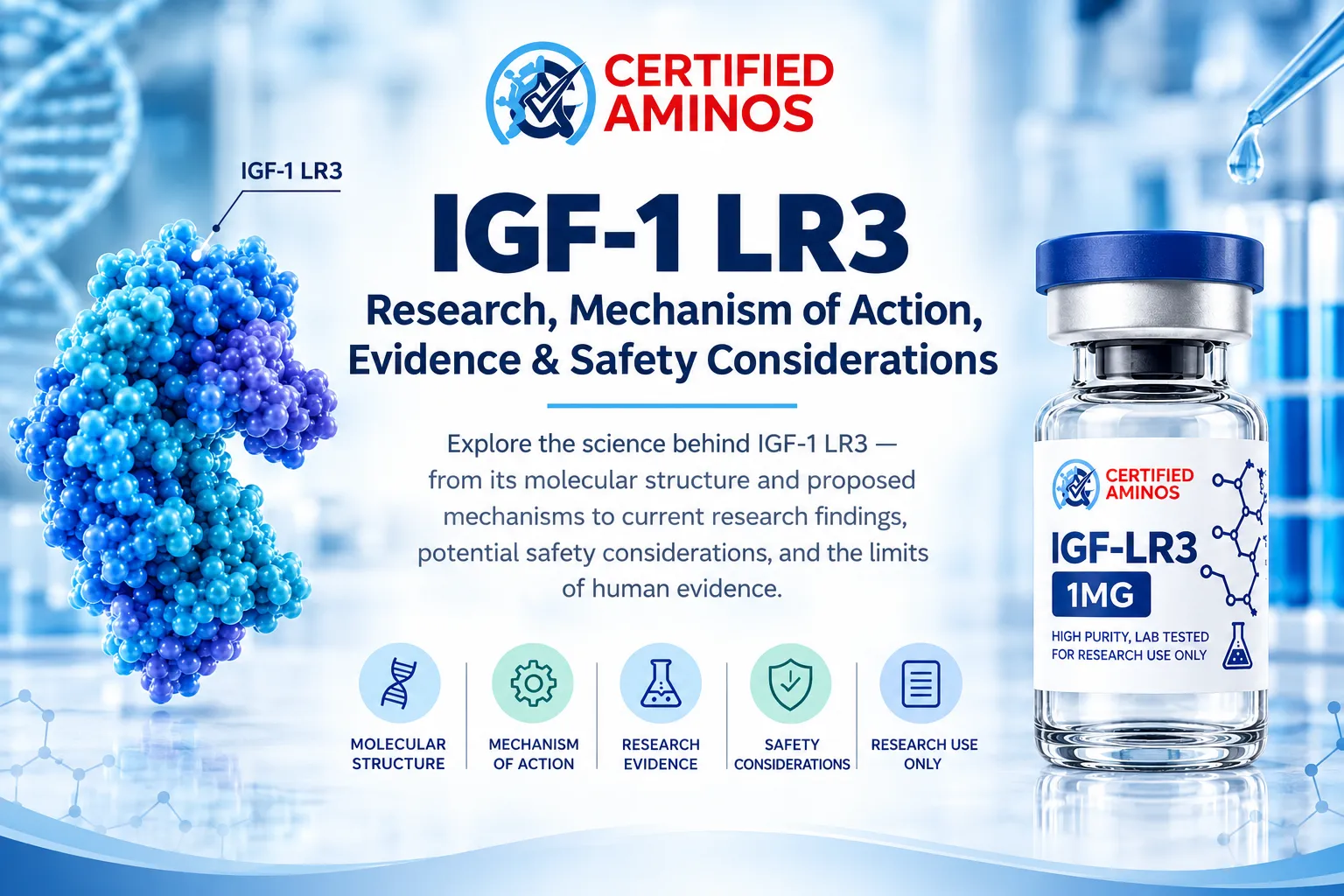
No peer-reviewed human study of IGF-1 LR3 exists — a 2026 literature review placed it in its lowest evidence tier. Here's what the cell and animal research actually shows, and where it stops.