GHK-Cu Peptide: What It Is and What Research Actually Shows
Recovery protocolsOctober 7, 202612 min read
GHK-Cu isn't a stand-in for every copper peptide — it's one specific, well-studied complex. What research supports for skin and hair, and current FDA status.
GHK-Cu is GHK's copper(II) complex — one specific, well-studied member of the broader “copper peptide” category, not a synonym for it.
Human evidence is real but limited and mixed (a 2006 RCT found no objective wrinkle improvement but higher patient-reported satisfaction); most other evidence is cellular or animal-level.
GHK-Cu is not FDA-approved; topical GHK-Cu currently has temporary compounding enforcement-discretion status, and injectable GHK-Cu remains unclassified pending future review.
Search demand for “GHK-Cu peptide” has stayed essentially flat and near the top of its category for the past year, while most of the content answering that search quietly treats GHK, GHK-Cu, and “copper peptide” as interchangeable. They aren’t. That gap between search volume and terminology precision is why this page exists.
Featured In This Article
RESEARCH PEPTIDE
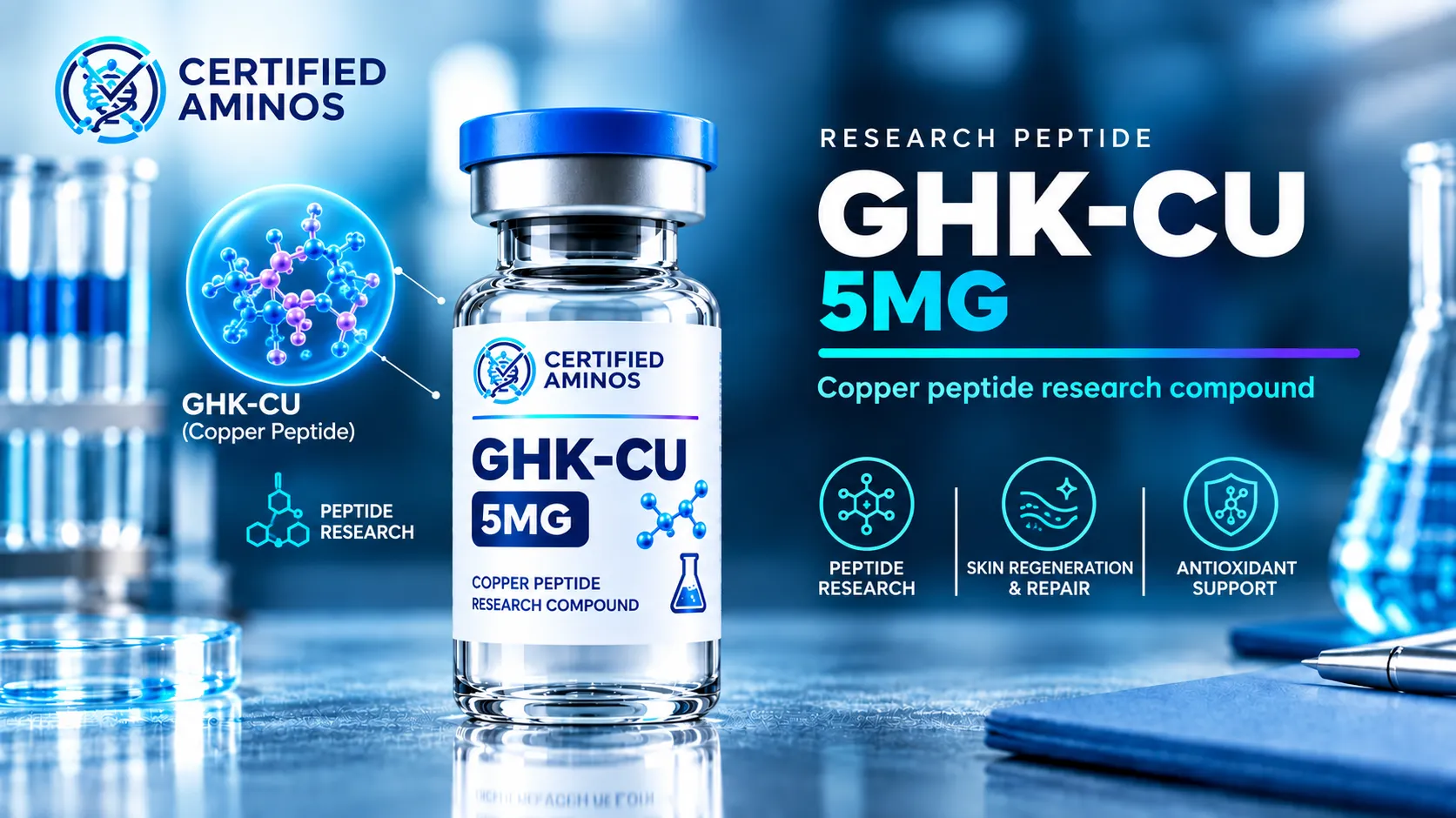
GHK-Cu
Highly purified synthetic peptide prepared for rigorous laboratory research.
$75.00
RESEARCH PEPTIDE
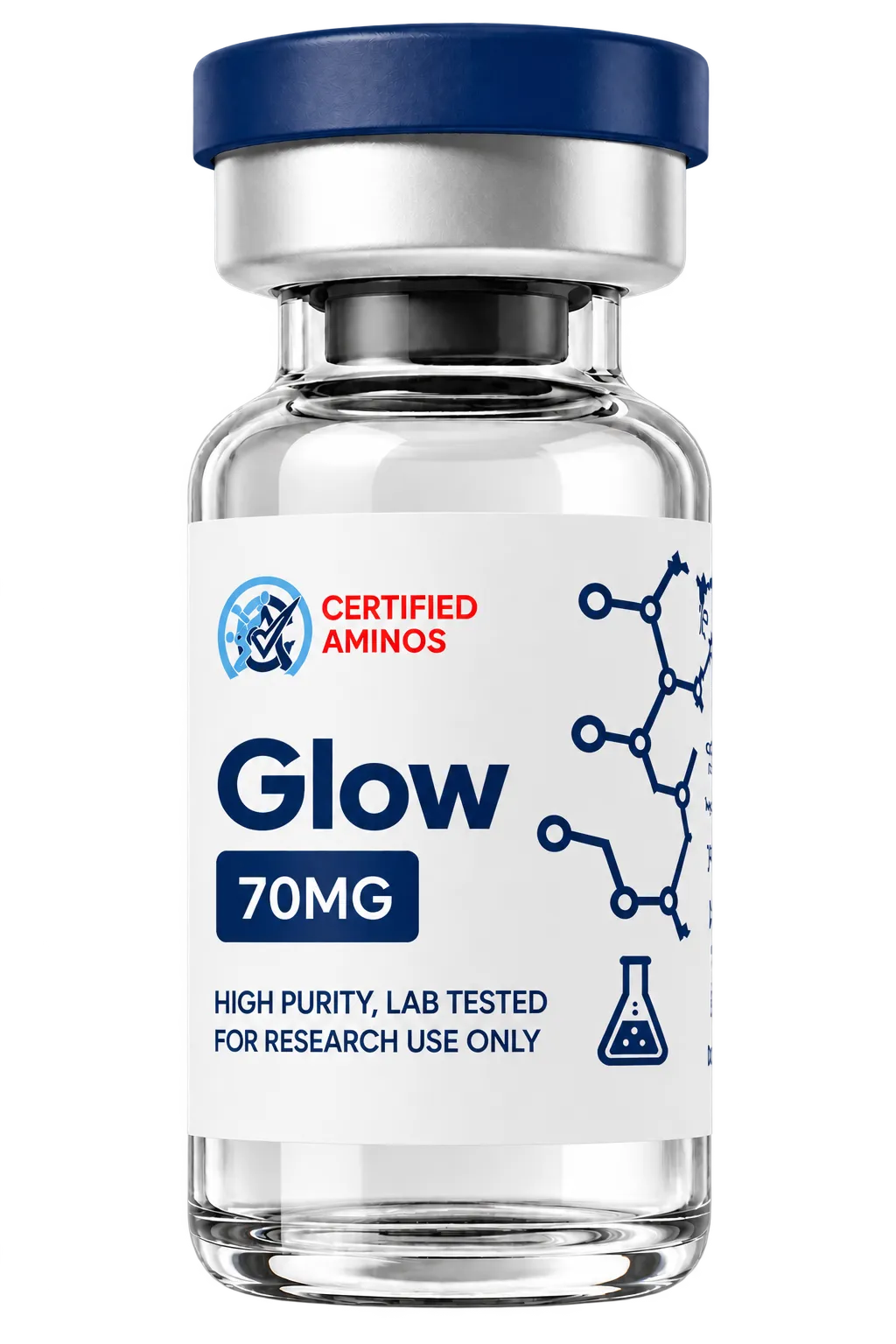
Glow Blend
Highly purified synthetic peptide prepared for rigorous laboratory research.
$129.00
RESEARCH PEPTIDE
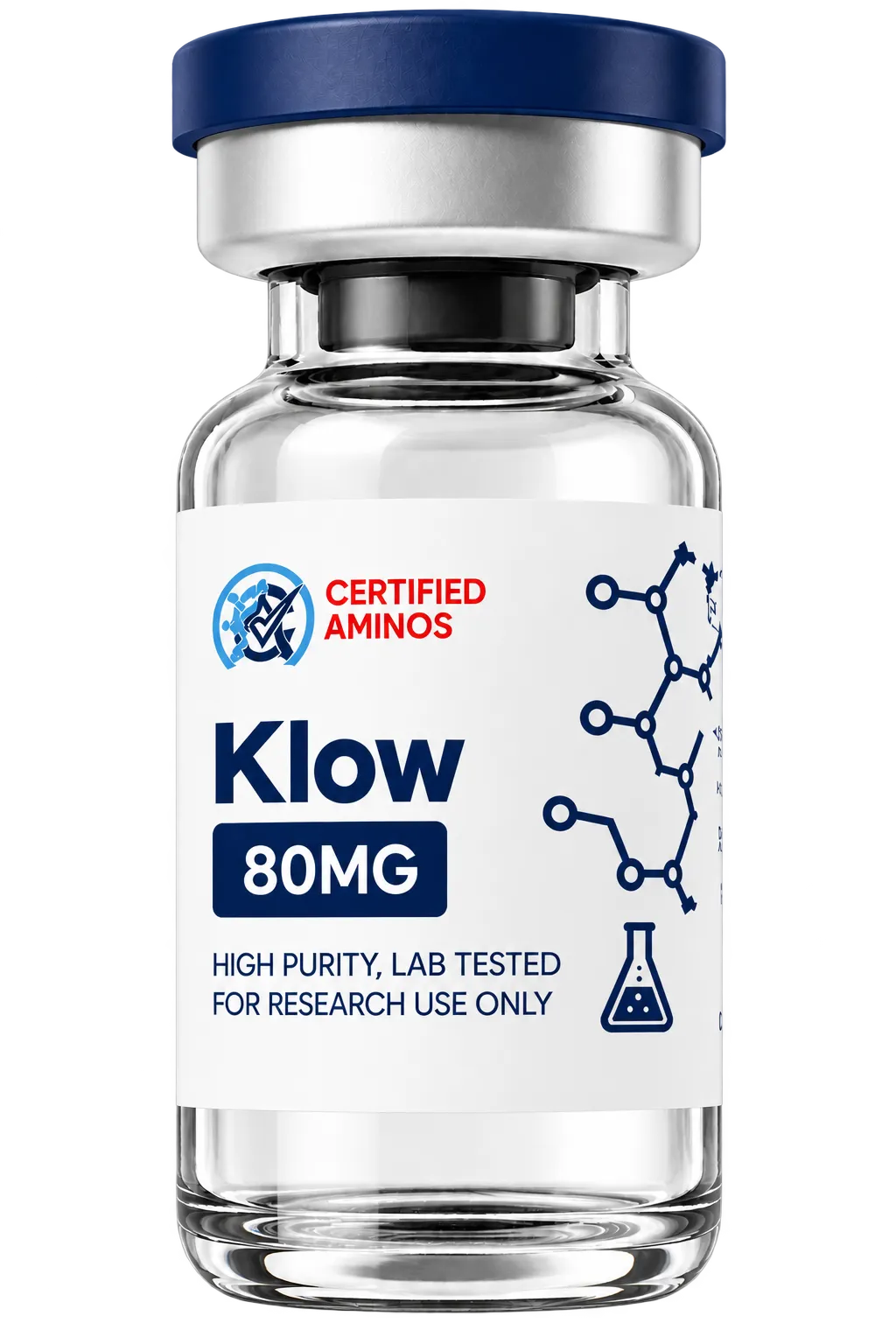
Klow Blend
Highly purified synthetic peptide prepared for rigorous laboratory research.
$149.00
GHK-Cu is the copper(II) complex of a naturally occurring human tripeptide, GHK. It is one specific, well-studied member of a broader category called copper peptides — not a synonym for that whole category, and not identical to GHK without copper attached. Most of the confusion in GHK-Cu content online comes from skipping that distinction.
What follows is a research-first accounting of what GHK-Cu actually is, how it differs from GHK and from the broader copper-peptide category, what the evidence does and doesn’t support for skin and hair, what current regulatory status actually looks like, and how to read documentation on a research-grade GHK-Cu product. This page does not provide dosing amounts, injection instructions, or treatment protocols — that is stated upfront, not buried in a disclaimer at the bottom.
What Is GHK-Cu?
GHK-Cu is the copper(II)-bound form of GHK, a tripeptide naturally found in human plasma, saliva, and urine — not a separate molecule, and not a synonym for the broader "copper peptide" category.
GHK is the short name for glycyl-L-histidyl-L-lysine, a tripeptide first identified in human plasma in 1973, where it was found to cause aged liver tissue to behave more like younger tissue in culture. GHK occurs naturally in human plasma, saliva, and urine, and its concentration declines with age — averaging roughly 200 ng/mL around age 20 and falling to roughly 80 ng/mL by age 60, according to a 2020 review in Aging Pathobiology and Therapeutics (Dou et al., 2020).
GHK has a strong, specific affinity for copper(II) ions. When GHK binds copper, it forms GHK-Cu, also written as the copper(II) chelate of GHK. GHK-Cu is not a separately discovered molecule — it is the copper-bound form of the same tripeptide, and most of the biological activity attributed to “GHK-Cu” in the research literature refers specifically to this copper complex, not to copper-free GHK.
Is GHK-Cu the same thing as AHK-Cu? No. AHK-Cu (alanine-histidine-lysine copper complex) is a structurally related but distinct tripeptide-copper complex, sometimes confused with GHK-Cu in vendor content because of the similar naming and shared copper-binding chemistry. The two should not be treated as interchangeable.
GHK vs. GHK-Cu: What’s the Difference?
The short version: GHK is the tripeptide on its own; GHK-Cu is that same tripeptide bound to copper. They are related, but research has not established that they behave identically in every context.
Term
What It Refers To
Relationship to GHK-Cu
GHK
The copper-free tripeptide glycyl-L-histidyl-L-lysine
Parent molecule — GHK-Cu is GHK's copper(II) complex
GHK-Cu
GHK bound to a copper(II) ion
The specific entity this article covers
Copper Tripeptide-1
The INCI (cosmetic ingredient) name for GHK-Cu
Synonym — same molecule, different naming context
Copper peptide
A broad category of copper-binding peptides
Broader than GHK-Cu — GHK-Cu is one member, not the whole category
AHK-Cu
A different tripeptide-copper complex (alanine-histidine-lysine + copper)
Related chemistry, distinct molecule — not interchangeable with GHK-Cu
One study specifically compared copper-bound GHK to copper-free GHK in cultured human keratinocytes and skin-equivalent models: copper-free GHK still increased keratinocyte proliferation and markers of basal-cell “stemness,” suggesting some effects don't strictly require the bound copper — but the study's authors noted this needs further exploration, not that the two forms are equivalent across all endpoints
(Choi et al., 2012, Journal of Peptide Science).
What Does “Copper Peptide” Actually Mean?
“Copper peptide” is a category term, not a specific molecule. It refers to any peptide that binds or is formulated with copper ions — GHK-Cu is one well-studied example, but it is not the only one, and not every product marketed as a “copper peptide” contains GHK-Cu specifically.
In cosmetic ingredient lists, GHK-Cu usually appears under its INCI name, Copper Tripeptide-1 — that is a direct synonym, confirmed against cosmetic-ingredient databases, not a separate compound. If a product lists “copper peptide” without naming the specific peptide sequence, there's no way to confirm from the label alone whether it contains GHK-Cu, a different copper-binding peptide, or a proprietary blend.
This distinction matters for reading research: a study on “copper peptides” broadly does not automatically apply to GHK-Cu, and a claim about GHK-Cu doesn't automatically generalize to every product calling itself a copper peptide.
How Is GHK-Cu Studied in Research?
GHK-Cu research spans several different kinds of studies, and they don't all carry the same weight. This article grades every property claim against the hierarchy below — worth keeping in mind before the next two sections. In preclinical and cosmetic research, GHK-Cu is most often associated with collagen/extracellular-matrix signaling and wound-healing pathways — not the sweeping "anti-aging" claims sometimes attached to it, which outrun what the evidence below actually establishes.
Evidence Level
What It Means
1. Human clinical evidence
Controlled trials in humans for a specific indication
2. Human observational/cosmetic evidence
Controlled cosmetic studies or human observational research
3. Animal evidence
In-vivo studies in animal models
4. Cellular/in-vitro evidence
Cell-culture or tissue-model studies
5. Mechanistic/theoretical evidence
A proposed biochemical pathway, not yet tested directly at the relevant level
6. Anecdotal/vendor claims
User reports or marketing claims with no study behind them
Levels 3 through 6 should never be read as proof of human efficacy. A cellular or animal finding is a reason to keep researching — not a conclusion about what GHK-Cu does in a person.
GHK-Cu Research: What Biological Properties Have Been Investigated?
Across the GHK and GHK-Cu literature — most of it authored or co-authored by Loren Pickart, who first identified GHK's tissue-remodeling activity — several properties have been investigated at varying evidence levels:
Property
Strongest evidence type
Source
Collagen, elastin, and glycosaminoglycan synthesis
Cellular (fibroblast cultures)
Pickart et al., 2015, BioMed Research International
Tissue remodeling / wound-healing signaling
Animal models across skin, bone, and gut tissue
Pickart, 2008, J Biomater Sci Polym Ed
Anti-inflammatory and antioxidant activity
Cellular / mechanistic, some animal
Pickart et al., 2012, Oxid Med Cell Longev
Angiogenesis-related signaling
Cellular / animal
Pickart, 2008, J Biomater Sci Polym Ed
Epidermal keratinocyte proliferation
Cellular (keratinocyte and skin-equivalent models)
Choi et al., 2012, J Pept Sci
A 2018 review in International Journal of Molecular Sciences (Pickart & Margolina, 2018) summarizes much of this literature and proposes gene-expression regulation as a unifying mechanism across these effects. It is a review of mostly cellular, animal, and mechanistic data — useful for understanding the scope of the research, not a substitute for human clinical evidence.
None of this establishes that GHK-Cu “builds collagen in your skin” or “reverses aging” as a guaranteed outcome. It establishes that GHK-Cu has been investigated across these pathways, predominantly at the cellular and animal level, with a research-driven rationale for continued human study.
GHK-Cu and Skin Research
GHK-Cu is one of the more extensively studied copper peptides specifically in skin/cosmetic contexts, and this is where the clearest human data exists — with real caveats.
A randomized, blinded controlled trial (Miller et al., 2006, Archives of Facial Plastic Surgery) tested a topical GHK-Cu (copper tripeptide complex) regimen on skin after CO₂ laser resurfacing in 13 patients. Objective, computer-assisted and blinded-evaluator assessment found no statistically significant difference in wrinkle improvement or overall skin quality between the GHK-Cu and non-GHK-Cu groups. Patient-reported satisfaction, however, was significantly higher in the GHK-Cu group (P = .04).
That is a genuinely mixed result, not a clean “GHK-Cu improves skin” finding — and it's a more accurate account of the human evidence than the blanket “clinically proven anti-wrinkle” claims that circulate in GHK-Cu marketing copy. Objective measures and subjective patient experience didn't agree in this trial, and a single 13-patient study is not large enough to settle the question either way.
Beyond this trial, most of the skin-specific research is cellular (keratinocyte and skin-equivalent models, see the properties table above) rather than further controlled human trials. Formulation and skin-permeability also matter: how well any topical GHK-Cu formulation actually delivers the peptide through the skin barrier depends on the specific formulation, and that is a separate, ongoing area of research in its own right — not something a product description can settle on its own.
GHK-Cu and Hair Research
Copper peptides, including GHK-Cu, come up frequently in hair-related searches. The research here is real but preclinical, and it should be read that way.
A 2023 study in Bioactive Materials (Liu et al., 2023) describes copper peptides, including GHK-Cu, as a “powerful hair growth promoter” in the context of developing an ionic-liquid microemulsion to improve topical delivery, and reports supporting results in mice, including activation of the Wnt/β-catenin signaling pathway associated with hair-growth regulation.
That is animal-level (Level 3) evidence for a specific delivery system, not a human trial, and not a guarantee of regrowth in people. GHK-Cu's older literature also notes an increase in hair-follicle size in some animal and in-vitro contexts (Pickart, 2008), which is consistent with but does not independently confirm the 2023 findings. Treat GHK-Cu's hair-related research as a genuinely active area of investigation — not an established alternative to minoxidil or finasteride, regardless of how it's framed elsewhere.
GHK-Cu Safety and Side Effects
Safety data on GHK-Cu is uneven across routes and formulations, which is a real limitation, not a minor caveat.
The topical/cosmetic literature (including the Miller et al. 2006 trial above) did not report significant adverse skin reactions attributable to GHK-Cu in that specific post-laser-resurfacing context. That is a narrow finding — one formulation, one application context, 13 patients — and it does not establish a general safety profile for GHK-Cu across all concentrations, formulations, or routes of administration.
Safety data for an injectable, research-grade GHK-Cu compound is a separate question from safety data for a topical cosmetic formulation. The two should not be assumed to carry the same risk profile. As of this writing, there is no large-scale, dedicated human safety study specifically characterizing adverse-event rates for GHK-Cu across routes — that gap should be stated plainly rather than filled in with reassurance.
GHK-Cu Dosage and Injection Searches: What This Page Won't Tell You
A meaningful share of GHK-Cu search traffic is people looking for dosing amounts, injection technique, or reconstitution instructions. That demand is real, and it's worth naming directly instead of ignoring it.
This page does not provide dosing numbers, injection schedules, or reconstitution instructions, for GHK-Cu specifically or as general guidance. Generic dosing information circulating online is not drawn from a standardized clinical protocol — there isn't one for GHK-Cu as a research compound — and treating a number found on a vendor page or forum as medical guidance is a mistake regardless of how confidently it's presented. Research-use-only material is, by definition, not labeled or studied for a specific human dosing regimen.
Is GHK-Cu FDA Approved? Regulatory and Research-Use Context
No. GHK-Cu, whether topical or injectable, is not an FDA-approved drug. Its regulatory status is more specific — and more fluid — than a flat yes/no, so it's worth stating precisely rather than generally.
GHK-Cu is not on the FDA's official Section 503A Bulk Drug Substances List for either route of administration. Topical GHK-Cu has been under the FDA Pharmacy Compounding Advisory Committee's temporary “Category 1” enforcement-discretion status, which allows continued compounding while formal review is pending — it was briefly removed from that category in April 2026 after a nomination withdrawal, then restored in May 2026 once it was clarified that only the injectable nomination had been intended for withdrawal. Injectable GHK-Cu remains unclassified, without compounding-list status, with a PCAC review reportedly expected before February 2027.
That status is current as of this writing and can change; anyone relying on it for a compliance decision should check the FDA's current bulk-substances guidance directly rather than this page or any other secondary source.
Separately: GHK-Cu, under its INCI name Copper Tripeptide-1, is used as a cosmetic ingredient, which is a different regulatory category from both an approved drug and a research-use-only compound. A product being sold as “research use only” means it is labeled and intended for laboratory and research settings, not for human or animal consumption, diagnosis, or treatment — that labeling reflects the seller's intended use, not an independent FDA safety or efficacy finding.
How to Evaluate GHK-Cu Research-Compound Documentation
A Certificate of Analysis (COA) is the main way to verify what's actually in a vial of research-grade GHK-Cu. Four things are worth checking on any GHK-Cu COA, regardless of which vendor it comes from:
1. The lot number matches the vial. A generic certificate that doesn't name your specific batch isn't documentation for your product.
2. Identity and purity are reported separately. Identity (typically supported by mass spectrometry) confirms what's there is what's claimed. Purity (typically assessed by HPLC) means unwanted material is below a stated threshold under that analytical method. A purity percentage alone says nothing about identity.
3. The method is stated. HPLC and mass spectrometry answer different questions. A COA that doesn't name its testing method is harder to evaluate.
4. The testing lab is named and verifiable. A COA is only as credible as the lab that produced it. If the lab can't be independently verified, treat the certificate with caution.
A clean COA confirms what's in the vial. It does not, on its own, establish that the material should be used for any particular purpose, at what amount, or with what effect — those are separate questions from identity and purity.
GHK-Cu at Certified Aminos
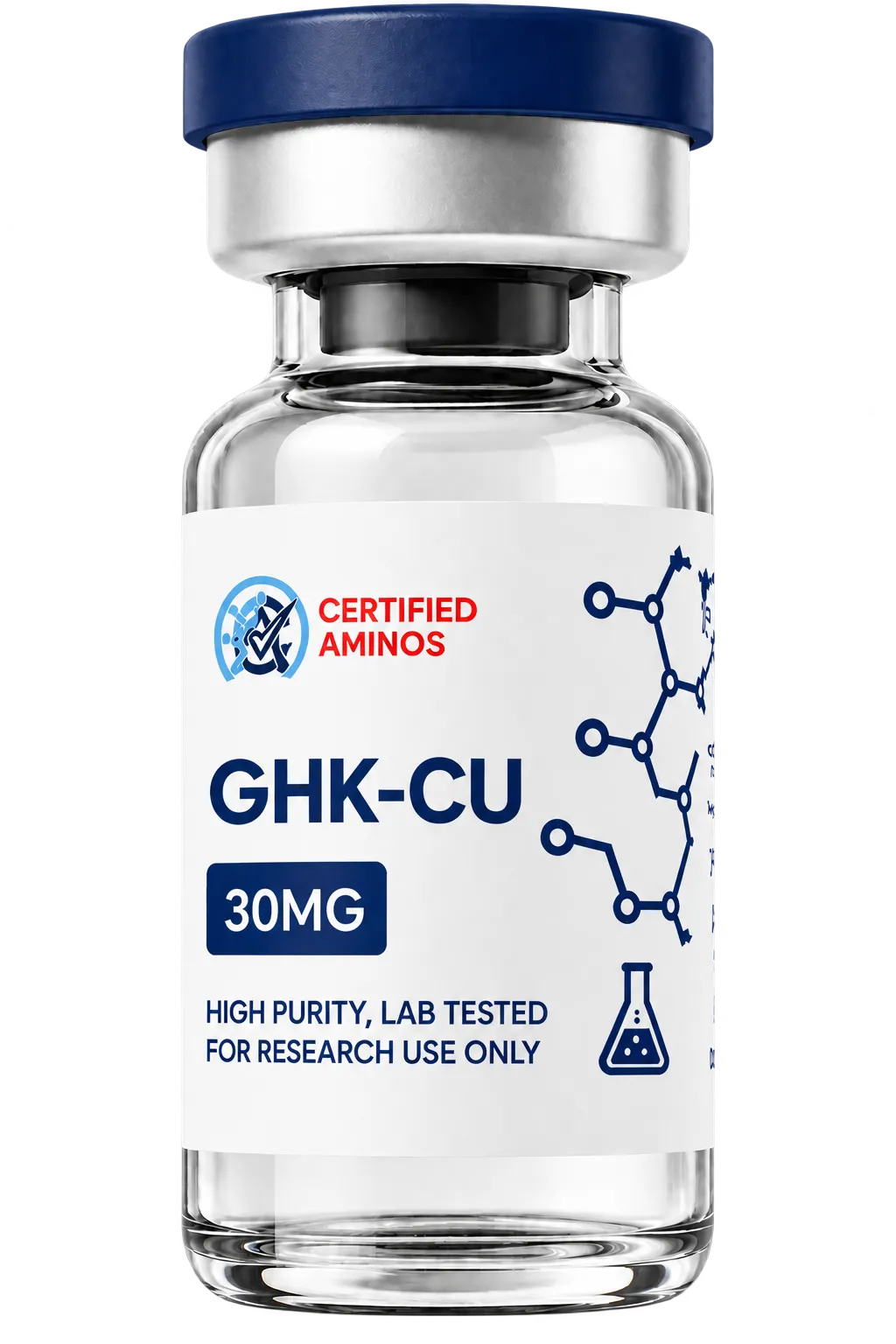
Certified Aminos offers GHK-Cu as a standalone research compound in 30 mg, 50 mg, and 100 mg sizes, listed under the site's Cosmetic & Skin category. The product is sold research-use-only, with stated third-party testing, HPLC-based purity assessment, and Certificate of Analysis documentation available for current batches. Exact purity figures, current stock availability, and the live COA should be checked on the product page directly, since these details change between batches.
GHK-Cu is also one component of Certified Aminos' Glow Blend (paired with BPC-157 and TB-500) and Klow Blend (which adds Kisspeptin). As with any multi-peptide blend, the combination itself has not been independently studied — each ingredient's research record, including GHK-Cu's above, applies to that ingredient alone, not to the blend as a formulation.
For research-use-only peptides generally, see Certified Aminos' FAQ, which covers RUO labeling, documentation, and storage questions across the product catalog.
For research use only. Not for human or veterinary use.
Got Questions?
Frequently Asked Questions
GHK-Cu is the copper(II) complex of GHK (glycyl-L-histidyl-L-lysine), a tripeptide that occurs naturally in human plasma, saliva, and urine and declines with age. It has been studied for its role in tissue remodeling, skin biology, and related research contexts.