Research Use Only. This material is provided for scientific and educational purposes only. The product discussed is designated for Research Use Only (RUO) and is not intended for human or veterinary consumption, diagnosis, treatment, or prevention of disease. Nothing on this page constitutes medical advice or a recommendation for human use.
What Is Semax?
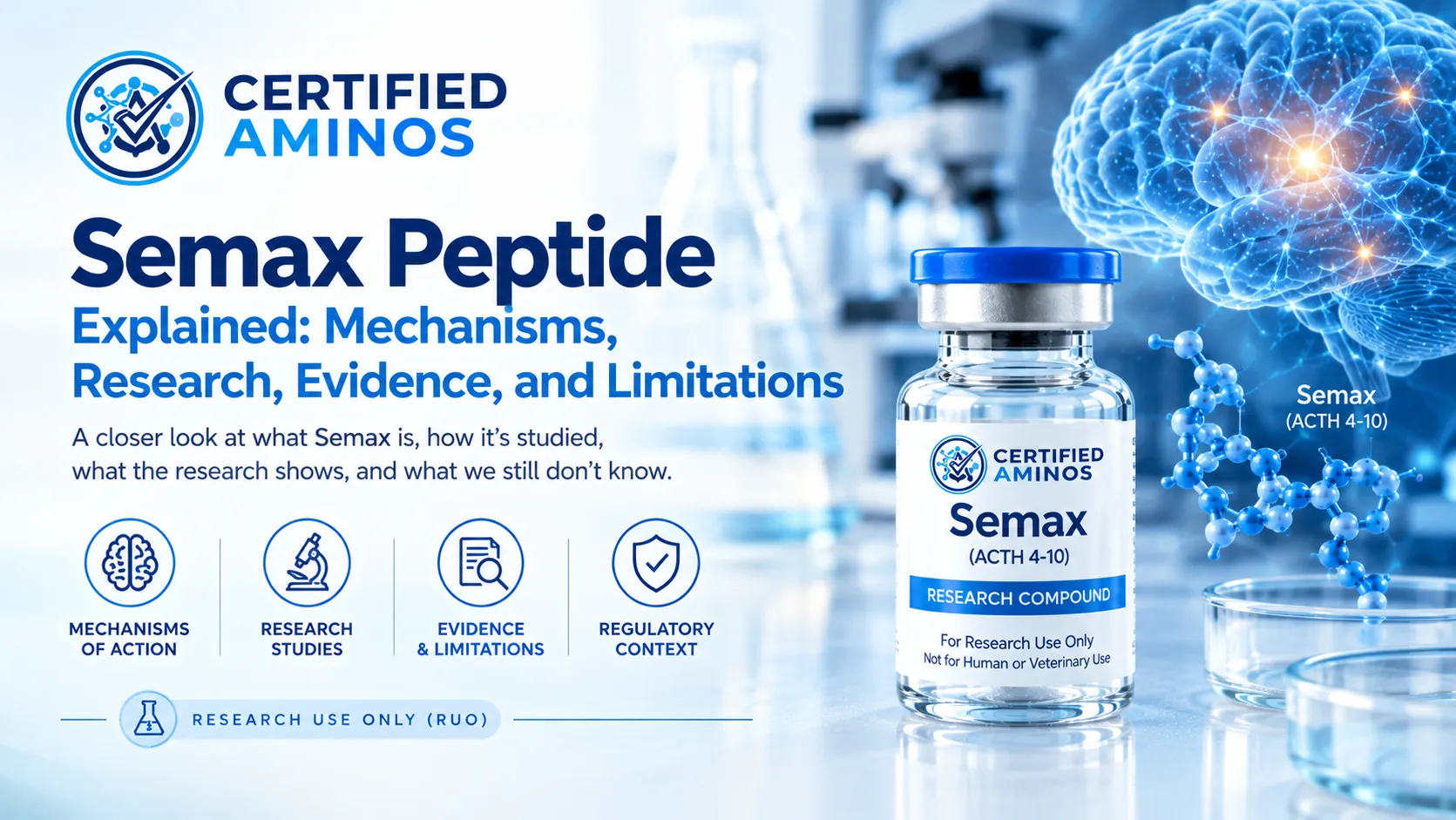
Semax is a synthetic heptapeptide with the sequence Met-Glu-His-Phe-Pro-Gly-Pro, developed in the 1980s at Russia's Institute of Molecular Genetics. It's built on the ACTH(4-10) fragment of adrenocorticotropic hormone, with the native C-terminal Arg-Trp-Gly sequence replaced by a Pro-Gly-Pro tripeptide — a substitution credited with resisting breakdown by plasma peptidases while removing the hormone's corticotropic (steroid-stimulating) activity entirely. Semax is not a stimulant, a steroid, or growth hormone; it's a modified fragment of a much larger natural hormone, studied for a narrow set of effects unrelated to ACTH's original endocrine function.
How Is Semax Proposed to Work?
The best-supported mechanism is binding to specific sites in rodent brain tissue that raises brain-derived neurotrophic factor (BDNF) protein levels and TrkB receptor activity. A widely-cited mechanism paper reported that Semax binds specifically and reversibly to rat basal forebrain tissue and increases BDNF protein there after intranasal dosing, with no comparable rise in cerebellum — a region-specific effect [1]. In rodent models of ischemic brain injury, Semax has also been reported to alter immune-response and vascular gene expression, which researchers have proposed as a second, related pathway alongside the BDNF effect.
This is rodent mechanistic data. It describes a plausible, region-specific biological pathway — it does not, on its own, establish what that pathway does in a human brain.
What Does Human Research on Semax Actually Show?
Two published human studies exist in the literature reviewed for this article, and they investigate different things in different populations.
The first is a 2018 resting-state fMRI study in healthy volunteers, scanning brain activity before and after intranasal Semax or placebo. It reported a larger volume of the default mode network's rostral (medial frontal cortex) subcomponent in the Semax group compared to controls [2]. A related, larger 2020 follow-up study scanned 52 healthy participants and examined connectivity around the amygdala and dorsolateral prefrontal cortex after Semax, Selank, or placebo — finding that Semax and Selank produced distinguishable connectivity changes from each other [3]. Both are small, non-Western imaging studies measuring brain activity patterns, not cognitive performance or clinical outcomes.
The second is a 2018 Russian clinical trial in 110 ischemic stroke patients, split into early- and late-rehabilitation groups, each further divided by whether they received Semax [4]. The study reported that Semax raised plasma BDNF levels, which remained elevated throughout the study period, and that Semax plus early rehabilitation was associated with faster functional recovery (measured by Barthel Index score) than rehabilitation alone. This is a real, specific, sourced finding — it is also a single, non-blinded trial from one research group, measuring a correlation between a blood marker and a recovery score, not a confirmed causal mechanism established by independent replication.
Neither study is a large, Western, placebo-controlled randomized trial of the kind that would typically support a therapeutic claim. Both describe real, specific findings in real, specific, narrow samples.
How Is Semax Different From Selank?
Semax and Selank are structurally unrelated peptides from different research lineages, despite often being discussed together. Semax derives from ACTH(4-10); Selank derives from tuftsin, an unrelated immunomodulatory peptide. They're proposed to act through different primary pathways — Semax through BDNF/TrkB signaling, Selank through GABAergic modulation and cytokine effects — and the 2020 connectivity study that scanned both in the same 52 participants found each produced distinguishable, non-identical brain-connectivity changes [3]. Sharing a research tradition and a common pairing in combination products does not make them interchangeable, and findings about one should not be assumed to describe the other.
Semax vs. Selank: What Each Compound's Research Actually Supports
What Are the Limitations of Existing Semax Research?
Most of the evidence comes from rodent studies run by a small number of research groups, with limited independent replication. Only two modest human studies exist, and none of this has been tested in the large, multi-center randomized trials required for drug approval. The human stroke trial and the imaging studies also come from overlapping Russian research groups rather than independent international replication, which is worth knowing when weighing how much any single result should count.
What Is Known About Semax Safety?
No dedicated, systematic safety study has been published. The available clinical and imaging studies did not report significant adverse effects within their small samples, but the absence of a reported problem in a handful of small studies does not establish an overall safety profile, particularly for long-term use, different doses, or different populations than those actually studied.
Is Semax FDA-Approved?
No. Semax has no FDA-approved drug product in the United States. It was one of six peptide groups FDA's Pharmacy Compounding Advisory Committee reportedly recommended in July 2026 for inclusion on the 503A Bulks List — the formal list that would let state-licensed pharmacies compound it under specific conditions [5]. That recommendation is non-binding advisory input FDA is free to accept, reject, or modify, and no rule has been finalized adding Semax to that list as of this writing. For the full regulatory timeline, see FDA Peptide Update 2026: PCAC Votes, Compounding Status, and What Hasn't Changed.
What Does Research Use Only Mean for Semax?
Research Use Only describes a product's intended use — laboratory research, not human or veterinary consumption, diagnosis, treatment, or disease prevention. It is a seller's labeling designation, not an FDA finding or approval of any kind.
Is a Semax Nasal Spray the Same as a Laboratory Vial?
Not necessarily. The published research cited above used specific intranasal formulations prepared for those studies. A lyophilized vial intended for laboratory reconstitution is a different physical product — different formulation, different delivery method, potentially different stability and handling characteristics — and findings from one formulation should not be assumed to apply to another without separate verification.
What Should Researchers Check on a Certificate of Analysis (COA)?
A peptide's published research history does not confirm the identity or purity of any specific commercial batch. That requires its own batch-matched Certificate of Analysis: a lot/batch number matching the vial, identity confirmed by a disclosed method such as mass spectrometry, purity confirmed by a disclosed method such as HPLC, a named and independent testing lab, and a date tied to that specific batch. Request this directly from the supplier rather than inferring it from the compound's research literature.
What This Page Does Not Establish
This page does not establish that Semax is safe or effective for any use; that its rodent BDNF mechanism has been directly confirmed in humans; that the 2018 stroke trial's findings would replicate in an independent, blinded, Western trial; or that this or any research-grade Semax product's purity, identity, or concentration meets any particular standard. It also does not provide dosing, reconstitution, or administration guidance, and none should be inferred from it.
For Researchers
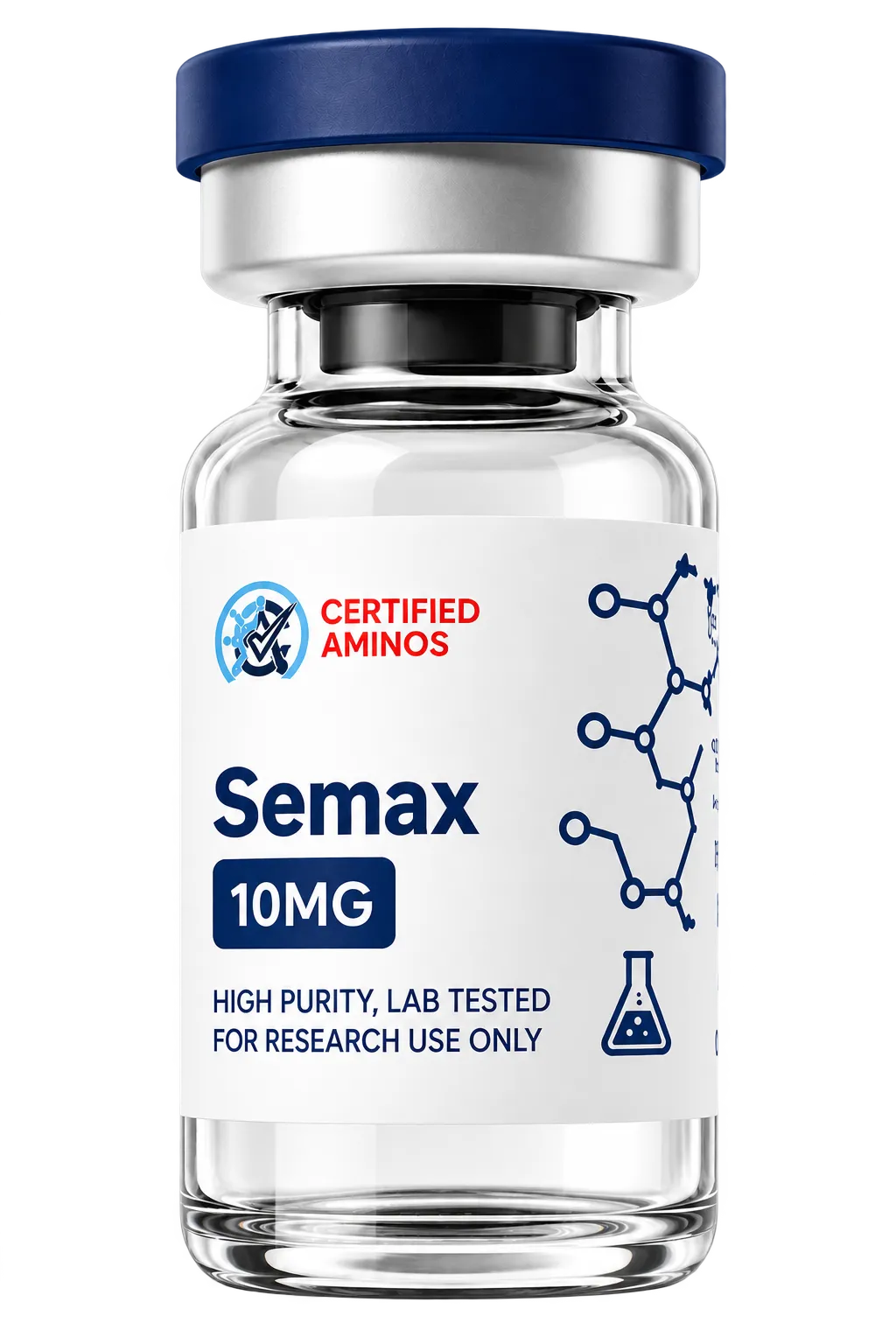
Featured in This Article: Semax — view the current listing on Certified Aminos to review live specifications, stock status, and documentation. Only features actually stated on that page are referenced in this article; no purity, identity, or testing claim is implied beyond what the page itself states.
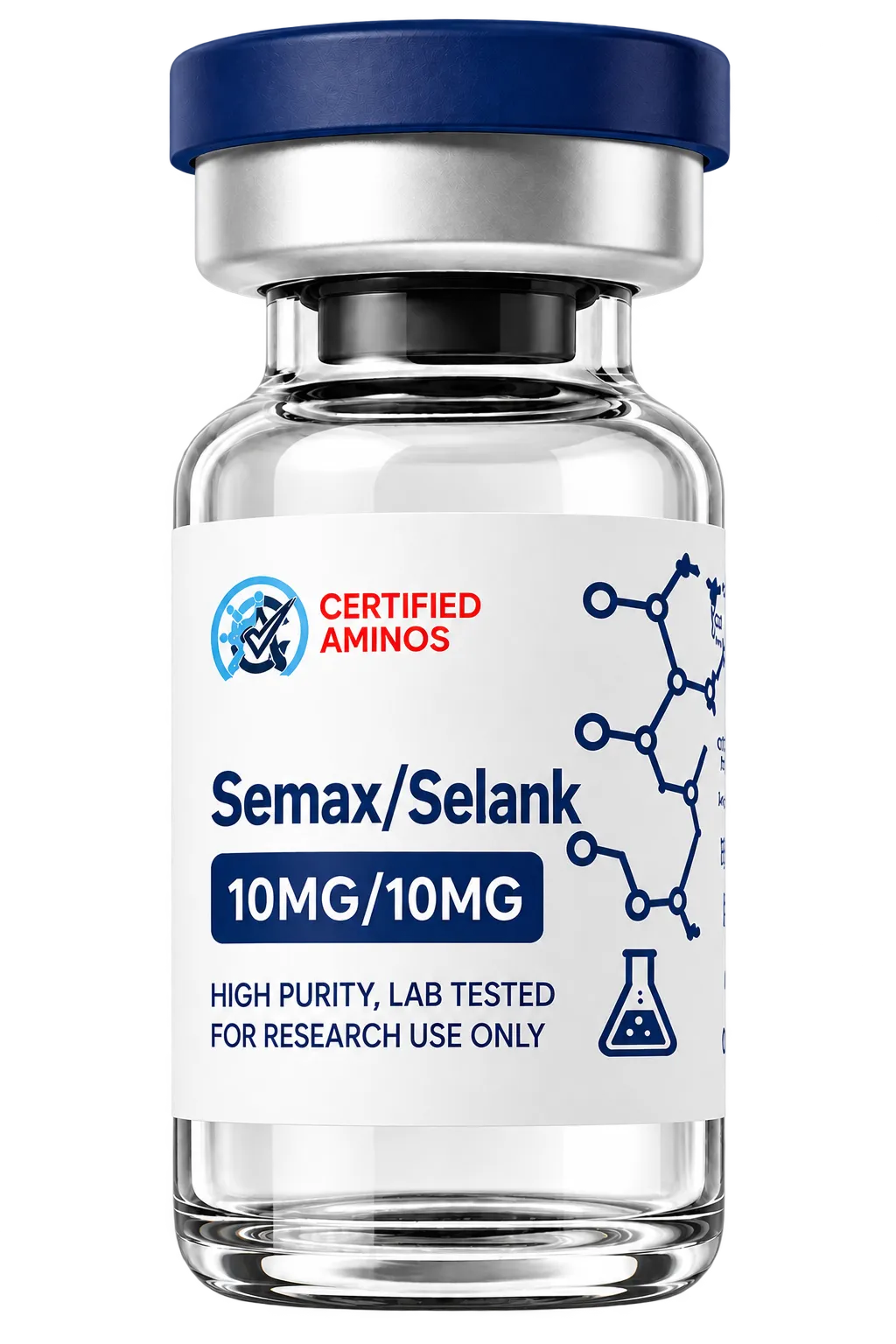
Related reading: the Semax / Selank Blend research guide, which covers the two compounds combined and the specific question of whether that combination has been studied; Are Peptides Safe? What Research Shows; and Do You Need a Prescription for Peptides? for the broader RUO/FDA distinction.
This material is Research Use Only. It is not medical advice, and it is not a recommendation for human use.